
IIT-BHU Establishes Centre for Sustainable E-Mobility
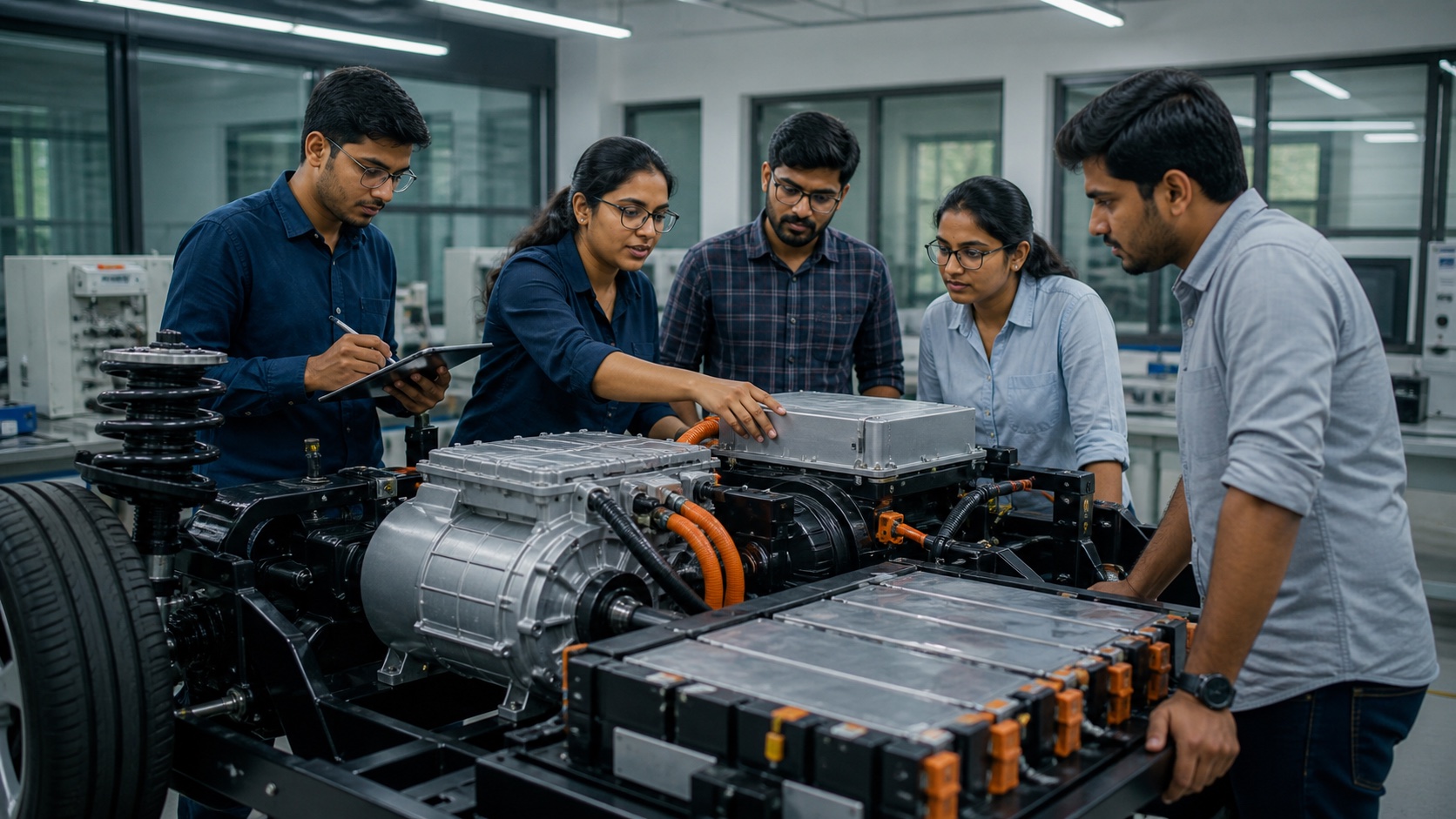
Indian Institute of Technology (BHU) Varanasi has formally established a Centre for Sustainable E-Mobility, creating a dedicated institutional home for work on cleaner transport systems. The establishment order was issued on July 15, followed three days later by the appointment of a coordinator for the centre. The sequence moves the idea from a general research interest toward an accountable academic unit.
Electric mobility is often discussed as a vehicle-purchase question, but the research agenda is wider. Batteries, power electronics, motors, charging, grid interaction, thermal management, recycling and transport planning all determine whether an electric system is genuinely reliable and lower-emission. Bringing those subjects together can help prevent engineering work from remaining isolated in separate departments.
Varanasi offers a useful real-world setting. The city combines dense old neighbourhoods, short urban trips, e-rickshaws, buses, tourist traffic and long peripheral corridors. Heat, dust, congestion and irregular charging access create conditions that laboratory designs must survive. A locally rooted centre could test questions that matter to drivers and public agencies here, while producing findings useful to other crowded Indian cities.
The word sustainable will need to carry real weight. Tailpipe emissions are only one part of an electric vehicle’s footprint. Researchers also have to examine how electricity is generated, how long batteries last, whether materials can be recovered, and what happens to workers in repair and informal recycling markets. Affordability and accessibility are similarly central; a technically impressive solution that excludes most commuters is not a complete transport solution.
The institute has not yet announced a public portfolio of projects, budgets or partners for the new centre. Those details will show whether it is primarily a coordinating body, a teaching platform, a test facility or all three. Clear rules on industry-sponsored research, data publication and conflict of interest will matter as private firms seek credible testing and trained graduates.
For students, the centre could open space for cross-disciplinary projects that connect mechanical and electrical engineering with materials, computing and urban systems. For Varanasi, the opportunity is to turn a national technology transition into practical local evidence. The centre’s impact should eventually be judged by tested solutions, trained people and transparent research—not simply by the creation of another name on an organisational chart.
The first year will be revealing. A useful public roadmap would identify lead faculty, shared equipment, student participation and two or three problems the centre intends to solve. It should also show how performance will be measured. Without that, an interdisciplinary centre can become a loose label; with it, departments gain a reason to share data, facilities and responsibility for results.
Sources and reporting
Based on IIT-BHU’s official establishment order dated 15 July 2026 and its coordinator notification dated 18 July 2026. The centre is newly constituted and its outcomes are yet to be demonstrated.
Related Stories
Redmi 17C 5G will launch in India on October 1 via Amazon
itel Zeno 300 brings a 6,000mAh battery to India at Rs 9,649

Vi makes international roaming free on select postpaid, prepaid plans

Pine Labs ties up with Google Cloud to build AI shopping agents
Belden to make RUCKUS ICX network switches at its Pune plant