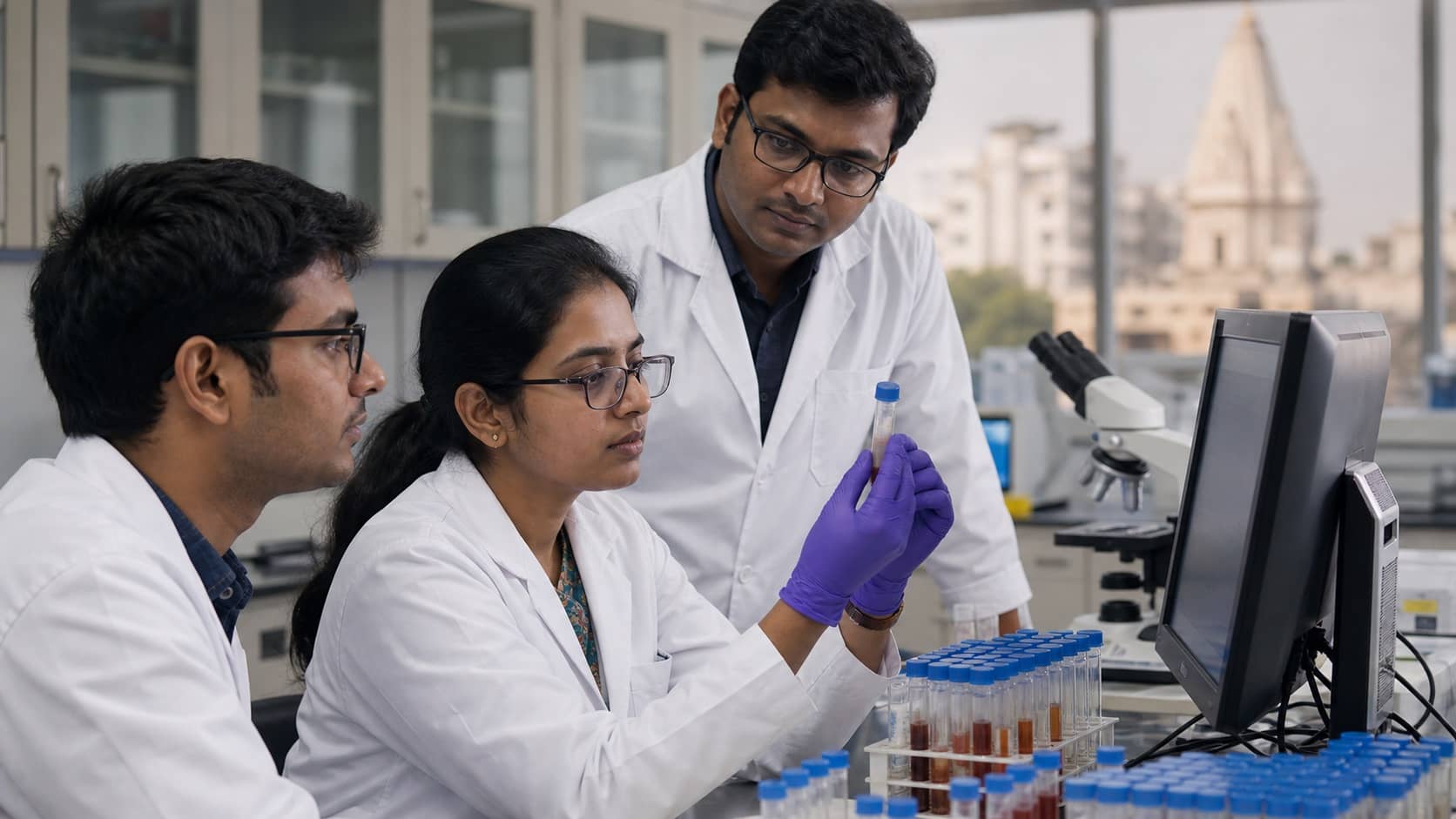
VARANASI: Six research teams at the Institute of Medical Sciences, Banaras Hindu University, have secured Indian Council of Medical Research support worth nearly ₹15 crore for work on gallbladder cancer, antimicrobial resistance and paediatric health.
The projects include efforts to detect gallbladder cancer earlier, identify biomarkers through multi-omics analysis and test approaches that respond to the growing problem of medicines losing effectiveness against resistant microbes. Other work will focus on child health and advanced laboratory investigation. The grants are significant because they support not only equipment and experiments, but the sustained collection and interpretation of clinical evidence.
Researchers associated with the funded work include Professor Manoj Pandey, Dr Shashikala Verma, Dr Rajeev Kumar, Professor Sunil Kumar Rao, Dr Devesh Yadav and Professor Sameer Trivedi, according to the institutional update. The university said more than 200 research proposals had been submitted during the past six months, with Dean of Research Manoj Pandey coordinating the push.
Gallbladder cancer is a particularly important research subject for north India, where clinicians encounter a high burden and many patients arrive after the disease has advanced. A useful early-detection test must do more than perform well in a laboratory; it needs to identify high-risk patients accurately, remain affordable and fit into hospitals where specialised imaging or pathology may be limited.
Antimicrobial resistance presents a different but connected challenge. When bacteria no longer respond to routinely used antibiotics, ordinary infections become harder and more expensive to treat. Research can help identify resistance patterns and new interventions, but hospitals must also improve antibiotic stewardship, infection control and diagnostic testing. A new scientific finding cannot compensate for careless prescribing.
Vice-Chancellor Professor Ajit Kumar Chaturvedi described the grants as an important institutional achievement, while IMS director Professor S N Sankhwar highlighted their potential impact. The scientific value, however, will be measured by protocols, peer-reviewed results and whether the work produces tools that clinicians and patients can actually use.
Large grants also carry obligations. Projects require ethical approval, informed consent where patients are involved, secure handling of medical data and transparent reporting of negative as well as positive findings. Timelines and spending should be monitored without forcing teams to announce conclusions before evidence is mature.
For Varanasi, the funding strengthens BHU’s role as both a treatment centre and a research institution serving eastern Uttar Pradesh and neighbouring states. Patients arriving at IMS-BHU often bring patterns of disease that are poorly represented in smaller studies elsewhere. Properly designed research can turn that clinical experience into knowledge relevant to the region.
The ₹15-crore figure is a beginning, not an outcome. The more meaningful milestones will come when recruitment starts, methods are validated and findings survive independent scrutiny. If that happens, these six projects could give Varanasi a stronger voice in national work on three of public health’s hardest fronts.