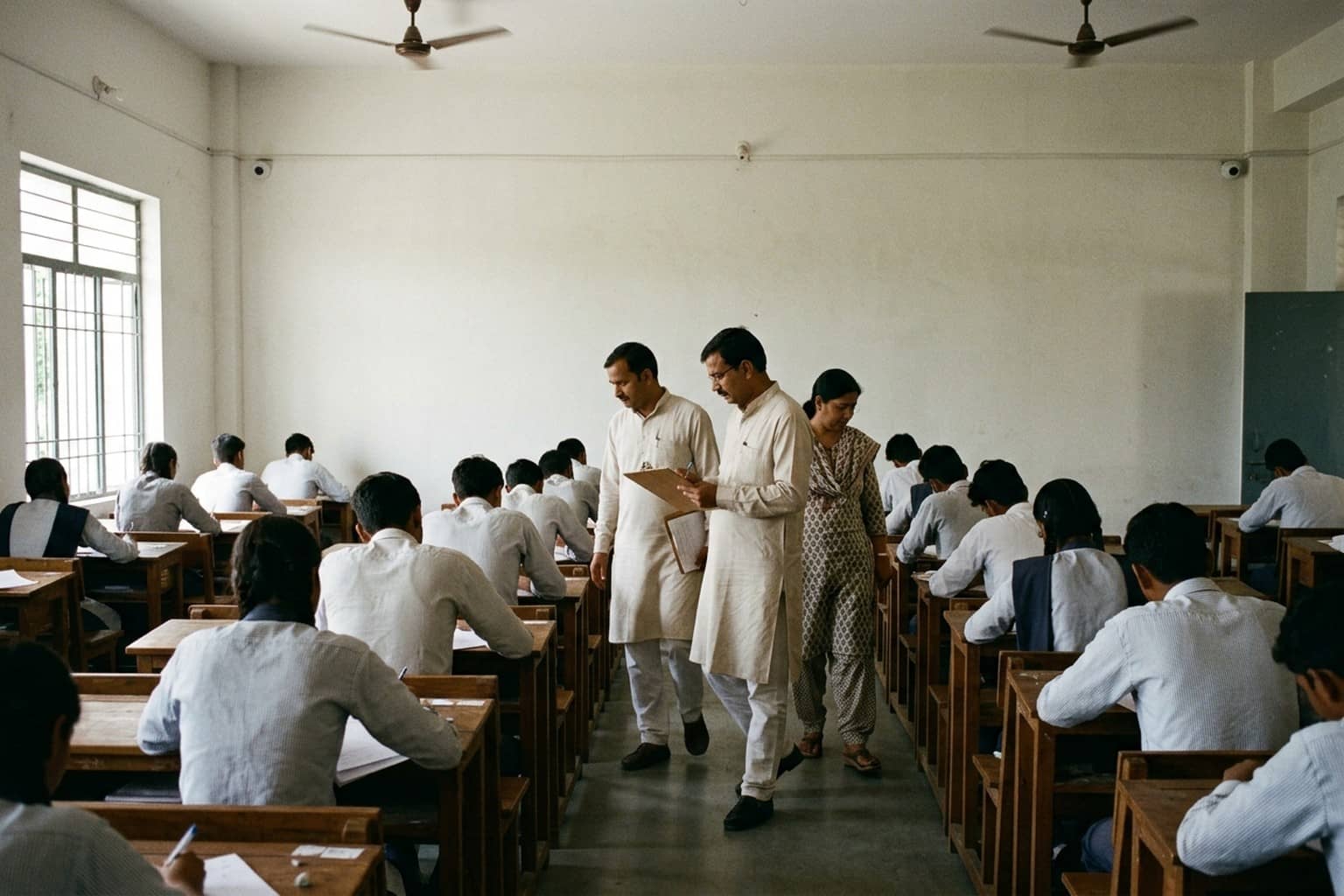
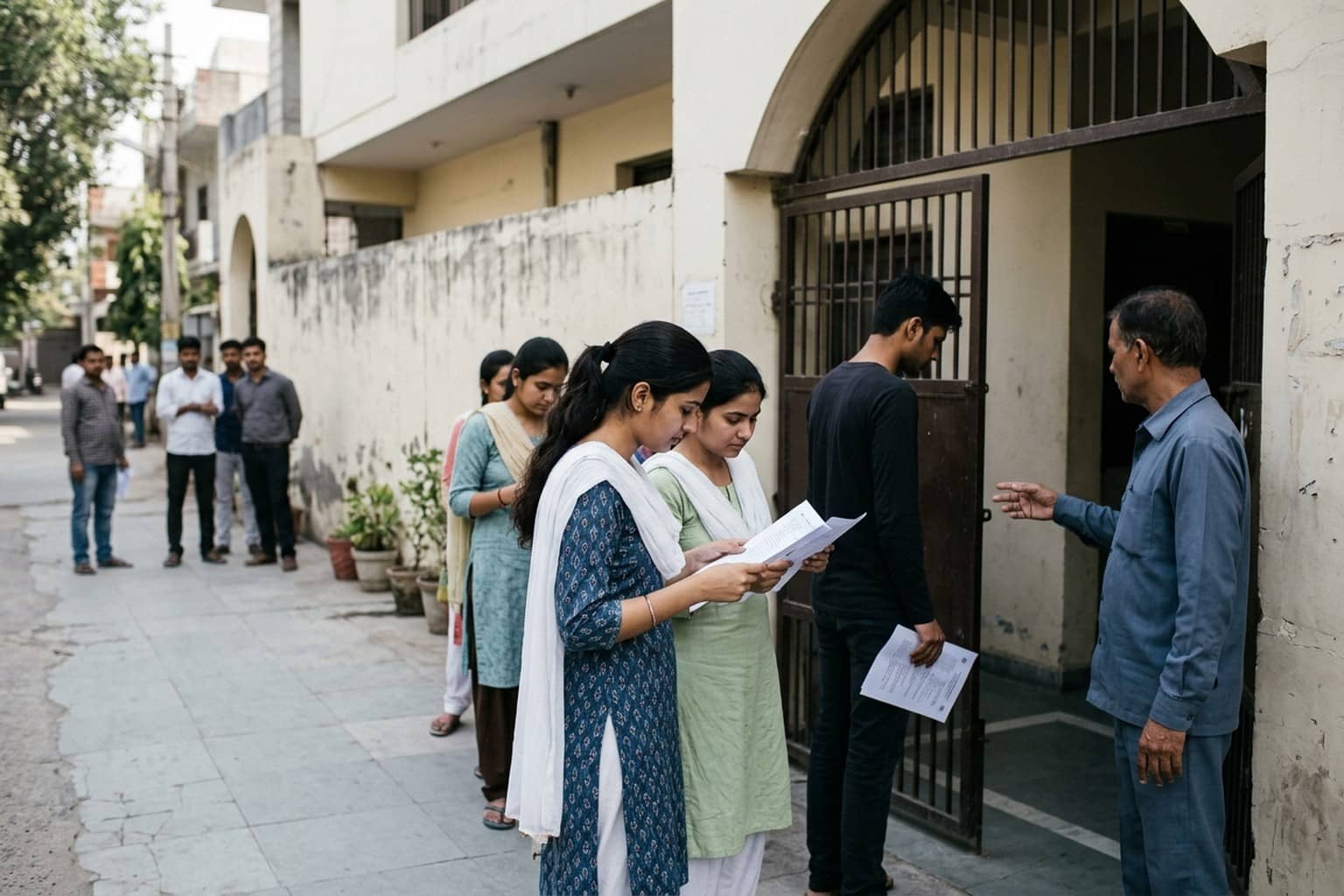
If you are sitting the IBPS Customer Service Associate preliminary exam this October, the call letter on your phone is not enough. IBPS stamps a printed copy at the centre, keeps a photocopy of your ID with it, and sends you home with both. The Online Preliminary Examination for CRP CSA-XVI, the drive still widely known as IBPS Clerk, is scheduled for October 2026. Your exact date, session and venue are printed on the call letter that IBPS linked from its website on 1 October 2026.
Everything below comes from IBPS's own papers: the CRP CSA-XVI page on ibps.in, the Information Handout for the Online Preliminary Exam (English), and the detailed notification dated 1 August 2026. Download the call letter from the login linked on that CSA-XVI page before you travel.
What to pack the night before
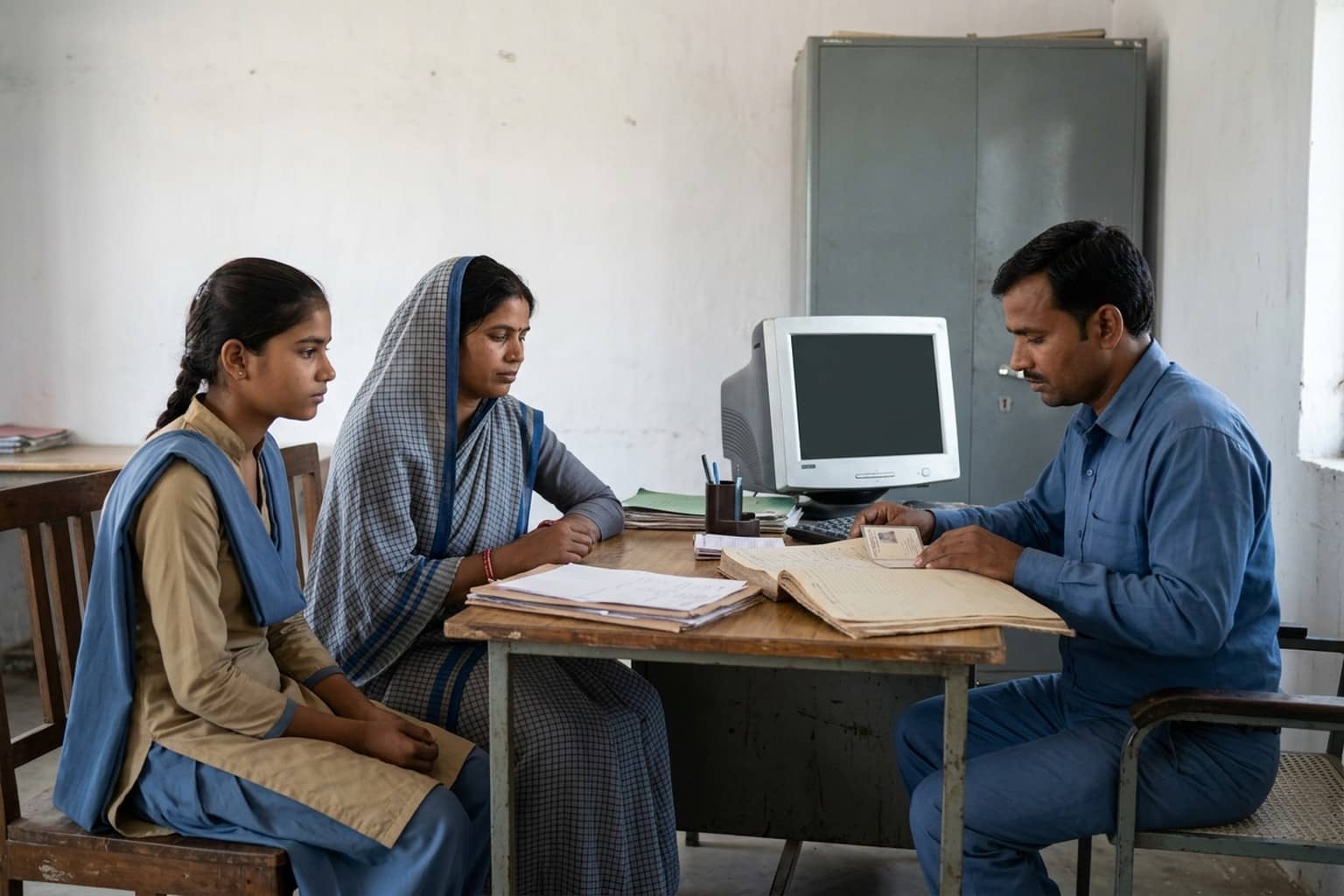
IBPS will not let you into the lab without three things working together. First, a valid call letter for your date and session, with the same passport photograph you uploaded at registration pasted on it. Second, one extra copy of that photograph. Third, a currently valid photo identity proof in original, plus a photocopy stapled to the call letter. The handout calls this set essential. Candidates who turn up without the photo on the call letter, or without the spare photo, are turned away.
Accepted IDs include a PAN card, passport, permanent driving licence, voter's card with photograph, bank passbook with photograph, Aadhaar or e-Aadhaar with photograph, an employee ID, a Bar Council identity card with photograph, a college or university identity card, or a photo ID on official letterhead from a gazetted officer or people's representative. A ration card and a learner's driving licence are not accepted. Your name on the ID must match the call letter exactly. If you have changed your name, carry the original gazette notification, marriage certificate or affidavit.
Carry a ball-point pen for the rough sheets the centre will give you. Write your registration number, roll number, name and exam date on those sheets, and hand them back before you leave. Do not bring a calculator, scale, geometry box, notebook or any electronic device. Mobile phones, Bluetooth sets, earphones, health bands, watches, cameras and anything with a screen freeze or storage function sit on the banned list. Bags, belts, caps, hair-pins and jewellery are also listed as items that should not come inside; IBPS says it cannot promise safekeeping if you leave them at the gate.
Timing, biometric checks and how long you will be there
The objective paper lasts 60 minutes. IBPS still expects you to be at the venue for about two hours or more, and the handout puts the full visit at roughly 150 minutes once entry, logging in, instructions and exit are counted. Reporting time on the call letter is earlier than the start of the test. Late arrivals are not allowed. If you can, walk or drive past the centre a day early so you are not hunting for the gate on the morning itself.
Photograph and biometric data, usually the right thumb, may be captured or checked. Wash off mehndi, stamped ink or colour from your fingers beforehand, and keep both hands dry. If the right thumb is injured, tell the staff at once so another finger can be used. IBPS also advises candidates to hold a valid Aadhaar card, because online Aadhaar verification can run at different stages of the process. Do not change your appearance from the photograph uploaded or captured live at registration.
What the 60-minute paper looks like
The preliminary exam is entirely online and objective. English Language has 30 questions for 30 marks in 20 minutes. Numerical Ability has 35 questions for 35 marks in 20 minutes. Reasoning Ability has 35 questions for 35 marks in 20 minutes. That is 100 questions for 100 marks in three separately timed sections. You have to clear the cut-off in each section. Wrong answers cost one-fourth of the marks for that question; leaving a question blank costs nothing.
Questions appear in English and in the language version you chose for your State or Union Territory at registration. In a clash between the English text and the translation, the English version prevails under the notification, while the handout tells candidates that the translated version is the on-screen reference and English still prevails if there is a discrepancy. Read both carefully if you are attempting in a bilingual paper. Compensatory time of 20 minutes for every hour of exam time applies to eligible candidates with disability, as set out in the notification and handout.
After you finish, and what happens next
The preliminary call letter is not collected. Centre staff stamp it and stamp the photocopy of your ID. Keep both. Anyone shortlisted for the Main examination has to bring that stamped prelims call letter and ID copy along with the Main call letter. Scribe declaration forms, where used, are collected on prelims day. IBPS's window notification places the prelims result in November 2026 and the Main examination in December 2026, with provisional allotment listed for March 2027.
Updated indicative vacancies as on 29 September 2026 stand at 11,663 posts across participating public sector banks for the 2027-28 indent, according to the annexure IBPS posted with its corrigendum. Figures remain indicative until banks report final numbers. For another bank recruitment timeline running in parallel this season, see our guide to the SBI PO 2026 prelims result, marks and Phase III dates. Candidates tracking regional rural bank posts can also read our report on IBPS RRB 2026 applications for 13,441 officer and office assistant posts.
One last pass before you sleep: print the call letter clearly, paste the photograph, staple the ID photocopy, pack the spare photo and pen, and leave the phone and watch at home. The date and reporting time on your call letter override any calendar guess. If a detail on the letter looks wrong, use IBPS's candidate grievance system at cgrs.ibps.in rather than waiting at the gate.