HD Deve Gowda’s Family Performs Chennamma’s Pind Daan in Kashi
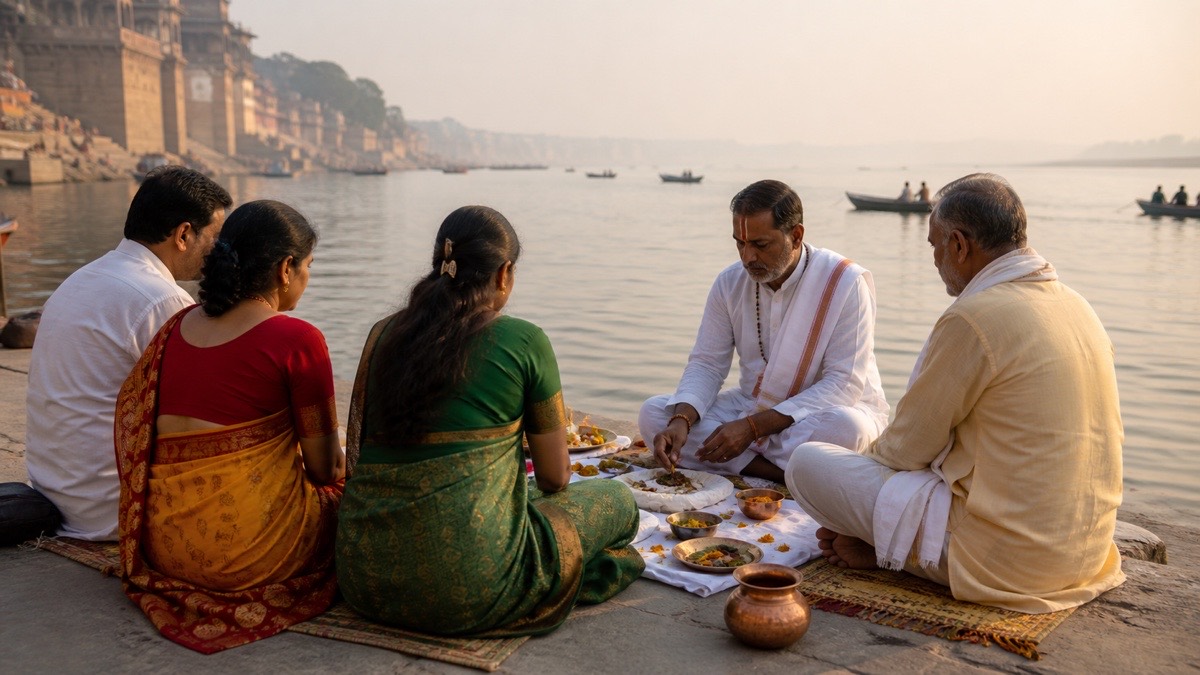
VARANASI: Members of former prime minister HD Deve Gowda’s family performed pind daan in Kashi for his late wife Chennamma Deve Gowda, continuing a tradition that brings bereaved families from across India to the banks of the Ganga.
Chennamma died on July 18, according to the report published on Wednesday. A son performed the rites in Varanasi under the guidance of priests, offering prayers and ritual materials associated with remembrance of ancestors and the spiritual welfare of the departed.
A private moment in a public city
The presence of a prominent political family can quickly turn a religious ceremony into a media event. The central fact, however, is one of bereavement. Images and reporting from the ritual should preserve the family’s dignity and avoid intruding into moments that do not carry a public-interest value beyond confirming the visit.
Kashi occupies a distinct place in Hindu traditions connected with death, memory and liberation. Families arrive for cremation, immersion of ashes, shraddha and pind daan, often guided by hereditary priests who maintain records and ritual lineages. The city’s role is national, drawing people across linguistic, regional and political boundaries.
What pind daan signifies
In the tradition followed by many Hindu families, pind daan involves symbolic offerings—often made from rice, barley flour, sesame and other prescribed materials—to honour an ancestor. Practices vary by community and family custom. The ceremony is not a public spectacle but a structured act of remembrance and duty.
For Varanasi’s priests, boat workers, lodging operators and local administration, visits by large or high-profile families also require coordination. Security arrangements should protect participants without blocking ordinary pilgrims or turning the ghats into an exclusive zone.
The report did not indicate a political programme connected with the ceremony, and none should be inferred. It was a family rite following Chennamma’s death, carried out in a city chosen by millions for the same purpose.
The family’s visit offers another reminder that Kashi’s identity is built not only through major festivals and temple crowds but through quieter rituals repeated every day. Each group arrives with its own grief and history; the city supplies a shared sacred geography in which remembrance can be performed. In this case, the public significance comes from the family name, while the substance remains personal: a son completing rites for his mother on the Ganga’s bank.
The administration should continue to make space for ordinary families performing the same rites. High-profile visits can bring extra police and media, but they should not displace people who have travelled with limited means. Equal access and quiet management are part of the hospitality through which Kashi serves bereaved visitors from every background.
Sources and reporting
Based on Amar Ujala and Dalimss News monitoring of reports published on August 12, 2026. The report states that a son performed the rites for Chennamma Deve Gowda, who died on July 18.
Related Stories
Kashi Marks Baba Lat Bhairav’s Wedding Day After Tilak and Haldi Rituals
Over 800 Doctors Converge as API UP Chapter Conference Opens in Rohania
Chitaipur Arrests Two After Homeguard Anuradha Tiwari’s Alleged Suicide
Lanka Registers Assault Case After Narottampur Youth Dies During Treatment
Storm Uproots Electric Pole in Cholapur’s Jagdishpur; Local Supply Cut