Harahua Camps Offer Food, First Aid and Rest to Kanwariyas
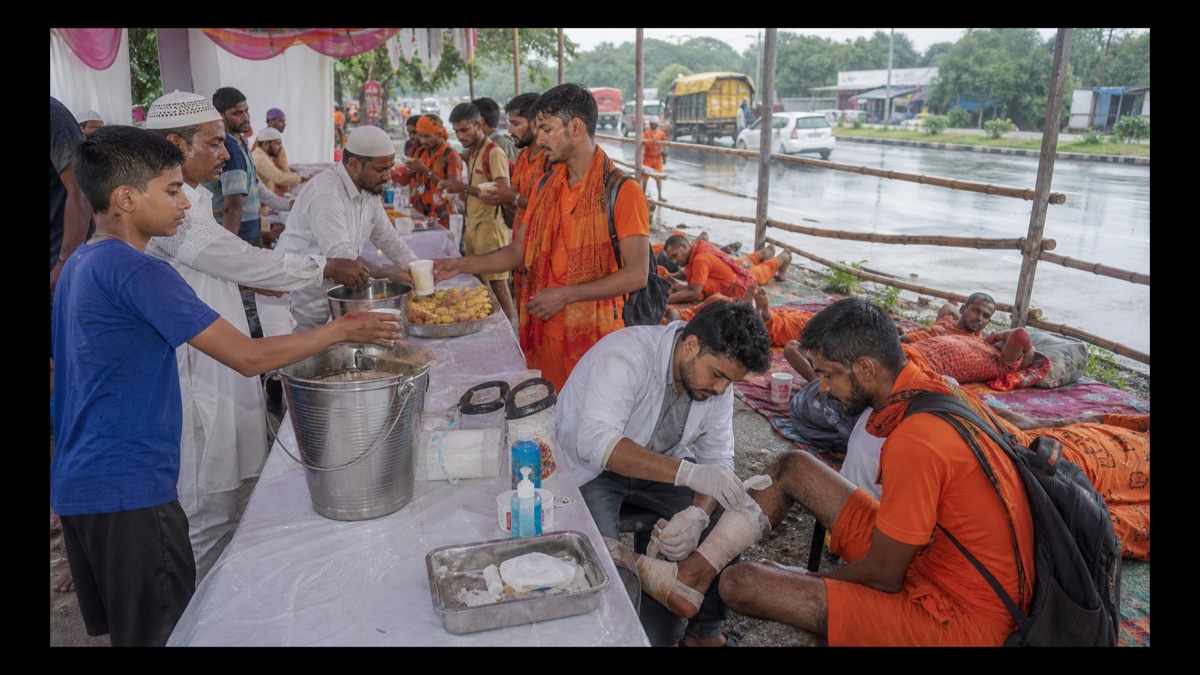
VARANASI: Community-run camps across the Harahua route are giving kanwariyas a place to eat, drink, rest and receive basic first aid as they carry Ganga water towards Trilochan Mahadev. On the third Monday of Shravan, service points were active at Vyasbagh, Harahua market and crossing, Kajisarai, Garhwa crossing and Sato Mahua, among other locations.
The camps offered water, tea, snacks and simple meals without charge. Mats and covered spaces allowed walkers to pause away from traffic. Volunteers also helped guide movement where pilgrim groups and ordinary highway vehicles shared the same corridor. These small interventions can prevent exhaustion from becoming a medical emergency, particularly in humid weather.
At Sato Mahua, New Laxmi Hospital ran a special 24-hour health camp from Sunday into Monday, according to the field report. Staff checked pilgrims, distributed basic medicines and dressed blisters or minor wounds. Foot care is not a side issue on a long pilgrimage: a small blister can become infected when it is repeatedly soaked, rubbed and covered with road dust.
First-aid teams should still work within clear limits. Severe chest pain, breathing difficulty, confusion, collapse, heavy bleeding or signs of heat illness require an ambulance and hospital assessment, not another painkiller at a roadside table. Medicines should be labelled, expiry-checked and given by qualified personnel. A treatment register helps continuity if a patient is later referred.
One of the most encouraging features of the Harahua effort was the participation of Hindu and Muslim residents in the same service network. Volunteers cooked, distributed water and prasad, helped with medicines and managed traffic. That cooperation was practical rather than performative: the route was busy, and every pair of hands reduced pressure on pilgrims and public services.
Camp organisers also carry responsibilities for sanitation and road safety. Drinking-water vessels need covered storage, cooked food should be protected from flies and waste should be removed before it enters drains. Resting areas must be set behind a barrier, not on the highway shoulder. Extension cables should stay dry and generators should be kept away from sleeping spaces.
Pilgrims can protect themselves by drinking regularly, changing wet socks, cleaning minor cuts and avoiding barefoot travel on the carriageway. Those with diabetes, heart disease or other chronic conditions should carry medicines and an emergency contact. A religious journey does not make warning symptoms less urgent.
Harahua’s camps show what local hospitality looks like when it is organised well: a cup of water, a bandage, a dry place and someone directing traffic. The most valuable images are not of scale or ceremony, but of neighbours sharing the routine work that lets strangers complete a difficult walk more safely.
Sources and reporting
Based on an August 17, 2026 field report from service camps across the Harahua route, including a 24-hour health camp at Sato Mahua.
Related Stories

Dalimss 20 Under 40 Varanasi 2026: Meet the 20 Young Achievers Making Their Mark on Banaras

Biker Dies After Thar Hit on Golf Course Road
Court Orders Probe Into Body Handling Lapses
Two Held After Rs 54,000 Robbery Near Rampura
Manduadih Fan Warehouse Fire Burns for Hours; No Deaths Reported