
Gurugram Police File Case Over Moving-Car Stunt in DLF Phase 3
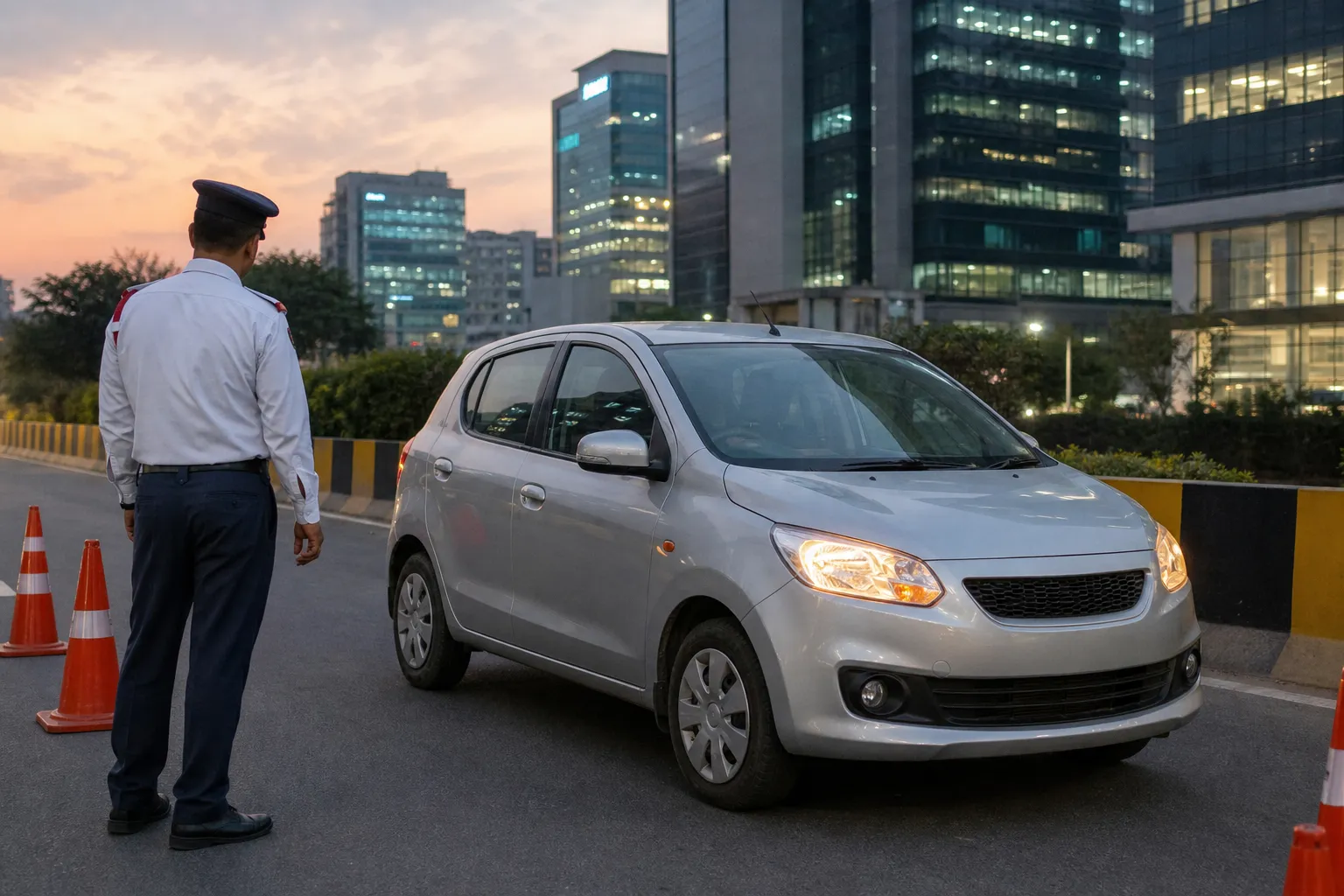
GURUGRAM: Police have registered a case after a social-media video appeared to show two men leaning out of the rear windows of a moving hatchback near Cyber City in DLF Phase 3 while filming one another on mobile phones. Investigators are working to identify the driver and occupants and determine their individual roles.
A sub-inspector noticed the circulating video on Friday, according to the police account. It showed a silver car and appeared to have been recorded on a road in the DLF Phase 3 area. A case was registered at the local police station on Saturday.
Video begins an inquiry, not a conviction
The case invokes provisions relating to dangerous driving and acts that may endanger life or personal safety, along with the Motor Vehicles Act. The registration of an FIR records the allegation and allows investigation; it does not establish guilt. Police must verify the location, date, vehicle, driver and authenticity of the footage.
Investigators can compare road features, camera timestamps and traffic-surveillance records, and trace the registration number if it is visible in original footage. Reposted clips may be compressed, cropped or stripped of metadata, so the first upload and the device used to record it can be important evidence.
Passengers outside the cabin change the risk
Leaning outside a moving vehicle removes the protection of the cabin and seat belt. A sudden brake, pothole, side-swipe or low overhead object can turn a brief stunt into a fatal fall. The person holding a phone is also less able to brace, while the driver may be distracted by passengers moving around the vehicle.
Cyber City and DLF Phase 3 carry dense mixes of office traffic, cabs, buses, pedestrians and delivery riders. Even when a stunt vehicle remains in its lane, other drivers may brake or swerve after seeing people outside the windows. Road-safety enforcement therefore considers the risk created for surrounding users, not only the occupants who chose to perform.
Virality should not become identification by crowd
Police said identities and roles remain under investigation. Social-media users should avoid naming individuals from appearance alone or circulating personal details. Misidentification can harm uninvolved people and complicate a lawful inquiry. The original video can be shared privately with investigators without turning speculation into a public accusation.
The case also presents a prevention opportunity. Police can release verified findings, explain the applicable penalties and ask platforms or creators to avoid rewarding dangerous road content. Enforcement after a clip goes viral is useful, but visible patrols and rapid reporting channels can interrupt the behaviour before an audience amplifies it.
The immediate legal question is who was driving and what each occupant did. The wider lesson is simpler: a city road is not a closed set. A stunt performed for a camera shares its consequences with every rider, pedestrian and family travelling beside it.
Sources and reporting
Original Dalimss News report based on the Gurugram Police case statement and verified road-safety information available on 9 August 2026.
Related Stories

Festive Special to Gorakhpur Gets Gurugram Halt
Fifth Accused Held in Rs 25 Lakh Sector 47 Robbery

Courier Staffer Booked Over 105 Missing One8 Returns

HC Sets Rs 50 Lakh Costs for Accused's Return to India

Gurugram Swimmer, 20, Crosses English Channel