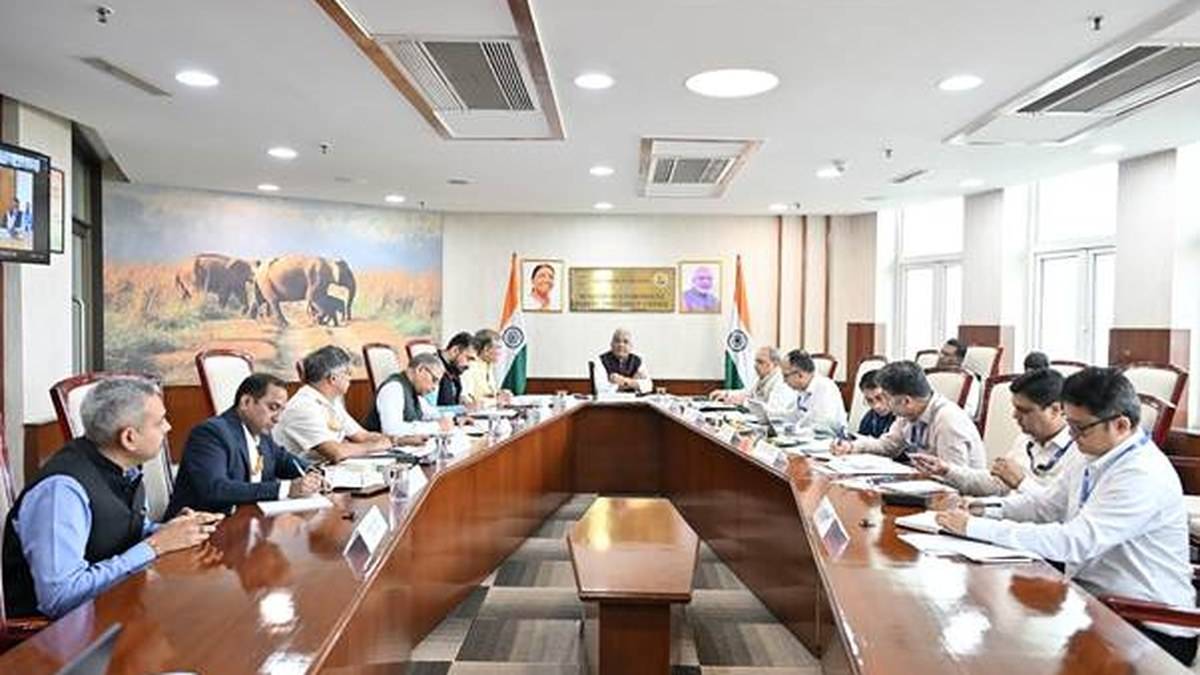
GURUGRAM: Haryana has been told to nominate senior officials for weekly field reporting on pollution control, while faster remediation of Bandhwari's legacy waste and tighter municipal cleaning were ordered at a regional review on Saturday, November 14, 2026. The directions concern civic agencies, industrial operators and residential associations across the National Capital Region, with Bandhwari specifically named among the waste sites requiring faster action.
The Municipal Corporation of Gurugram has its head office in Sector 34. Union Environment Minister Bhupender Yadav chaired the review, which Haryana Environment Minister Rao Narbir Singh joined virtually. The environment ministry's official statement, released at 1.52 pm IST on November 14, sets out the new reporting and enforcement instructions. It does not announce a new completion date for clearing Bandhwari or certify that its accumulated waste has been processed.
Weekly reporting and named responsibility
State governments were directed to nominate secretary level officers to take responsibility for implementing pollution measures through field visits and weekly reports to the Commission for Air Quality Management. The allocation covers seven cities in Haryana, four in Uttar Pradesh and four in Rajasthan. The release does not list the seven Haryana cities or identify the officers who will receive those assignments.
For Gurugram readers, this is a direction to strengthen oversight, rather than evidence that a particular new city monitor has already taken charge. The commission was also asked to issue notices to officers who fail to perform. The statement puts field verification alongside reporting, so the administrative task includes visiting locations where controls are meant to operate.
The review of individual hotspot plans will involve the environment and housing ministries, the Central Pollution Control Board and the air quality commission. Yadav and the relevant state ministers will also undertake field inspections, according to the statement. No Gurugram inspection appointment or public meeting time was specified in the release.
Bandhwari, waste collection and open burning
The minister directed states to close a municipal waste processing capacity gap of 6,747 tonnes per day across the region covered by the review. That is a regional figure. It should not be read as Gurugram's daily waste generation, Bandhwari's daily intake or the quantity left at the landfill.
Bandhwari was named alongside Okhla, Ghazipur and Bhalswa for faster remediation of legacy waste. The directions also cover timely removal of material from secondary collection points, functioning recycling plants and tracking waste from collection through processing. The release gives no separate fresh tonnage, revised budget or contractor award for the Bandhwari site.
Municipal bodies, residential welfare associations and private establishments were asked to provide heating alternatives that do not cause pollution for security and sanitation workers. Ward officers and sanitation inspectors were made responsible for watching for and preventing open burning. For housing societies, the instruction therefore extends to arrangements for staff working outdoors, alongside the wider prohibition on burning waste.
The review also called for physical inspections of more than 3,000 active construction and demolition sites. This figure covers the regional exercise and is not a count of sites in Gurugram alone. Officials were told to prevent open dumping and burning while ensuring waste is lifted and reaches functional processing facilities.
- Review date: November 14, 2026.
- Haryana oversight allocation: secretary level officials for seven cities.
- Reporting frequency: weekly reports to the air quality commission.
- Local site explicitly named: Bandhwari legacy waste facility.
Road cleaning and industrial compliance
Road owning agencies were told to prioritise potholes, damaged footpaths, central verges and paving across the full road width under the commission's framework. Mechanical sweepers are to operate in two shifts, with deep cleaning and removal of silt and construction debris. The statement recorded 3,221 km of roads redeveloped against a regional target of 5,480 km.
Industrial enforcement is a separate part of the same review. The central pollution board was directed to seal 191 identified nonconforming polluting industries that had not even placed orders for the required pollution control equipment. The release does not identify Gurugram units in that group, so it cannot establish that 191 local factories face closure.
State pollution boards were also asked to help smaller enterprises access assistance under the Swachh Pawan Neel Gagan, Swasth NCR scheme for installing pollution control devices. The next administrative steps set out in the statement are nominations, field visits, weekly reporting and enforcement. It contains no fresh Gurugram air quality measurement.
Local background includes the earlier TV and projector price guide, Gurugram Bandhwari case: NGT seeks March to July waste plan and Gurugram GMDA plans five sweepers and shared cleaning schedules. Those separate developments provide context; the November 14 review adds the regional oversight and operational directions described above.