
Gurugram Swings to 12 Per Cent Rain Surplus After 141 mm Falls in Twelve Days
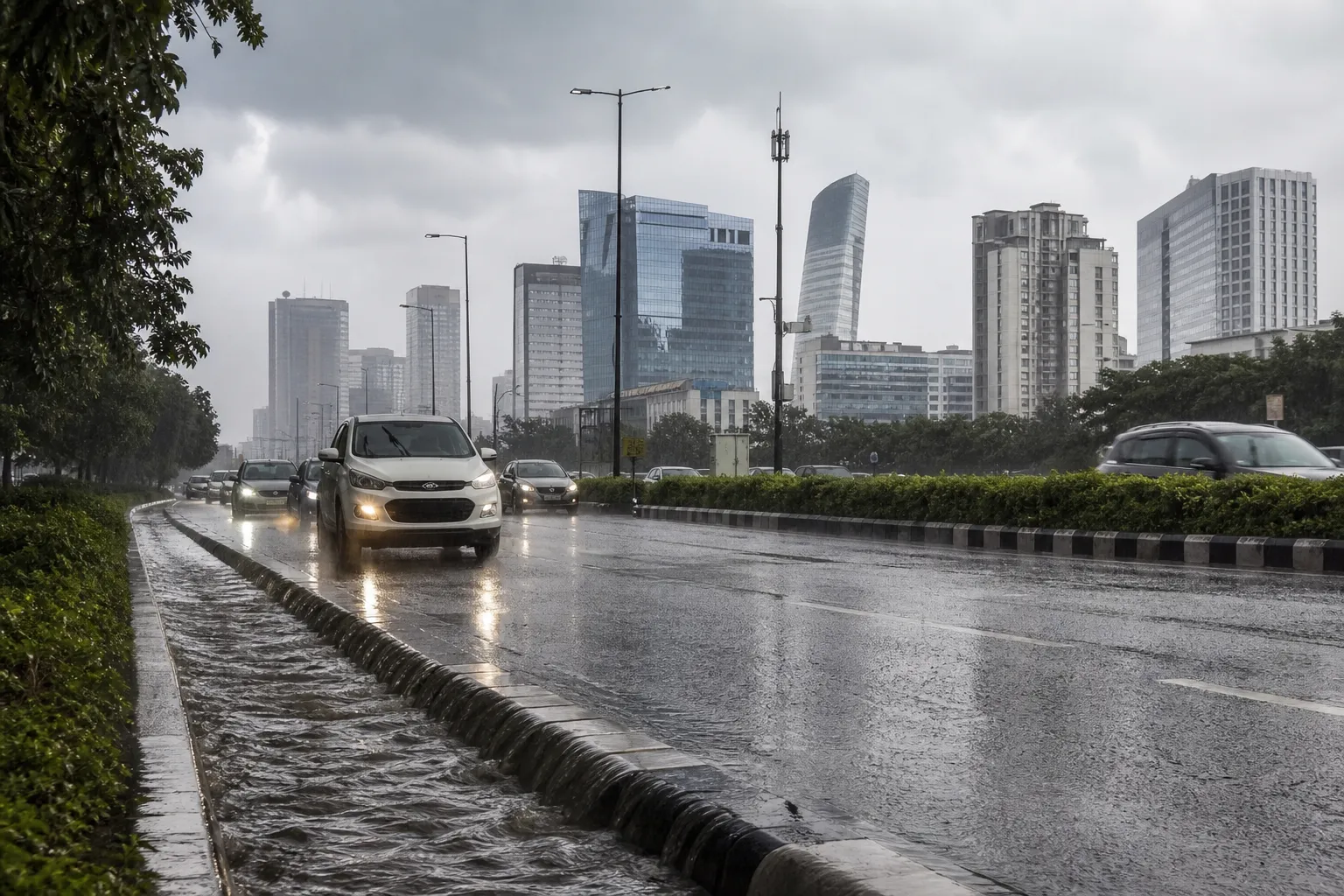
GURUGRAM: Twelve wet August days have rewritten Gurugram's monsoon balance sheet. The district received 140.9 mm of rain between August 1 and 12, lifting the seasonal total since June 1 to 333.9 mm. That is 12 per cent above the 298.1 mm considered normal for the same period.
The turnaround is sharp because July ended on the other side of the ledger. Up to July 31, Gurugram had recorded 193 mm, around 13 per cent below normal. A large share of the season's rain has therefore arrived in a compressed window rather than through evenly distributed showers.
A surplus does not mean the monsoon is comfortable
Seasonal percentages can hide the way rain is experienced on the ground. Farmers, water managers and city engineers benefit most from moderate spells separated by time for soil and drains to absorb water. Intense rain over a few hours can create a statistical surplus while flooding roads, eroding shoulders and overwhelming pumping stations.
Gurugram has already seen that mismatch. The district total may look healthy, yet neighbourhoods have faced waterlogging, outages and damaged roads. Rainfall at one gauge also does not describe every sector; local cloudbursts can hit one catchment while another remains comparatively dry.
The groundwater opportunity depends on where water goes
A strong monsoon can support groundwater recharge only when open soil, ponds and recharge structures receive the runoff. Water rushed through concrete drains into the Najafgarh system leaves the city quickly. Water trapped on asphalt creates disruption without necessarily replenishing the aquifer.
This is why the rainfall figure should be read beside the condition of johads, greenbelts, natural drains and construction sites. Restored catchments and clean recharge shafts can turn part of the surplus into a reserve. Encroached channels and silted inlets turn the same water into a hazard.
Planning must use intensity, not only totals
Civic agencies should publish hourly peak rainfall alongside cumulative totals and map which drains failed at those intensities. A road that floods after 35 mm in an hour needs a different response from one that remains clear through the same storm. The public also needs consistent gauge locations and timings so numbers from different stations are not mixed.
Gurugram's 12 per cent surplus is welcome in a water-stressed region, but it is not a performance certificate for urban drainage. The real monsoon result will be measured later: how much water entered the ground, how quickly roads recovered and whether the concentrated rain left the city more resilient or simply more damaged.
Sources and reporting
Based on India Meteorological Department rainfall figures available on 13 August 2026, covering district totals from June 1 and the 140.9 mm received during August 1-12.
Related Stories

OPPO K14 Plus set for India launch on September 29 via Flipkart

SEBI clears Rs 25 lakh PRIM route for mutual-fund portfolios

Samsung starts One UI 9 rollout on Galaxy S26 phones

Sector 17 Food Court Fire Blasts Two LPG Cylinders
Signature Global Plans 194-Acre Farrukhnagar Villas