BENGALURU: Automated calls are now a routine part of Indian banking and insurance, from EMI reminders to claim status updates, often in the customer's own language. Gnani.ai, a Bengaluru company, builds the speech and language models behind many such systems, by its own account. Since late August it has also been selling something bigger: a full "sovereign AI" stack that banks and government offices can run on their own servers.
Here is what Gnani makes, what the new Artha stack contains, and which of its claims are worth reading carefully.
A voice company first
Gnani's core business is voice AI for enterprises. Its model line-up, as listed on its website, includes Prisma for speech to text, Timbre for text to speech, Warp for speech to speech, and Evon, its large language model. On top of these it sells products such as voice agents for collections, customer support and KYC, speech analytics that score every recorded call, live hints for human call centre agents, and voice biometrics that verify a caller from the sound of their voice.
The company's pitch is about audio quality, or the lack of it. Most speech models, it argues, are trained on clean studio recordings, while real phone calls in India come with traffic noise, low bandwidth and people switching between Hindi and English mid-sentence. Gnani says its models were trained on 14 million hours of real telephonic audio across more than 40 languages, and that its speech recognition ranks first in eight of nine Indian languages on the Kathbath noisy 8 kHz benchmark.
The scale figures vary across its own pages. The homepage says Gnani handles 50 million voice interactions a day for more than 250 enterprises in banking, government and healthcare. Its FAQ gives 30 million daily interactions and more than 200 enterprises. Either way these are company numbers that Dalimss News has not verified.
What Gnani Artha is
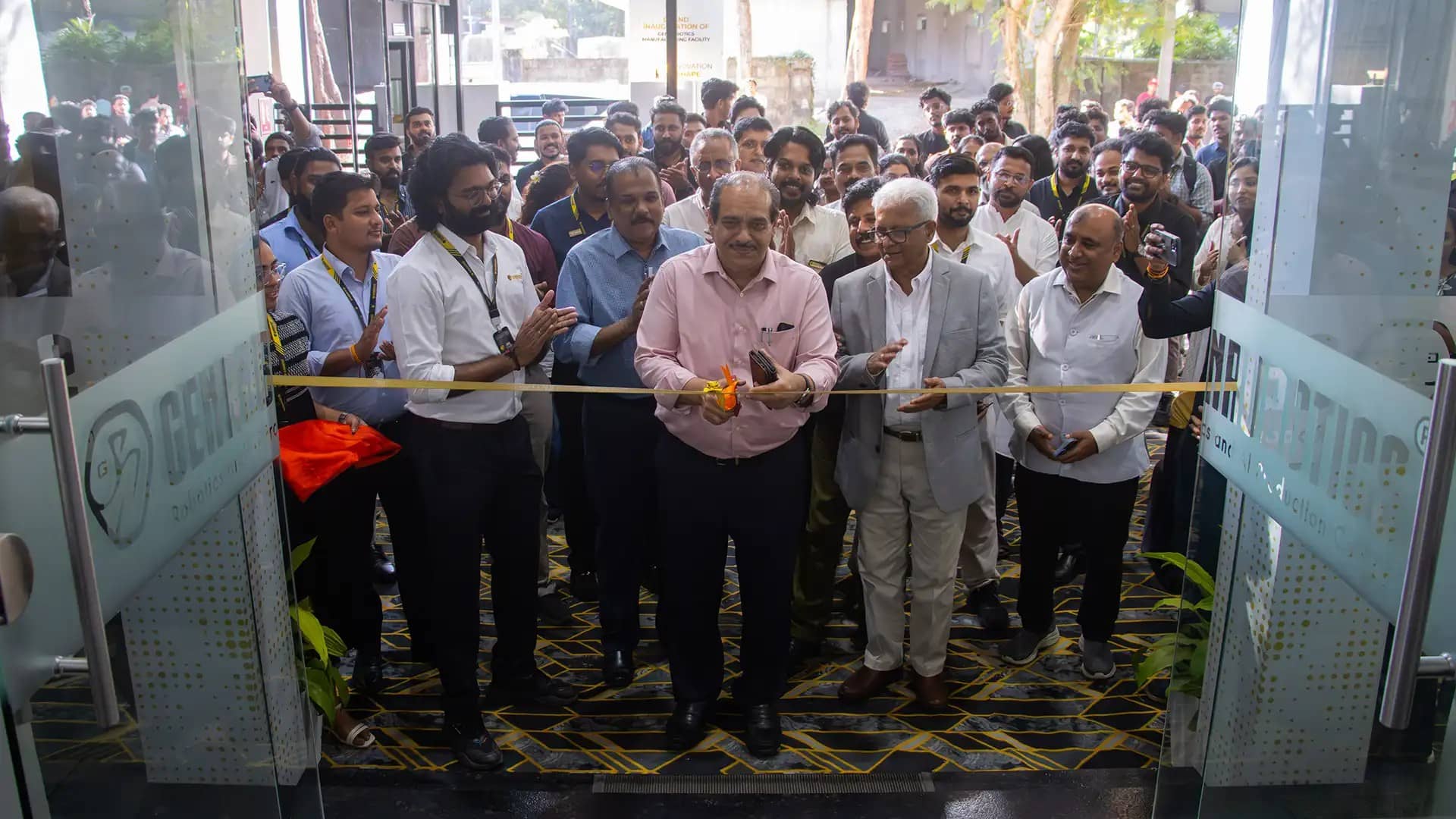
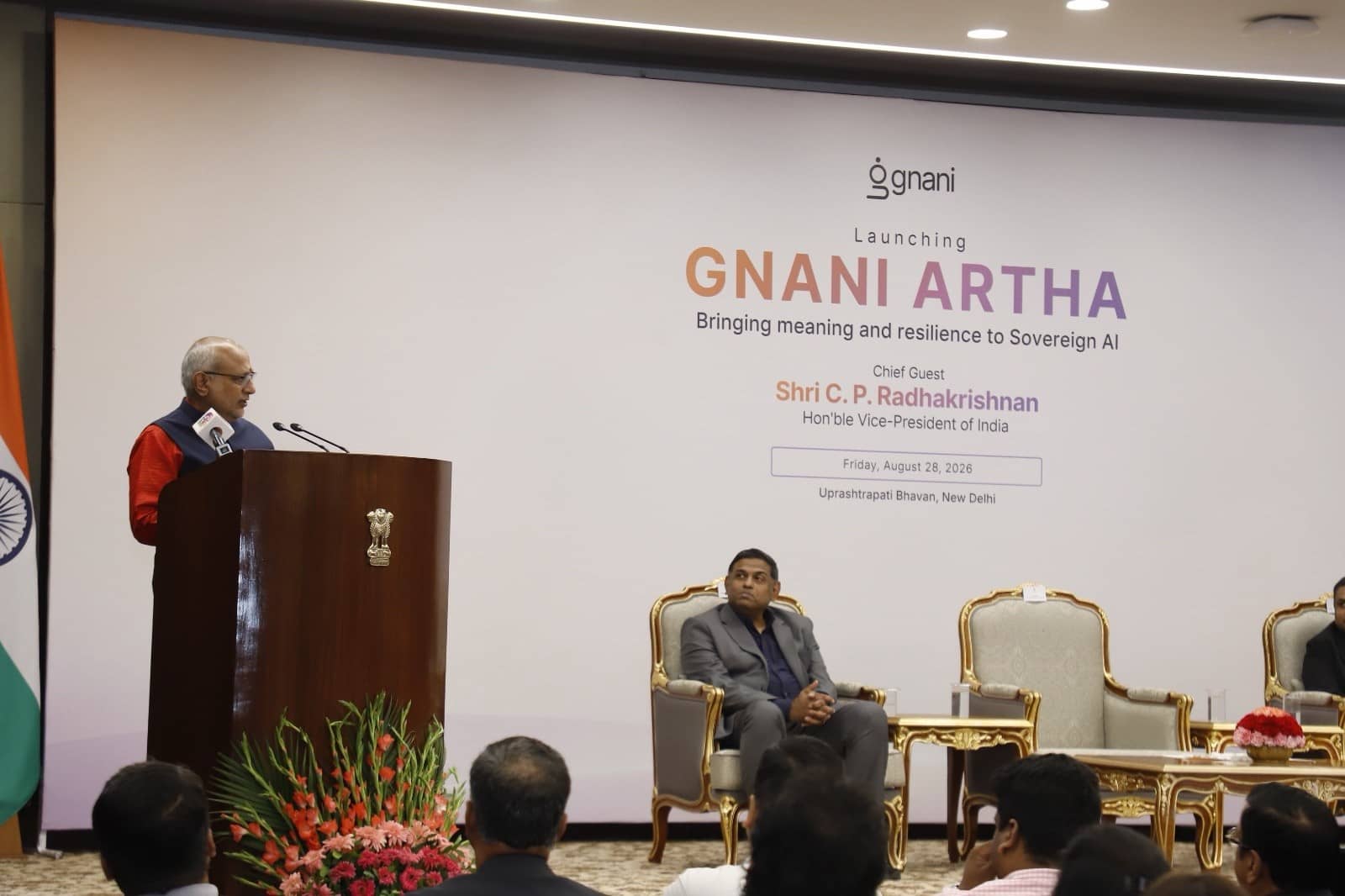
Gnani Artha was unveiled on 28 August 2026 by Vice-President C. P. Radhakrishnan in New Delhi, according to the company's newsroom. The stack has two main parts.
The first is Evon v3.3, a 30 billion parameter language model trained natively across 11 Indian languages, with roughly 3.5 billion parameters active for any given token. Gnani says the weights are open under the Apache 2.0 licence, available on request through Hugging Face, and that the model can run on a single server node. The company rebuilt the tokenizer, the layer that chops text into units for the model, for Indian scripts. That is not a small detail. Indian languages typically need more tokens per word than English, which makes them slower and costlier to process. Gnani claims every model it benchmarked against Evon v3.3 costs at least 2.2 times more per point of Indian-language accuracy.
On MILU, an Indian-language benchmark spanning 11 languages, Gnani says Evon v3.3 beats a 105 billion parameter Indic model on ten of the eleven languages and matches a similar-sized hosted global model. Benchmarks chosen by the company that built the model should always be read with that in mind, and independent testing will matter more over time.
The second part is Plexus, an agentic AI platform. Gnani describes each agent on it as an identity-bearing unit, "closer to an employee than a script", that can be combined with other agents into workflows. The launch release says Plexus is now available to enterprise customers, though the Artha page still invites companies to join a waitlist.
Who it is built for
The use cases Gnani lists make the target clear. For government, it describes agents that take citizen complaints in the caller's own language and spot patterns across districts, find people who qualify for a welfare scheme but have not enrolled, and call beneficiaries when a pension, scholarship or LPG subsidy transfer fails because of a bank or Aadhaar mismatch. For lenders, it describes reading loan applications, bank statements and GST filings and cross-checking them against bureau data.
The selling point for both is that the data stays in-house. Gnani says Artha runs inside a customer's own data centre or private cloud, which it argues helps meet data residency expectations under the DPDP Act and rules from regulators such as RBI and IRDAI. The company also says it is SOC 2 and ISO 27001 certified and supports fully air-gapped deployment.
There is a fair question here about automated calls to citizens and borrowers. Collections calls in particular have drawn complaints in India, and RBI has rules on how lenders and their agents can contact borrowers. An AI agent that calls at scale will need the same guardrails as a human one, and the responsibility sits with the bank or department deploying it.
The people behind it
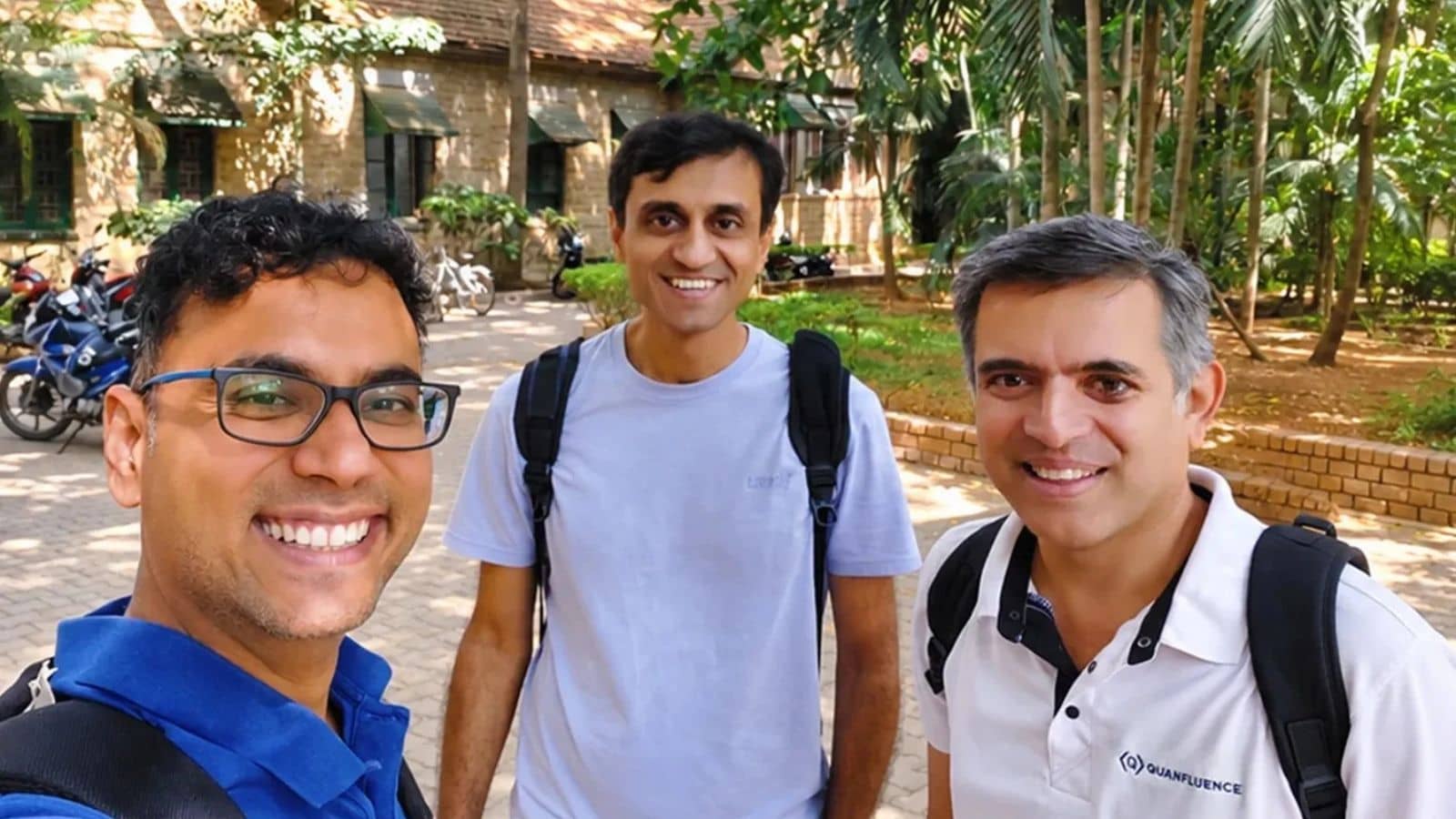
Gnani's leadership page lists Ganesh Gopalan as co-founder and CEO, Ananth Nagaraj as co-founder and CTO, and Bharath Shankar as co-founder and chief product and engineering officer. At the launch, the Vice-President said India's approach to AI focuses on making it "open, affordable, and accessible", and congratulated the company on the milestone, according to Gnani's release.
Gnani is part of a wider push to build Indian-language AI at home rather than rent it from global platforms. Dalimss News has covered Sarvam's Vision 2.1 document model for 22 Indian languages and ShepHertz's offline AI models shown at a drone expo, both aimed at similar sovereignty concerns.
What to watch
Three things will show whether Artha matters beyond the launch. The first is how many outside developers actually download and test Evon v3.3 once access opens up. The second is the first named bank or state department to run Plexus agents in production. The third is independent benchmark results on Indian languages, which would settle the cost and accuracy claims better than any company table can.