
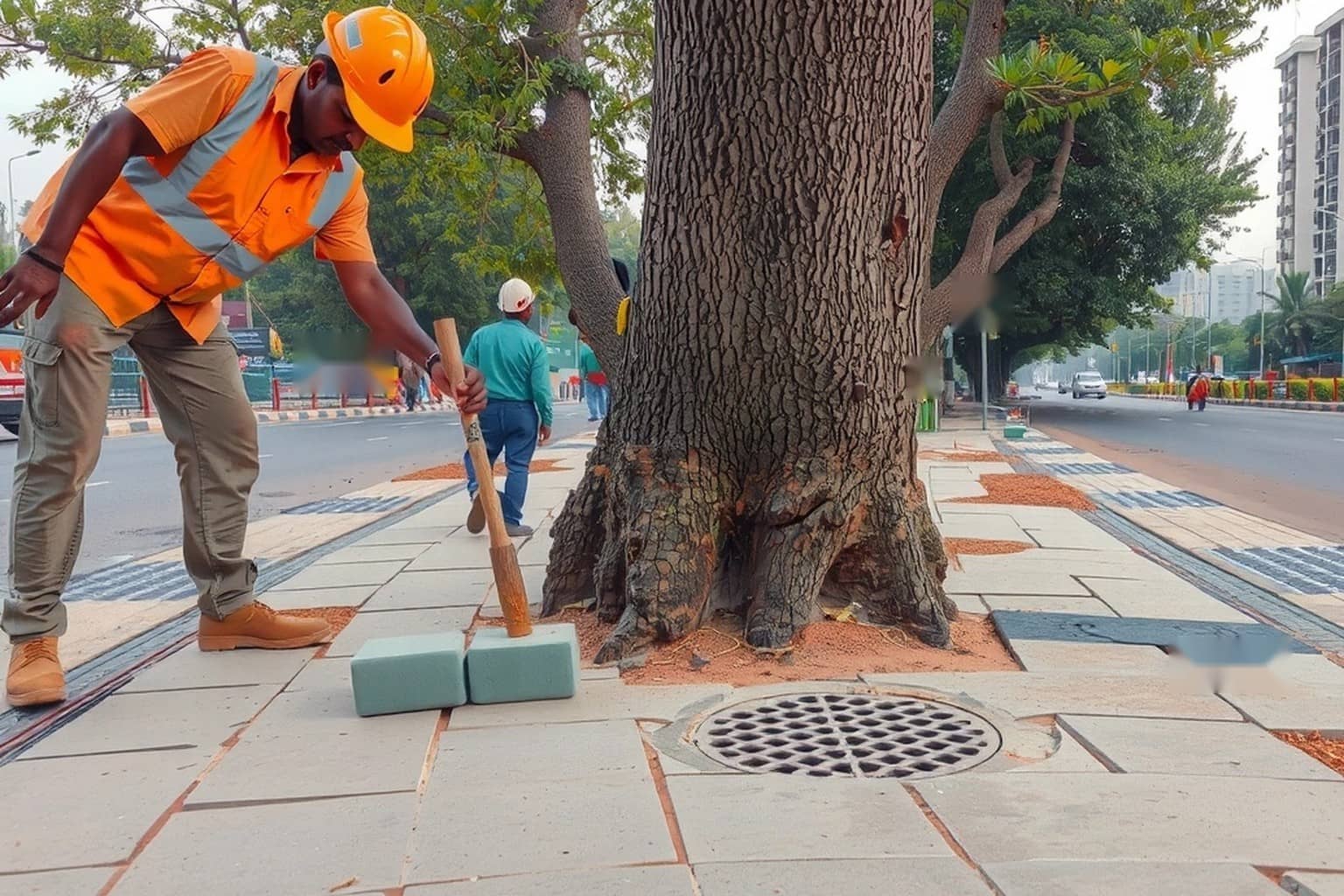
GURUGRAM: Engineers at the Gurugram Metropolitan Development Authority (GMDA) will now have to account, every day, for how much footpath they have repaired and how much they plan to fix next, under directions issued by Chief Executive Officer PC Meena on Tuesday.
The instructions came out of a review meeting on footpaths that Meena chaired at the GMDA office, where he asked officers to give priority to both building new footpaths and repairing old ones across the city, officials said.
Meena told the engineering wing to review progress daily and set clear targets, GMDA said in a post on its official X account after the meeting. According to GMDA officials, executive engineers are to inspect footpaths in their own areas, get repairs done without delay, and report the kilometres repaired along with the next day's target.
Two of the rules deal with what pedestrians actually trip over. Wherever a road gully, the inlet that takes rainwater from the road into the drain, is built, the footpath beside it has to be fixed at the same time instead of being left broken. Manhole covers, too, must be kept level with the road and footpath around them.
That second point is less minor than it sounds. A cover that sits a few inches above the paving, or has sunk below it, is a trip hazard for anyone walking after dark and a hard jolt for a scooter that rides up onto the edge of the road.
Trees get priority over straight lines
Meena also made saving trees a priority in footpath work. If a tree stands where a footpath is planned, the alignment will be changed if needed, the authority said. GMDA added that green belts would be improved and the existing greenery kept.
There is a separate rule for private builders. According to GMDA officials, any footpath that a developer or builder lays within the right of way (ROW) now needs the authority's prior approval. The engineer concerned will check the footpath's cross-section and its alignment with manholes, so that the covers stay visible and can be reached.
Officials said the direction followed cases in which builders had paved over manholes while making footpaths, leaving the chambers hard to locate when maintenance crews came looking for them.
The authority has been working on the same problem for a few months. In August, its road maintenance officers were told to inspect their stretches every month and give pedestrian safety the same weight as the carriageway. Later that month, GMDA teams cleared 49.5 km of right of way and took the anti-encroachment drive onto footpaths, cycle tracks and walkways.
Hidden or open chambers have hurt people in the city before. In August, a nine-year-old girl was seriously injured after falling into an uncovered manhole in a Sector 95 society. That chamber was inside a private complex, not on a GMDA road, but it showed how little it takes for a missing or buried cover to cause harm.
The directions apply to roads that GMDA itself maintains, which are mainly the master sector roads and other arterial stretches. Most internal roads inside sectors are looked after by the Municipal Corporation of Gurugram, so a broken footpath on a residential lane is usually a complaint for MCG rather than GMDA.
Tuesday's directions came on a day when GMDA teams were also cleaning footpaths and roadside channels in Sector 23 and along Sheetla Mata Road, according to the authority's own updates.
For people on foot, the real test is whether repaired stretches stay level once utility crews return to dig. The daily kilometre reports would let residents check progress road by road if GMDA chose to publish them. The authority has not said whether it will.
No deadline for the citywide repairs was mentioned in the directions made public. The first sign of change may be simpler to spot: whether the next road gully built on a sector road comes with a finished footpath beside it.