Girl Dies After Snakebite in Chaubepur Village; Rescuers Urge Rapid Hospital Care
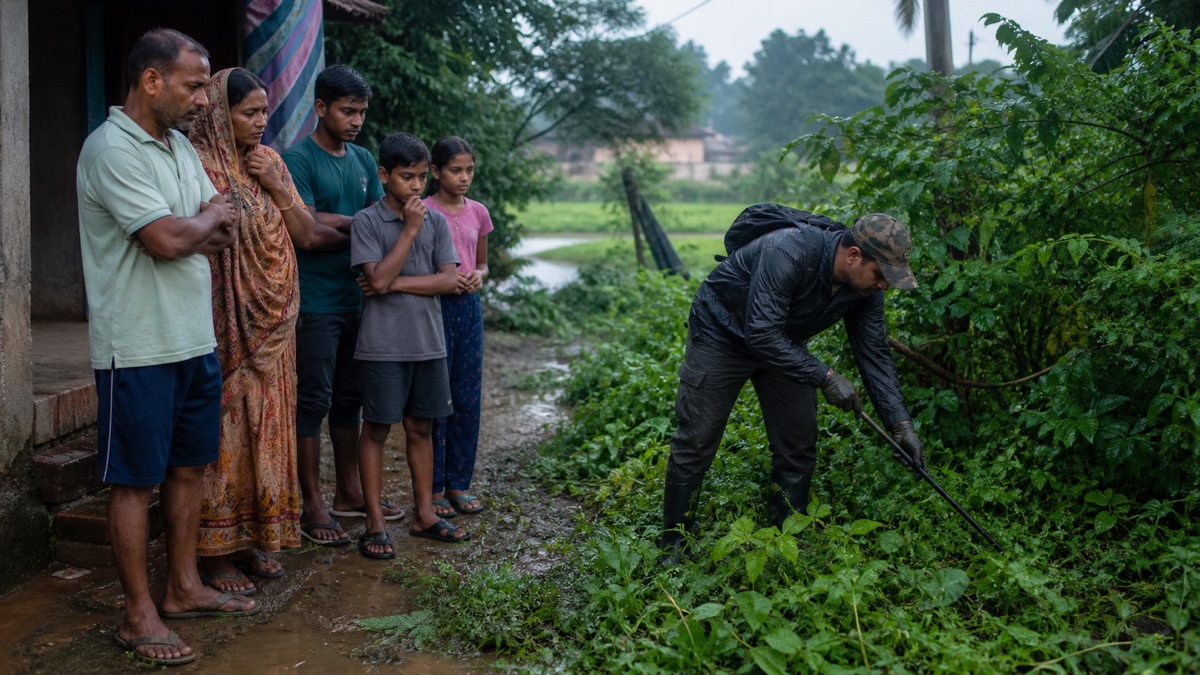
A girl died after being bitten by a snake in Narayanpur Kasihar village under Chaubepur police station on Sunday morning, a fatal incident that has again put the focus on the narrow window for medical treatment in rural snakebite cases. The bite was reported at about 5 am. The child was identified in the local account as Naina, daughter of Brijesh and Manisha.
After residents alerted the Sarvesh Wildlife Conservation Institute, a team led by its president, Sarvesh Kumar, reached the village and inspected the area. The rescuers searched the surrounding vegetation in an effort to locate and safely remove the snake, but it had moved away before they arrived. The species was not confirmed in the information available at the time this report was prepared.
That uncertainty matters. Families often lose crucial minutes trying to identify or catch a snake, even though hospital treatment should come first. A person who may have been bitten should be kept as calm and still as possible and taken immediately to the nearest health facility capable of assessing snakebite and administering antivenom when clinically indicated. Nobody should attempt to seize or kill the animal. A photograph from a safe distance can sometimes help, but it is never worth another bite.
Wildlife rescuers also cautioned against cutting or burning the wound, sucking out venom or tying a tight tourniquet around the limb. These practices do not reliably remove venom and can create additional injury or interrupt blood circulation. Traditional remedies and faith healing can also consume the time in which breathing support, observation and antivenom may save a life. Symptoms may not appear dramatic at once, which is why medical monitoring is essential even when the bite site looks small.
The early-morning setting is familiar in monsoon months. Snakes may enter homes, sheds and courtyards seeking dry shelter or following rodents. Residents can lower risk by using a torch at night, wearing closed footwear outdoors, keeping bedding off the floor where practical, clearing clutter near walls and sealing gaps around doors and drains. Food grain and household waste should be stored in ways that discourage rodents.
The death in Narayanpur Kasihar is a private tragedy for one family, not a spectacle. Public discussion should avoid circulating distressing images or blaming relatives without a verified treatment timeline. The useful response is to make ambulance numbers, antivenom-capable facilities and trained rescue contacts visible at village level. Chaubepur’s health and administrative teams should also review whether residents know where to go after a bite. In snakebite emergencies, calm first aid and rapid hospital care—not an attempt to capture the snake—offer the best chance of survival.
Sources and reporting
Based on a report from Narayanpur Kasihar and the response of Sarvesh Wildlife Conservation Institute. The report did not specify the snake species or treatment timeline.
Related Stories

Dalimss 20 Under 40 Varanasi 2026: Meet the 20 Young Achievers Making Their Mark on Banaras

Biker Dies After Thar Hit on Golf Course Road
Court Orders Probe Into Body Handling Lapses
Two Held After Rs 54,000 Robbery Near Rampura
Manduadih Fan Warehouse Fire Burns for Hours; No Deaths Reported