Ganga Reaches 65.8 Metres in Varanasi; Boats Stopped as Ghats Disconnect
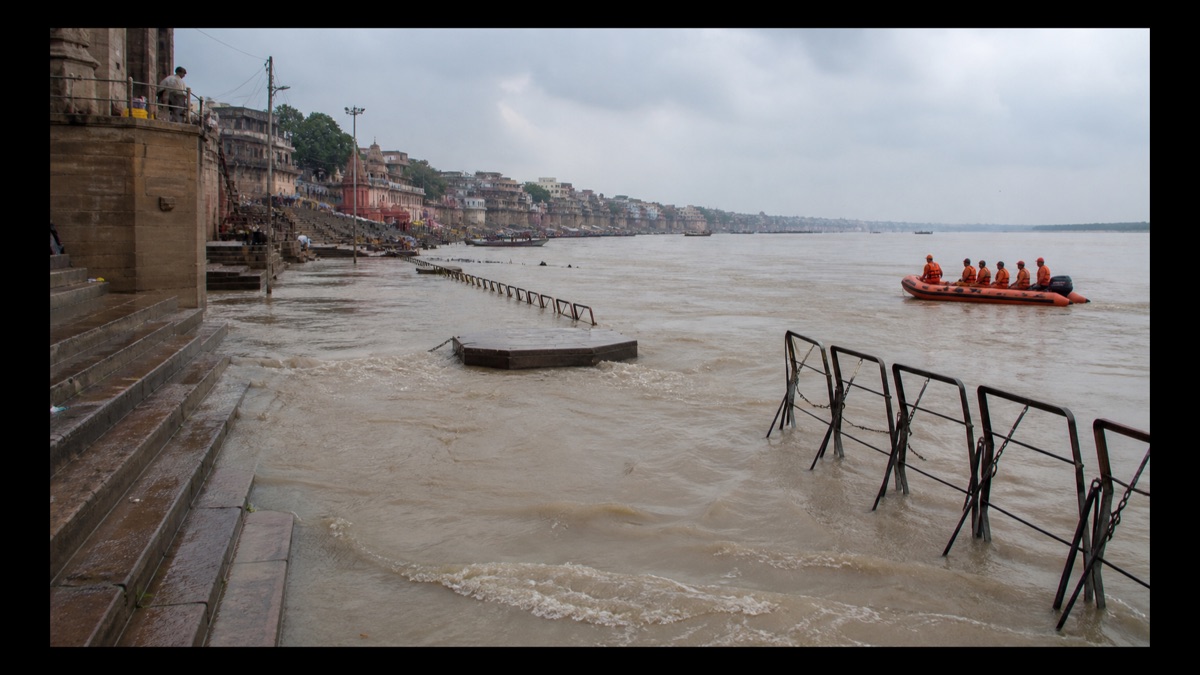
VARANASI: The Ganga stood at 65.8 metres at 8 am on Monday and was reported to be rising rapidly, submerging lower steps and breaking the walking link between many of Varanasi’s ghats. Boating had been stopped since Sunday, while water police and NDRF teams maintained round-the-clock monitoring.
The local report described a rise of about 20 centimetres an hour around the time of observation. That pace can change quickly and should not be projected forward as a simple calculation. Rainfall and releases upstream move through the river system unevenly, which is why the Central Water Commission’s latest gauge bulletin matters more than an old social-media update.
Varanasi’s warning level is 70.26 metres and the danger mark is 71.26 metres. The city’s recorded high cited in the report was 73.90 metres in 1978. Monday morning’s reading remained below the warning threshold, but a river does not need to cross that line before a ghat becomes unsafe. Steps, railings, changing rooms and electrical fittings can be submerged much earlier.
The report said routes connecting 84 ghats had been interrupted by water. That affects more than tourism. Priests, vendors, sanitation workers, residents and people arranging cremations may have to use longer routes through narrow upper lanes. Signage at each blocked section is necessary because a visitor entering from another ghat may not know the normal walkway has disappeared.
The boating suspension should be followed without exception. Operators and passengers cannot judge current strength from the surface, and submerged structures can damage a hull. Water police and NDRF craft are working vessels with trained crews, not evidence that recreational boating is safe.
District teams were using drones and river patrols to watch vulnerable stretches. Technology helps identify crowding and stranded people, but basic behaviour remains decisive. Residents should keep children away from the edge, avoid bathing at unapproved points and never step onto a flooded platform to test the depth. Electricity near water, loose stone and algae add risks beyond drowning.
People in low-lying areas should keep identity papers and essential medicines together, charge phones and follow official relocation instructions if issued. Rumours about embankment breaches or sudden releases should be checked with the district administration before forwarding.
The Ganga’s rise is a normal monsoon process with potentially dangerous local effects. At 65.8 metres, Varanasi was not at the official warning mark, but its riverfront was already changing by the hour. The appropriate response is neither panic nor complacency: respect the closures, watch verified readings and give the river more space than it appears to need.
Sources and reporting
Based on Central Water Commission figures and local safety arrangements reported on August 17, 2026. River readings and rates change hourly.
Related Stories
Railways Clears Banaras–Prayagraj Rambagh MEMU Pair
Haryana Clears Phase 2 Metro Civil Works Package
MLC Forms Reach 30 Over Two Days; Still No Papers Filed
Italian Woman FIRs Alleged Gurugram Romance Scam
Varuna Reverse Flow Floods Low Homes Near Pulkohna Again