
Five Electric Passenger Boats Begin Pilot Operations on the Ganga in Varanasi
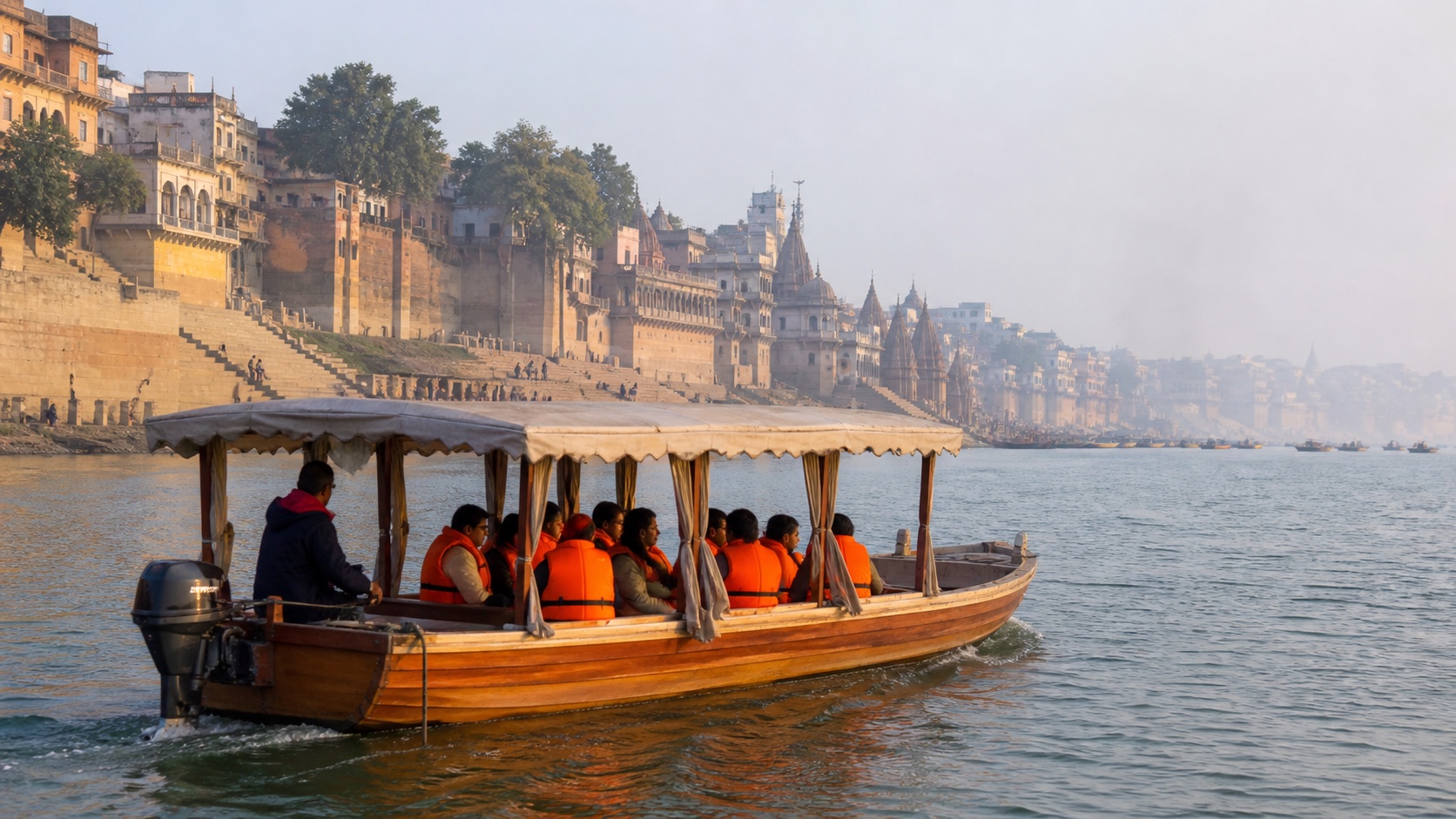
Five converted electric passenger boats have begun operating on the Ganga in Varanasi under a pilot led by the Varanasi Development Authority with GAIL (India). Mayor Ashok Kumar Tiwari inaugurated the first vessels at Namo Ghat on July 23. The wider first phase covers 20 conventional boats that are to be converted in stages, making the launch a test of technology, cost and boatmen’s experience rather than a citywide replacement overnight.
Each pilot boat uses a 15-kilowatt electric outboard motor and a 20-kilowatt-hour lithium battery pack, according to the authority. The package includes a charger, digital display, GPS tracking and remote monitoring. Officials say a boat can complete at least three round trips between Assi and Namo Ghats under normal operating conditions, with charging infrastructure installed at selected points.
The most immediate change is acoustic. Diesel engines are part of the everyday soundscape on the river, and quieter motors could improve the experience for passengers, residents and boat workers. The authority also expects lower air and water pollution and estimates that operating costs may fall by as much as 80 per cent. That figure should be tested over months of real service, including battery ageing, maintenance and electricity costs.
Five boatmen whose vessels were converted—Deepak Sahani, Rakesh Sahani, Jyotilal Nishad, Deepak Kumar Sahani and Shubham Sahani—were recognised at the launch. Their role is central. A transition designed without boat operators can fail on charging time, repair access or lost earning hours. Their logs of trips, breakdowns and passenger loads will provide evidence that a ceremonial ride cannot.
Safety remains non-negotiable. Electric systems operating on water require protected wiring, trained maintenance, battery-fire protocols, life jackets and clear passenger limits. Remote monitoring can flag technical problems, but it cannot replace inspections or an emergency plan at the ghats. Public reporting should also track whether charging equipment remains functional during crowded and wet conditions.
If the pilot performs well, Varanasi could offer a model for other river cities and inland-waterway routes. The useful model will not be a photograph of five new boats; it will be a transparent account of emissions avoided, costs saved, uptime and income retained by boat families. The Ganga is both a working river and a sacred landscape. Cleaner propulsion succeeds only if it respects both realities.
Passengers can contribute to the evaluation too. A simple feedback channel could record ride comfort, perceived safety and service reliability without turning the pilot into a tourism gimmick. The most useful comparison would be route-for-route performance against a similar conventional boat, measured over the same season. That would show where electric conversion already works and where the equipment or operating model still needs adjustment.
Sources and reporting
Based on the Varanasi Development Authority’s July 23, 2026 launch record and technical details supplied for the pilot.
Related Stories
Festive Special to Gorakhpur Gets Gurugram Halt
Fifth Accused Held in Rs 25 Lakh Sector 47 Robbery

Courier Staffer Booked Over 105 Missing One8 Returns

HC Sets Rs 50 Lakh Costs for Accused's Return to India
Gurugram Swimmer, 20, Crosses English Channel