BENGALURU: A pomegranate or grape farmer in Maharashtra makes the same calls every week. When to run the drip, how long to run it, and whether the humid spell after last night's rain is the start of a fungal attack that needs a spray. Most of those decisions are still made by eye and by habit. Fasal, an agritech company that has been selling farm sensors since 2018, wants them made from data instead.
The company, whose legal name is Wolkus Technology Solutions Private Limited, has its corporate office in Bengaluru and its registered office in Lucknow, according to its privacy policy. It makes field sensors, weather stations and irrigation controllers, and ties them to a mobile app that gives crop-specific advice. Its focus is horticulture, the fruit and plantation crops where water, sprays and timing make a large difference to what a farmer earns.
What the hardware does
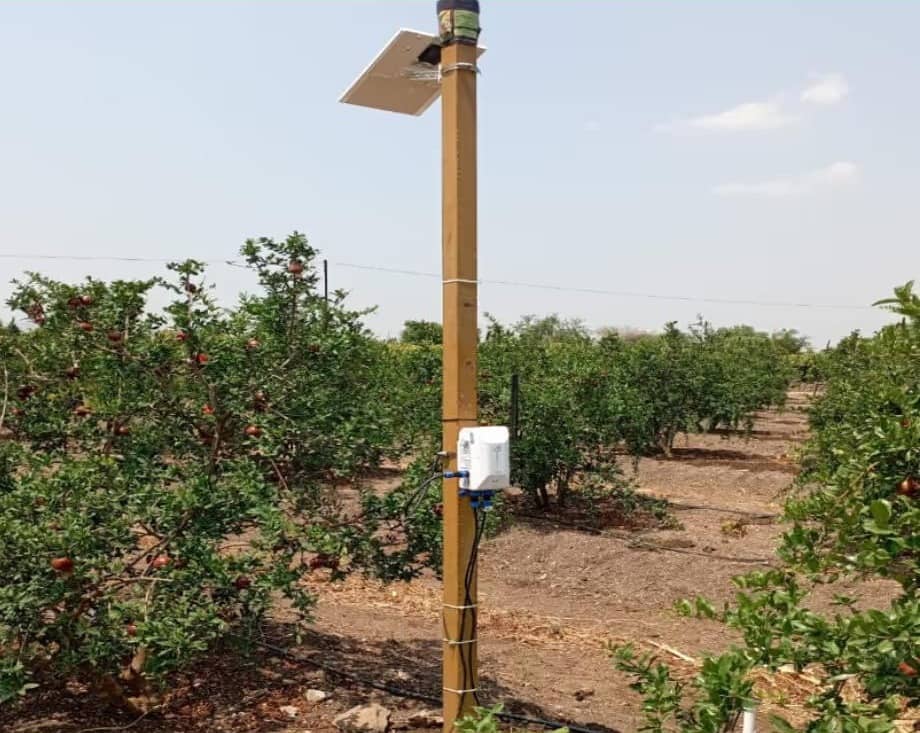
The flagship device is the Fasal Main Unit, which the company also calls its weather station. It is a pole-mounted unit with 12 sensors, a small solar panel and soil probes whose depth can be adjusted to match the root zone of the crop. It feeds the app with readings on the field's microclimate and soil, and the company's agronomic models turn those readings into alerts.
The alerts are the point of the product. Fasal says the Main Unit gives disease and pest prediction, spray advisories that tell a farmer the right window to apply pesticide or nutrients, and irrigation alerts that warn against both under and over watering. It also tracks growing degree days, a measure of accumulated heat that helps predict crop stages, and vapour pressure deficit, which relates to how much water a plant is losing to the air.
The smaller Soil Moisture Unit 6.0 does one job: it measures soil moisture and temperature and tells the farmer when to irrigate. Both devices support Bluetooth, so readings can be pulled from the unit even where mobile networks are weak, and both get software updates over the air.
Irrigation from a phone
The newer part of the catalogue is automation. FasalJet is a controller that connects to a farm's pump and solenoid valves on the drip lines, so a farmer can start, stop or schedule irrigation from the app or from a touch screen on the unit. Fasal's page makes a practical case for it: farmers no longer need to walk to the field at night to switch a pump on, which it notes also avoids night-time encounters with animals.
One feature is aimed squarely at rural power supply. If electricity cuts out during an irrigation cycle, FasalJet resumes from where it stopped once power returns, and sends a mobile alert about the interruption. Anyone who has farmed on a feeder with patchy three-phase supply will see why that matters. The company also lists FasalJet Pro for fertigation, which adds fertiliser dosing to the same system, and a Fasal Hub.
Every installation, according to the product pages, comes with doorstep delivery and installation, a one-year warranty, a free first-year subscription and a service helpline. Fasal does not publish prices on its website, so Dalimss News is not able to say what a farmer would pay for a unit or for the subscription after the first year.
What it claims so far
Fasal's own figures are large. It says it supports farmers across more than 13 states and manages over 75,000 acres, and that its irrigation advice has saved 52 billion litres of water. It also claims a reduction of 127,426 kg of pesticides and 54,965 tonnes of avoided greenhouse gas emissions, and says its pest and disease guidance cuts spray costs by 18 to 30 percent. The company says it has built crop models for more than 100 crops.
These are company numbers and have not been independently audited, as far as its website shows. Savings of this kind depend heavily on what a farmer was doing before, so results on one farm can look very different from another.
The product videos on its site are offered in Marathi, Telugu, Gujarati and Kannada as well as English, which gives a fair idea of its main markets. FasalJet is meant for farms that already have drip irrigation. The product page describes it as a smart controller paired with solenoid valves on the drip lines, so a farmer without drip would need that system first.
On recognition, Fasal lists a National Startup Award from the Government of India in 2022. The crops featured on its site include grapes, pomegranate, mango, orange, guava, papaya, custard apple and apple, which reflects where it has found its customers.
Where it fits in Indian farm tech
Most farm tech in India has been about finding buyers or financing inputs. Fasal sits in the smaller group that works inside the field, alongside drones and robots. Dalimss News has explained how Niqo Robotics uses cameras to spray only where weeds are and how SUIND's Bumblebee drone sprays tall crops. Fasal's approach is quieter: it does not spray anything, it tells the farmer when spraying or watering is worth doing.
For a farmer with a few acres of fruit, the question is whether the savings on water, power and sprays cover the cost of the sensor and the subscription within a season or two. That depends on the crop, the farm and the price, which is the detail missing from Fasal's public pages. For a country where groundwater in many fruit belts is falling, the larger idea, watering by measurement instead of by routine, is hard to argue with.