DLF-2 Residents Flag Power Network Safety Risks
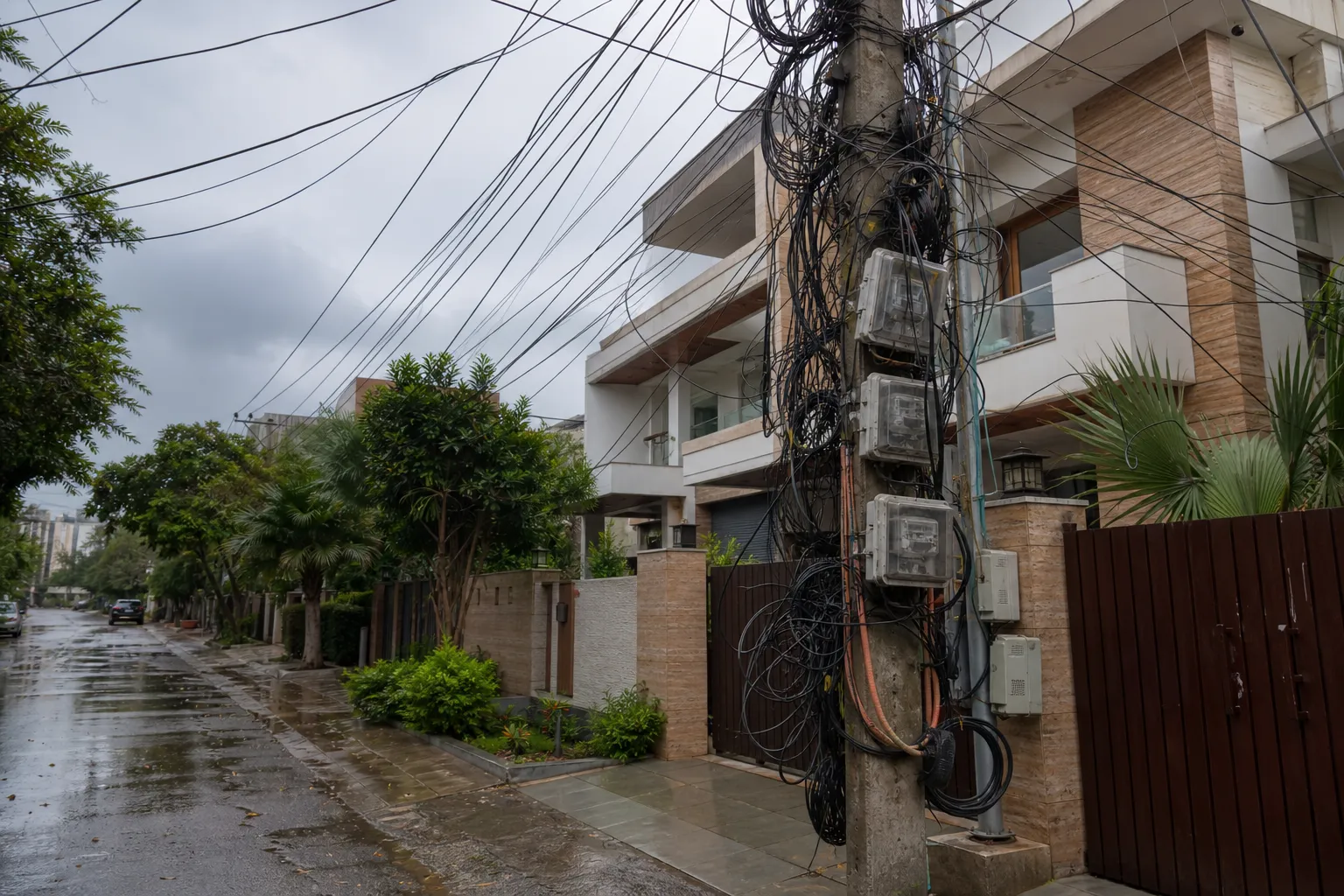
GURUGRAM: Residents of DLF Phase 2 have sought a detailed safety inspection of the colony's electricity distribution network, pointing to frequent outages, tangled cables and clusters of meters mounted on poles. Their complaints have become more urgent during the monsoon, when waterlogging and exposed or low-hanging connections can create an added electrical hazard.
According to residents, several poles carry multiple meters packed close together, with cables running in different directions. In some lanes, meters have been fixed to boundary walls while wiring passes close to the ground. They say such arrangements need to be checked for loose joints, damaged insulation and loads that may exceed the capacity of older connections.
Residents have also reported fire incidents involving poles and meter clusters at several locations. Firefighters and local response teams prevented major damage in some cases, they said. These accounts have not produced a public technical finding on the cause of every incident, but they are sufficient to justify a preventive audit rather than waiting for another emergency.
Power cuts are the other everyday complaint. During Gurugram's hot and humid months, repeated outages affect homes, lifts, water pumps and people working remotely. Residents have requested secure meter panels, tightening or replacement of ageing connections and additional transformer capacity wherever a load assessment shows it is needed.
DHBVN says transformer capacity is adequate
Dakshin Haryana Bijli Vitran Nigam has offered a different view on parts of the complaint. Superintending engineer Manoj Yadav said transformer capacity in DLF-2 was adequate and additional transformers had been installed where required. He also said meters were placed outside homes in line with Haryana government policy and that their outside installation was not itself a problem.
The two positions are not necessarily irreconcilable. Adequate transformer capacity at colony level does not rule out unsafe cable management, loose connections or overloaded local meter assemblies. Equally, the presence of meters outside a house does not establish that an installation is unsafe. A joint lane-by-lane inspection would replace competing claims with a documented technical assessment.
That review should identify poles with dense meter clusters, cables within easy reach, signs of overheating and stretches prone to standing water. Each fault could then be logged with a repair deadline. Residents would also benefit from a simple channel for reporting sparks, burning smells or damaged wiring without navigating multiple complaint desks.
DLF-2 is an established neighbourhood, but ageing infrastructure needs periodic strengthening as household loads rise. The issue is not merely the inconvenience of a power cut. In the monsoon, sound maintenance is a public-safety requirement. A transparent audit by DHBVN, followed by targeted repairs, would be the quickest way to address genuine risks while separating them from concerns that do not require network expansion.
Sources and reporting
Based on verified resident representations from DLF-2 and the response of the DHBVN superintending engineer.
Related Stories
Biker Dies After Thar Hit on Golf Course Road
Court Orders Probe Into Body Handling Lapses
Two Held After Rs 54,000 Robbery Near Rampura
DTCP Notices 30+ Buildings Over PGs in SL-3
Thar Driver Held After Dwarka Expressway Crash