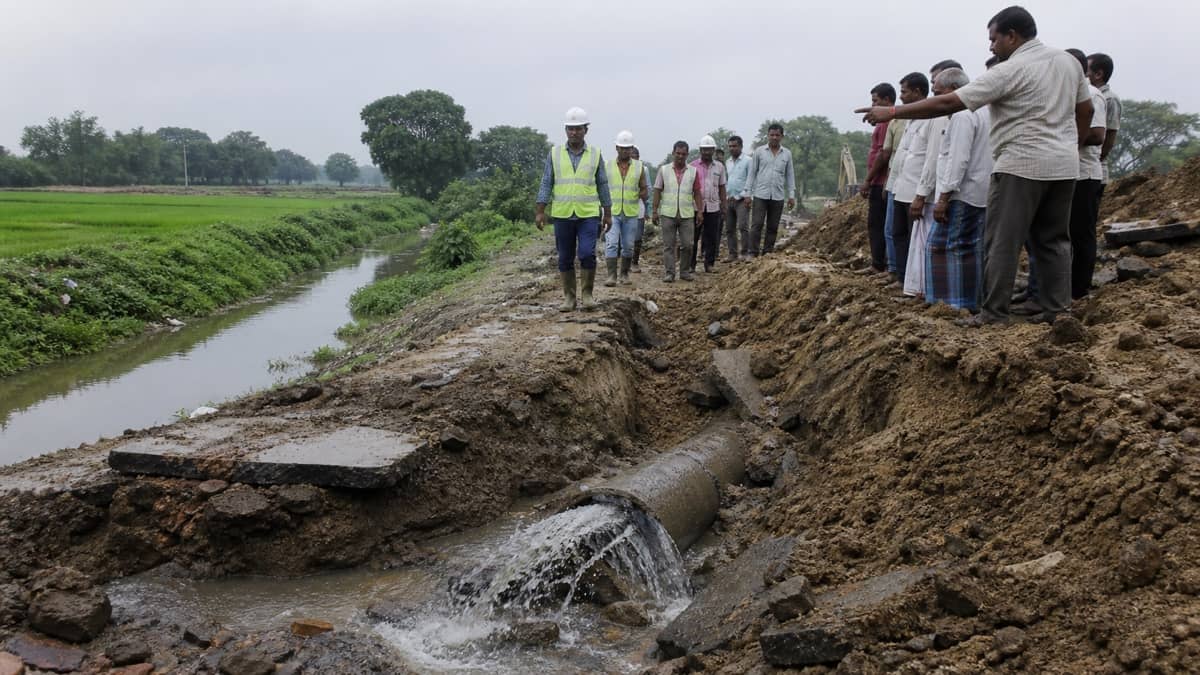
VARANASI: Residents near Khalispur and Kapildhara say a damaged sewage pipeline leading to the Dinapur treatment plant has been leaking towards the Varuna and adjoining farmland for as long as two years.
The line carries wastewater from areas including Kazzakpura, Hanuman Phatak, Rajghat and Prahlad Ghat towards the 140-million-litre-per-day sewage treatment plant at Dinapur. Villagers allege that a crack in the route allows sewage to escape continuously before it reaches treatment. They say teams have visited and taken photographs after complaints, but a lasting repair has not followed.
Residents including Ramayani Devi, Manisha Maurya and Adarsh Yadav described persistent odour, mosquitoes and damage along field edges. Those observations should be taken seriously, but claims about disease or the precise quantity of sewage cannot be confirmed without sampling and flow measurement. The responsible agency must establish whether the discharge is sewage, how much is escaping and where it enters the river system.
The Dinapur facility was inaugurated in December 2018 as a major component of Varanasi’s wastewater infrastructure. A treatment plant can protect the river only if the network delivers sewage to it. A cracked rising main or gravity line turns installed treatment capacity into a misleading number: the plant may be functioning while part of its intended inflow bypasses it.
An urgent technical inspection should pressure-test the section, map the fracture and check whether soil movement, corrosion, joint failure or unauthorised excavation caused the damage. Teams should secure the area before digging because saturated ground around a large sewage line can collapse. A temporary bypass or controlled pumping arrangement may be needed while the pipe is isolated.
Water and soil samples should be collected upstream, near the suspected entry and downstream, with results placed in the public record. Farmers also need an assessment of affected land rather than a verbal assurance. If crops or soil have been damaged by a public asset’s failure, the administration should explain the process for documenting and deciding claims.
The initial report did not include a detailed response or repair deadline from the utility or contractor. Both should be sought. Responsibility may sit with Jal Nigam, an operating contractor or another network agency depending on the handover and maintenance agreement; residents should not have to navigate that internal division themselves.
The Varuna’s condition is shaped by many drains, but every preventable leak matters. Dinapur was built to intercept and treat the city’s sewage. If a line has been bypassing that system for two monsoons, the fix is not another visit with a camera. It is excavation, repair, testing and a date on which clean flow to the plant is restored.