CHENNAI: A typical refinery, steel plant or power station already has hundreds of CCTV cameras, and most of that footage is never watched. Detect Technologies, founded in February 2016 at the IIT Madras Research Park, builds software that turns those existing cameras and sensors into round-the-clock safety and operations monitors.
Its main product is a platform called T-Pulse. In July 2026 the company announced a collaboration with US oilfield equipment maker NOV and integration partner SGT to roll T-Pulse out across select NOV manufacturing operations. Here is what the platform does, who backs the company, and what remains to be seen.
The problem it is going after
Detect's about page makes the case with numbers from the International Labour Organization: about 330,000 people die in work accidents each year, and 395 million suffer non-fatal injuries. The company argues that safety walkdowns and audits only sample a site a few times a year, while the conditions that cause accidents can appear in seconds.
Its pitch is that sites do not need new hardware to close that gap. T-Pulse runs on the CCTV, sensors and control systems a plant already has, and the company says most deployments go live within days.
What T-Pulse watches
The platform is split into five areas, according to Detect's website. The safety suite is the core. It flags workers missing helmets, gloves or fall protection gear, people entering red zones near moving equipment, fires, leaks and breaches of permit-to-work rules. A separate module tracks entry, occupancy and time spent in confined spaces such as tanks.
The security module watches perimeters for fence climbing, digging or objects thrown over walls, and the company says it can detect firearms and other weapons in live feeds. Detect says a privacy layer is built into every feed. For long assets such as pipelines it offers automated surveillance, including drones.
The other three areas cover operations and quality, where cameras check that procedures are followed step by step and map congestion on the shop floor; reliability and maintenance, which supports operator rounds and asset inspections; and turnaround planning for the large scheduled shutdowns that refineries and plants go through.
How a camera becomes a safety monitor
The basic idea behind systems like T-Pulse is computer vision. A model is trained on large numbers of labelled images, for example workers with and without helmets, so it learns to spot the difference in a live video frame. The software then checks each camera feed against rules set for that site, such as which zones need fall protection or who is allowed inside a fenced area.
When a rule is broken, the system raises an alert for a supervisor, usually with a clip or still image as proof. Detect describes its safety suite as being built around each customer's own Life Saving Rules, which means the alerts are tuned to a site's procedures rather than a generic list. The value comes from coverage: software can watch forty feeds at once, which one human guard cannot.
The NOV deal and other customers
In the 29 July 2026 announcement on Detect's site, NOV said T-Pulse would be deployed across select manufacturing operations, with SGT handling deployment and integration with existing business systems. NOV's chief technology officer, David Reid, is quoted as saying the collaboration gives the company a scalable foundation for turning site data into actionable intelligence. Detect founder and CEO Daniel Raj David is quoted calling it another step toward making real-time safety intelligence the standard across critical industrial infrastructure.
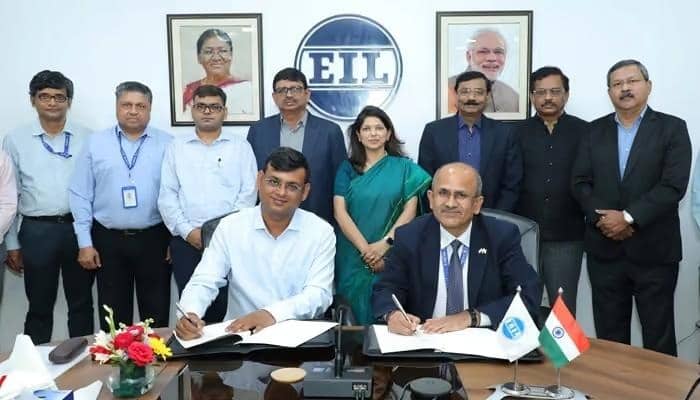
The company's announcements page also lists a global agreement with Vedanta, a partnership with consulting firm RLG International, drone surveillance for Oil India's crude oil pipelines, and a 2024 memorandum of understanding with state-run Engineers India Limited to use AI, cameras and drones to monitor safety and progress at construction sites.
Detect says it now monitors more than 340 industrial sites for Fortune 500 operators across North America, Europe and Asia Pacific. It does not name most of those customers, so the figure is the company's own.
Who backs it
According to its announcements, Detect raised US$12 million in a round led by Accel with Elevation Capital, and later a US$28 million Series B led by Prosus Ventures. The about page lists Prosus Ventures, Accel, Elevation Capital and Shell Ventures as backers. Shell's involvement matters, since oil and gas is one of Detect's biggest markets.
The company's website now carries a copyright line for Detect, Inc., which points to a US entity, though the founding story and the Engineers India agreement are tied to Detect Technologies Private Limited in Chennai.
What to watch
Camera-based AI on worksites raises fair questions. Workers and unions may worry about constant monitoring, and false alarms can wear down trust in any system. Detect says privacy is built in, but each deployment will be judged on how the footage is used and who sees it.
The bigger test is scale. Turning hundreds of existing cameras into reliable alerts across very different plants is hard, and the NOV rollout will show how well T-Pulse travels across a large manufacturing network.
Detect is part of a growing group of IIT Madras linked deep tech companies. Dalimss News has reported on the IIT Madras deep tech fund's Rs 450 crore first close, and on factory automation through Ati Robotics' Sherpa robots. Detect's story is a reminder that some of the most practical uses of AI in India are not chatbots but software that watches dangerous places so people do not get hurt.