
Delhi Plans to Demolish 34 Schools and Build 27 New Campuses
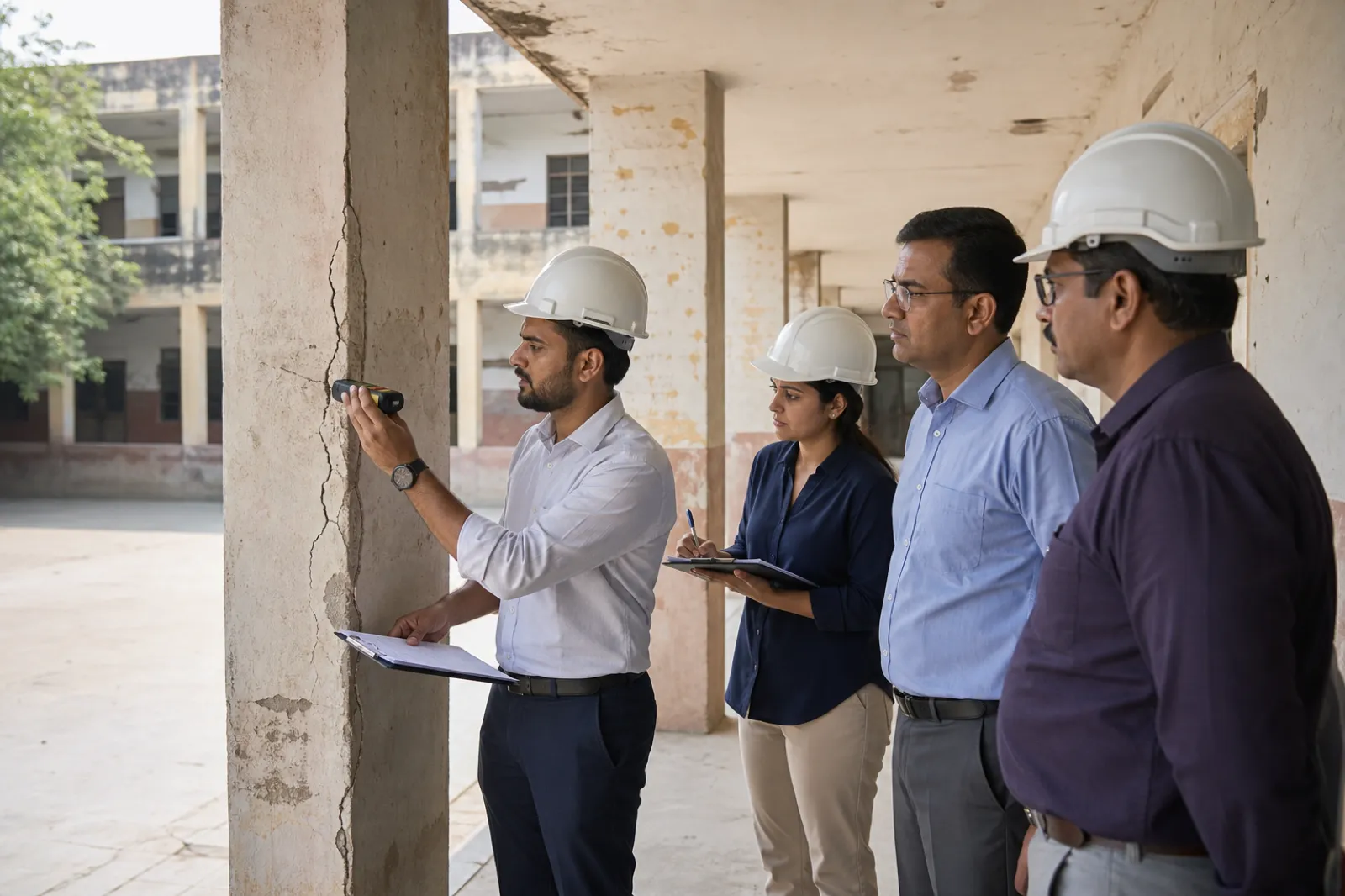
Delhi has identified 34 government schools for demolition over safety, waterlogging or unsuitable-site concerns and is planning 27 new school buildings at an estimated cost of about Rs 900 crore. The decisions follow a digital profiling exercise covering all 1,090 government schools in the capital.
Work is already under way at 16 of the schools selected for demolition, while nine additional cases have received approval, according to an education department official. The remaining cases are at other stages of the process. The government has not yet published in one place the school-wise timeline, temporary arrangement and reason for every demolition.
That information is essential for families. Removing an unsafe building protects children, but shifting classes can create longer journeys, crowded host schools or lost instructional time. Each affected school needs a transition notice explaining where pupils and staff will go, how transport and accessibility will be handled and when a permanent campus is expected.
The 27 new buildings are planned on vacant plots and are expected to be completed within 18 months. Sites have been grouped into five geographic clusters for project management. They include locations across Narela, Bawana, Bhalswa, Rohini, Mundka, Sawda Ghevra, Shalimar Bagh, Bakkarwala, Kapashera, Jaffarpur and southern areas including Jaunapur, Satbari and Asola.
Delhi’s profiling exercise goes well beyond a conventional asset register. Every room has been recorded through 360-degree imaging, creating a virtual walkthrough. Drone surveys, high-resolution orthomosaic images and GIS visualisation are being used for planning, budgeting and monitoring. The inventory covers drinking water, electricity, cleanliness, security, furniture, kitchens, laboratories and digital facilities.
Technology can make neglect visible, but it does not decide structural safety. Specialised teams are carrying out visual inspections and non-destructive tests, including rebound-hammer and ultrasonic-pulse checks. Buildings are to be categorised for retention, repair, retrofitting or demolition on the basis of the assessment.
The department should publish the engineering criteria and responsible signatory for each final category. A photographic model can show a crack; only a competent structural assessment can establish its seriousness and the appropriate remedy. Independent review is particularly important when demolition and a large construction contract follow from the same exercise.
The Directorate of Education has invited bids from central public-sector undertakings for a project-management-cum-engineering, procurement and construction role. Clustered execution may accelerate work, but an 18-month target should not weaken fire safety, ventilation, universal access, playground provision or quality control.
Schools retained for repair also need attention. A high-profile list of new buildings can draw resources away from ordinary failures such as broken toilets, unsafe wiring or persistent waterlogging. The digital database should support a public maintenance schedule, not remain only a planning tool inside government.
For parents and staff, the plan’s success will be measured in continuity as well as concrete. Delhi must remove genuinely unsafe structures without displacing educational access. School-wise timelines, temporary arrangements and progress photographs would turn an ambitious infrastructure exercise into an accountable one. Regular public updates should continue until every affected cohort has moved into a safe, permanent school building.
Sources and reporting
Based on Delhi education department disclosures on the digital profiling of 1,090 schools, structural testing and plans for 34 demolitions and 27 new buildings.
Related Stories
Two Held for Alleged Bid to Run Over Men
Retired HSVP Officer Surrenders in SCO Plot Case
Cops Warn Weekend Bikers After Recent Crashes
HT Pole Still Blocks Road Between Sectors 102, 102A
HSVP Plans Single City Office in Sector 16