On the stone steps of Dashashwamedh Ghat, a Varanasi social group performed pind daan and tarpan on Sunday for about 10,000 daughters who were never born. Aagman Samajik Sanstha held the rite on Matru Navami, the ninth day of Pitru Paksha, and used it to appeal to families to stop female foeticide.
The ritual was led by the organisation's founder-secretary, Dr Santosh Ojha. According to Aagman, this was the 13th year it has held the annual rite at the ghat, and Sunday's offerings take its running count past 1.6 lakh unborn daughters, up from more than 1.5 lakh before this year. Those totals are the organisation's own figures.
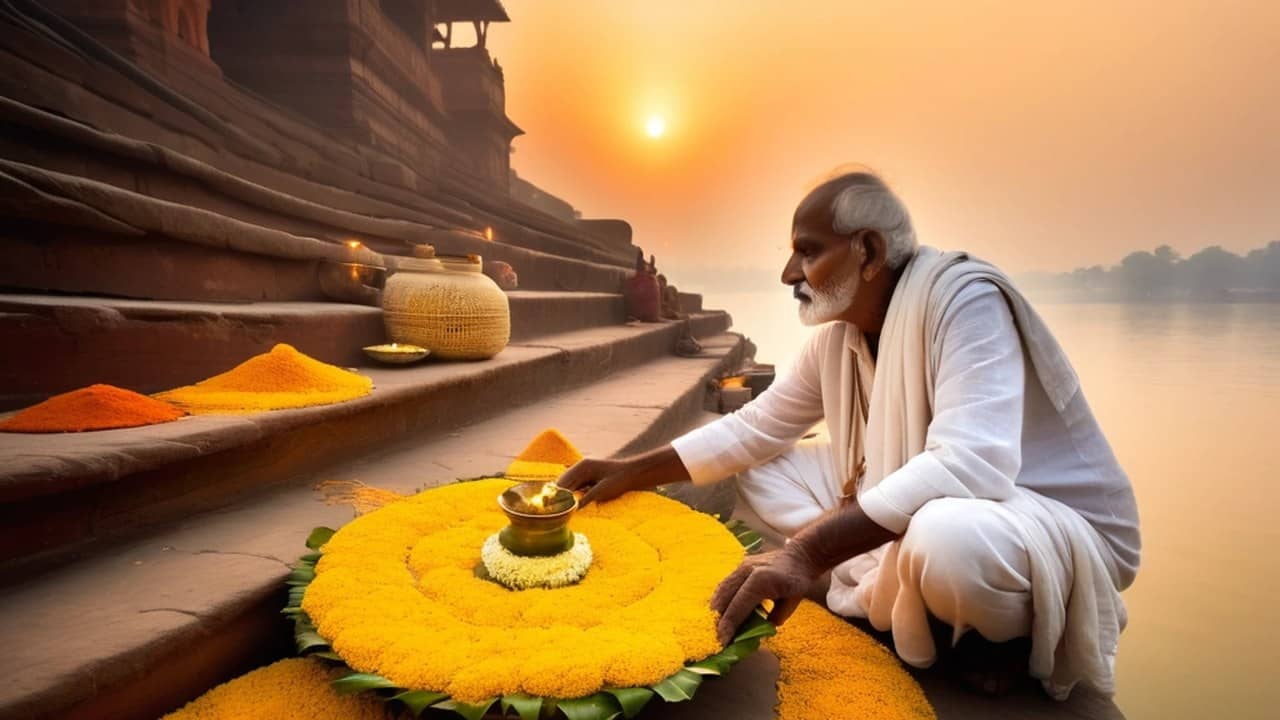
Volunteers began reaching the ghat from about 7 am. A vedi, or ritual platform, was shaped out of Ganga clay, and the ground was first purified with Ganga water, kusha grass and fire before the rite started under five Vedic acharyas. Vedic chanting and a shanti path accompanied the sankalp, the formal resolve taken for the peace of the unborn souls.
Each of the roughly 10,000 pinds was made from barley flour, barley and sesame, honey, desi ghee, sugar, milk and Ganga water. The organisers placed every pind as a symbol of one unborn girl and offered sandalwood, garlands, incense, a lamp and naivedya to it. Tarpan was then performed facing south, the direction tied to the ancestors in shraddha practice.
The programme also included panchabali, the set of food offerings made to living beings as part of shraddha, and a feast for Brahmins. At the end, after a prayer seeking forgiveness, the pinds were immersed in the Ganga. The rites were guided by Pt Dinesh Dubey, Pt Dhananjay Tiwari and Pt Sitaram.
Speaking at the ghat, Dr Ojha said Sanatan tradition regards daughters as a form of Lakshmi, yet female foeticide remains a serious challenge for society even in an age of modern medical technology. He described the gathering as an effort to wake people up rather than a ritual for its own sake, and urged families to give daughters equal rights and equal respect.
Aagman says it has campaigned since 2001 on women's empowerment and against female foeticide. The ghat programme is the most visible part of that work each year, timed to the fortnight when Hindu families across north India remember their dead. Among the volunteers present on Sunday were Rahul Gupta, Harikrishna Premi, Bhanu Pratap, Love Tiwari, Ajay Dubey, Rambali Maurya, Pratap Mishra, Arun Gupta and Madan Gupta.
Matru Navami has a particular place in the shraddha calendar. Families traditionally use the day to remember mothers and other women of the household who have died, which is why the group chose it for daughters who never got to be counted among them. This year's Pitru Paksha began on 27 September, when Dalimss reported on the first shraddha crowds at Pishachmochan Kund, and it runs until Sarva Pitru Amavasya on Saturday, 10 October. Sharadiya Navratri begins the next day.
The law on the issue has been in place for three decades. The Pre-Conception and Pre-Natal Diagnostic Techniques Act, 1994, bars doctors and clinics from determining or revealing the sex of a foetus, and violations can lead to prosecution and cancellation of a clinic's registration. Campaigners like Aagman argue that a law alone does not change attitudes at home, which is the gap the ghat programme is meant to address.
Dashashwamedh, the main ghat near the Kashi Vishwanath corridor, is where the city's best known evening Ganga aarti is held, and families come to its steps for shraddha rites through the fortnight. The river has kept the ghats under watch this season. It began rising again at the start of October, as Dalimss reported in its account of the Central Water Commission's forecast, after weeks in which the lower steps of several ghats stayed under water.
Rites for the unborn are not part of the standard shraddha sequence, which is performed by a family for its own named ancestors. Aagman's version adapts that form for a social cause: the pinds are made and offered in the traditional way, but they are dedicated collectively to girls who were never named. Dr Ojha framed his appeal on Sunday as one addressed to families rather than to the priests on the steps.
For Aagman, the count of 10,000 was the point of the morning. Each small ball of barley and sesame on the steps stood for one girl, and the organisation's message was that every one of them should have been born.