How Dalmandi’s Music Salons Became Shelters and Meeting Rooms for Revolutionaries
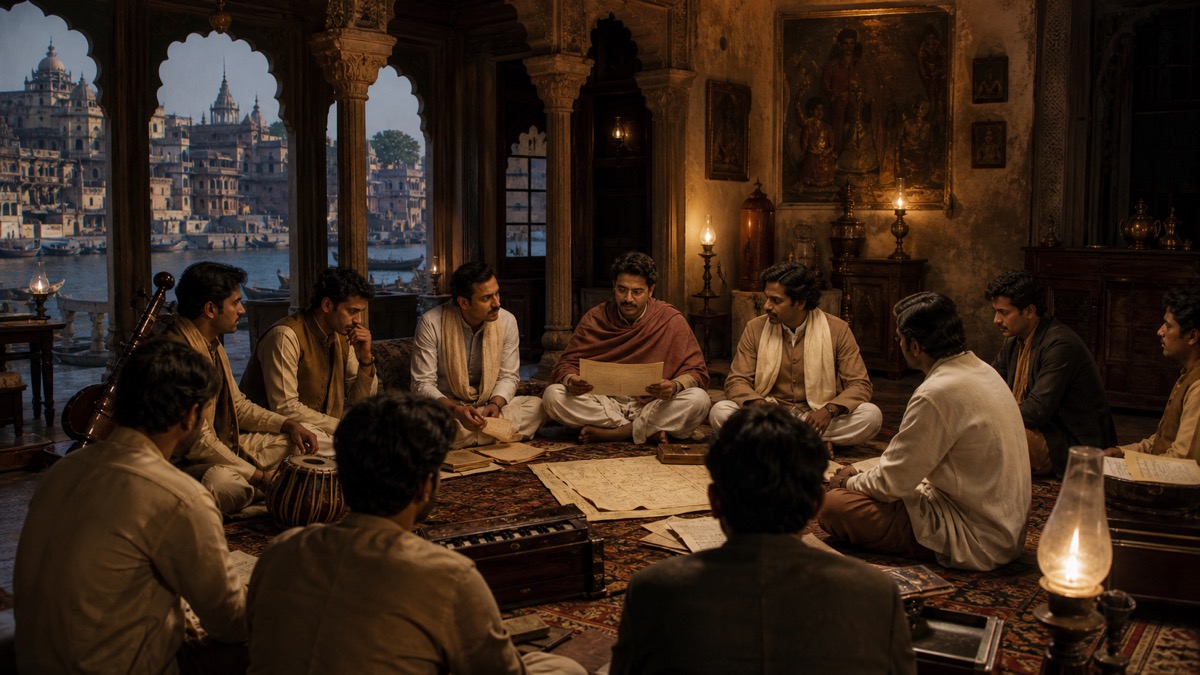
Dalmandi is usually remembered through music, courtesan culture and the dense commercial life of old Banaras. Local historians and residents say it also carried a quieter identity during the freedom movement: a place where revolutionaries could disappear into busy salons, exchange information and hold meetings beyond the easy reach of colonial police.
The accounts name performers including Koila Bai, Jaddan Bai, Rasoolan Bai, Rajeshwari Bai, Chhoti Maina and Badi Maina among those associated with shelter or support. Residents recall houses in Narial Bazaar and Govindpura where activists could blend into the movement of musicians, patrons and workers. One oral account links Chandrashekhar Azad with refuge at Jaddan Bai’s home. Such details are important, but they should be presented as testimony until supported by contemporary records.
Former journalist Rajesh Gupta argues that the contribution was direct rather than incidental. In his telling, performers did not merely hide fugitives; they passed messages, offered money and allowed plans or handwritten pamphlets to be prepared during secret meetings. Other residents say the salons refused invitations to perform for British officials and used the social assumptions surrounding Dalmandi as a shield.
That shield worked because colonial policing often carried its own prejudice. A music salon could be dismissed as entertainment rather than recognised as a political room. The women who ran these spaces also controlled access, knew their neighbourhood and could decide who entered. Their cultural labour created networks of trust that a conventional organisation might not possess.
The story challenges a narrow division between “respectable” nationalism and the worlds of performance. Banaras’s courtesans were trained artists, patrons and teachers connected to elite households as well as popular audiences. Their role in music history is documented more readily than their political assistance. Gender and social stigma helped push the latter out of official memorials.
Recovering that history requires more than romantic anecdotes. Researchers can examine police surveillance files, court records, correspondence, property histories and performer biographies, then record oral testimony before another generation is lost. Contradictions should remain visible. A credible archive can honour courage without turning memory into certainty.
Dalmandi’s lanes have changed, and redevelopment debates often focus on traffic, structures and commerce. Its intangible history deserves equal attention. If the salons did serve as shelters and planning rooms, they belong on Varanasi’s freedom map alongside courts and memorial parks. Even where proof remains partial, the testimony asks a valuable question: whose rooms made resistance possible, and why were the women who opened those doors so easily written out?
Sources and reporting
A historical feature based on oral histories and local reporting. Claims about individual revolutionaries and salons are attributed to named community accounts and require archival corroboration.
Related Stories
Ramnagar Day Three Follows Vishwamitra Into the Forest and Mithila
Shivpur Ramlila Stages Narad Moh and Kshirsagar Tableau Through Rain
VMC Puts City on Alert for Navratri and Durga Puja Civic Arrangements
Chowk Becomes Varanasi's First Police Station With ISO 9001 Certificate
World Tourism Day: Guides Welcome Visitors; Namami Gange Cleans Namo Ghat