Counterfeit Liquor Unit Using Fake QR Codes Busted in Cholapur; One Arrested
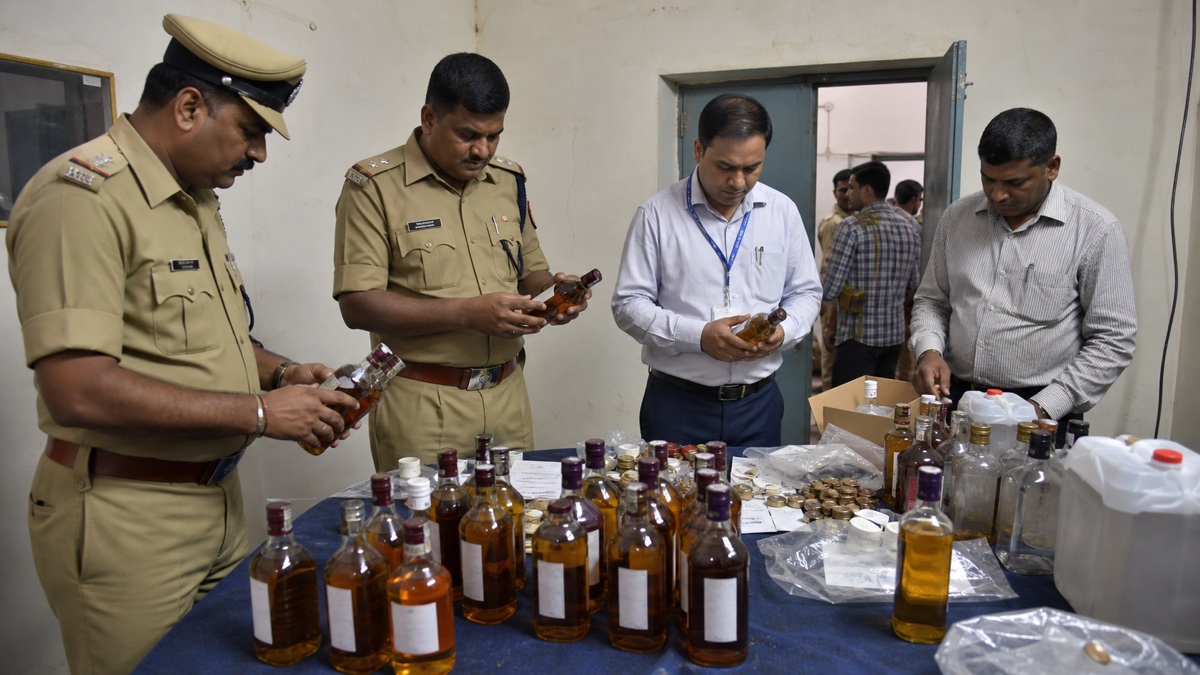
A joint team of Cholapur police and the excise department has arrested a 26-year-old man after allegedly uncovering a counterfeit-liquor operation in Nakchhedpur village. Officers said the seized material included spirit, filled and empty bottles, fake caps and QR labels designed to make illicit products resemble authorised brands.
The raid took place at about 8.15 pm on August 14 after a tip-off, according to police-linked reporting. The arrested man was identified as Ashish Bhardwaj, a resident of Dashwatpur under Cholapur police station. A case has been registered, but the allegations have not yet been tested in court and the accused’s response was not available in the initial report.
Police said they recovered 19 filled half-bottles, 54 quarter-bottles and 70 empty bottles carrying the appearance of different brands. Five cartons each contained 25 bottles of 450 ml, while two 20-litre cans held a total of 40 litres of spirit and bore allegedly fake QR codes. The seizure also included 1,761 imitation bottle caps, around five litres of prepared illicit liquor in three bottles, two empty cans and a vehicle.
Those figures suggest an operation built around presentation as much as liquid. Counterfeiters can reuse branded bottles, attach copied caps and place a QR image where buyers expect a traceable excise mark. A code that merely opens a page or displays familiar graphics is not proof of authenticity. The excise investigation will need to trace where the bottles, caps, labels and spirit came from and whether other people were involved in distribution.
Illicit liquor is a public-health danger because the strength and composition are unknown. Improperly prepared alcohol can contain toxic substances or far higher concentrations than a consumer expects. Anyone who develops blurred vision, severe vomiting, confusion, breathing difficulty or loss of consciousness after drinking suspected counterfeit alcohol needs emergency medical care. The bottle should be preserved for investigators rather than discarded.
Retailers and consumers can also help by checking seals, buying only from licensed outlets and reporting prices or packaging that appear implausible. They should not confront suspected sellers. Enforcement teams need the location, time, product description and, where safe, a photograph that does not expose the informant.
The Nakchhedpur seizure is the first step, not the conclusion. Laboratory analysis must establish what the liquid contained, while financial and supply-chain inquiries can show whether the site served a larger network. Police should publish verified results when available. For now, the suspect remains an accused person, and the claimed counterfeit system—including the fake QR codes—remains subject to forensic examination and court scrutiny.
Sources and reporting
Based on the joint police-excise raid and seizure figures reported on August 16. The accused has not been convicted and the case remains under investigation.
Related Stories

Dalimss 20 Under 40 Varanasi 2026: Meet the 20 Young Achievers Making Their Mark on Banaras
Biker Dies After Thar Hit on Golf Course Road
Court Orders Probe Into Body Handling Lapses
Two Held After Rs 54,000 Robbery Near Rampura
Manduadih Fan Warehouse Fire Burns for Hours; No Deaths Reported