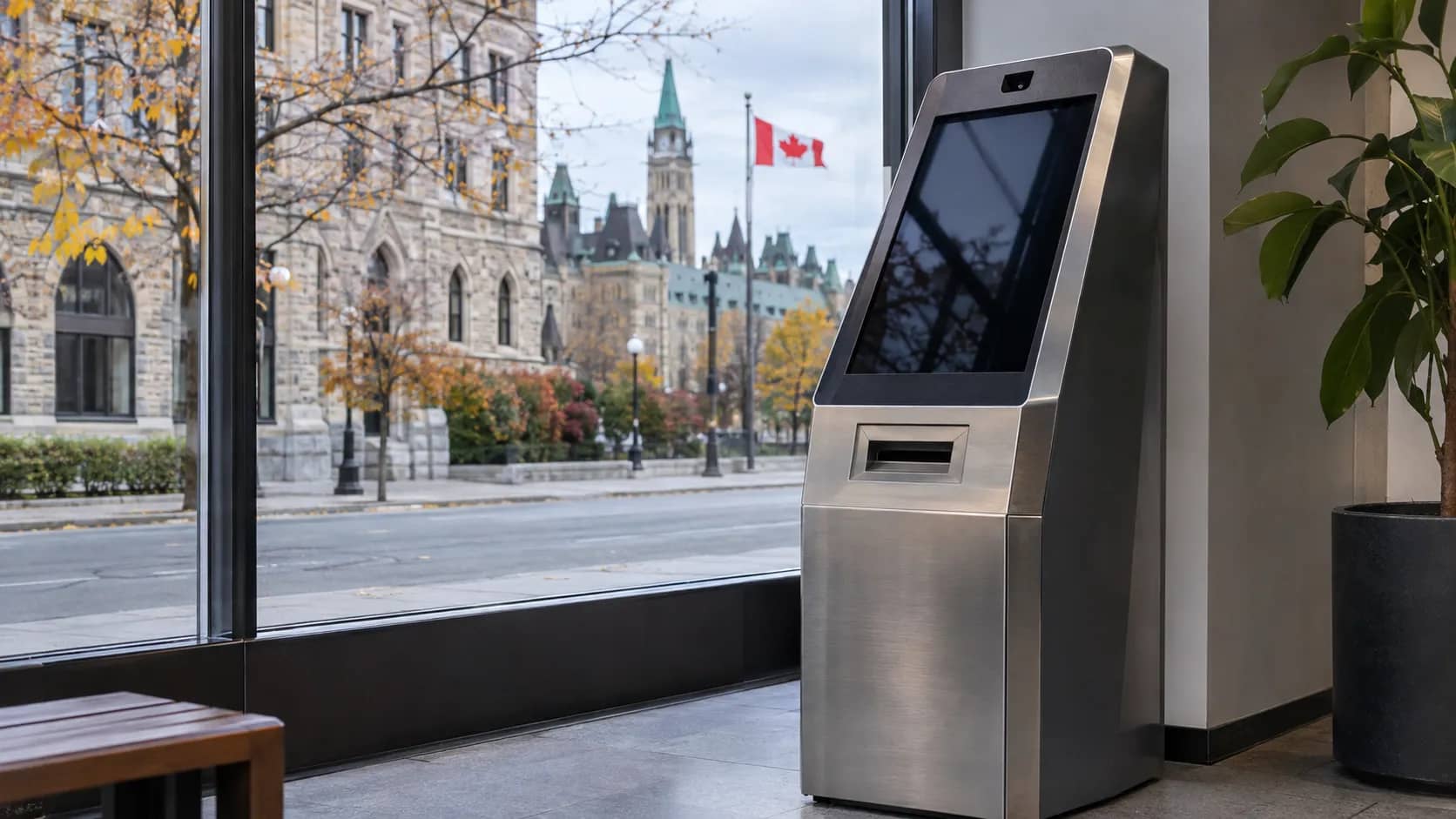
Canada has proposed a C$1,000 aggregate cap per person or entity within 24 consecutive hours using a crypto ATM. The bill does not expressly combine transactions across machines or operators.
Bill S-8, the Combatting Financial Crimes and Drug Trafficking Act, was introduced and first read in the Senate on November 3, 2026. Parliament's status page, checked on November 5, lists it at second reading but records no activity at that stage. It has not reached the House of Commons and is not enacted law.
The Department of Finance says the proposed changes target fraud and criminal abuse of money services businesses. Its announcement says provincially licensed and regulated crypto ATMs, along with in-person and online cryptocurrency exchanges, would remain available. The proposal therefore concerns how these services operate and are supervised, rather than announcing an end to all cryptocurrency trading in Canada.
What the transaction rules would require
Operators would report every transaction to the Financial Transactions and Reports Analysis Centre of Canada (FINTRAC) within 15 days, including terminal ID, transaction date and time, wallet addresses, customer details, and the types and amounts of virtual currency involved.
Existing FINTRAC guidance already requires reporting entities to report receipt of virtual currency worth C$10,000 or more in a single transaction, generally within five working days. A separate aggregation rule covers multiple receipts reaching that amount within 24 consecutive hours where the business knows they involve the same person or entity, the same third party, or the same beneficiary.
That C$10,000 figure is a reporting threshold under the existing framework, not a permitted spending allowance. The guidance also explains that suspicious-transaction reporting can be required alongside a large-transaction report. Businesses cannot treat the absence of a large-transaction report as proof that no other reporting obligation applies.
Provincial licensing and federal registration
Operating a machine knowing it is a crypto ATM would be an offence unless its operator holds a provincial statutory licence and the machine is in that province. Related exceptions cover premises, cash services and software for licensed operations, without waiving federal limits or reporting.
Federal registration is different. FINTRAC's consumer guidance says registration neither licenses nor endorses a money services business. It confirms that the business has met the federal registration requirement. The agency expressly says it does not issue licences or registration certificates, so a claim of being registered with FINTRAC should not be mistaken for the provincial licence described in the bill.
The same guidance directs consumers to check a business's name, registration number and status in the public registry. FINTRAC supervises compliance with anti-money-laundering legislation but does not assess a firm's overall business practices. It also cannot recover customers' funds or resolve access to an account.
Why the government is focusing on machines
Crypto ATMs connect conventional cash with digital wallets. FINTRAC's May 2024 advisory describes internet-linked terminals through which users buy or sell virtual currency without the bank-account access associated with a conventional ATM. It treats operators providing exchange or transfer services as money services businesses, with obligations that already include registration, recordkeeping, customer identification and a compliance programme.
The advisory's analysis of suspicious-transaction reports identified fraud as the leading suspected underlying offence in that material. It describes a scam pattern in which a victim is directed to deposit cash at a machine or use a QR code connected to a fraudster's wallet. These observations concern suspected activity reported to FINTRAC, not a finding that every machine or customer is involved in crime.
The timetable depends on Royal Assent
After Royal Assent, recordkeeping, identity checks and the cap would start on day 90. Reporting and machine-information duties would start on day 180, and licensing-related offences after 18 months. No calendar commencement date exists.
The Finance Department says the longer transition for unlicensed machines would give provinces and territories without licensing systems time to establish them. Its backgrounder also says machines outside the proposed ban would face stronger federal requirements. A provincial licensing route would therefore coexist with federal supervision, rather than replace it.
Dalimss News has separately covered Hong Kong's crypto tax-reporting legislation and the UK crypto-reporting portal timetable. Those measures concern tax information. Canada's proposal addresses financial-crime controls at crypto ATMs, with parliamentary consideration still ahead.