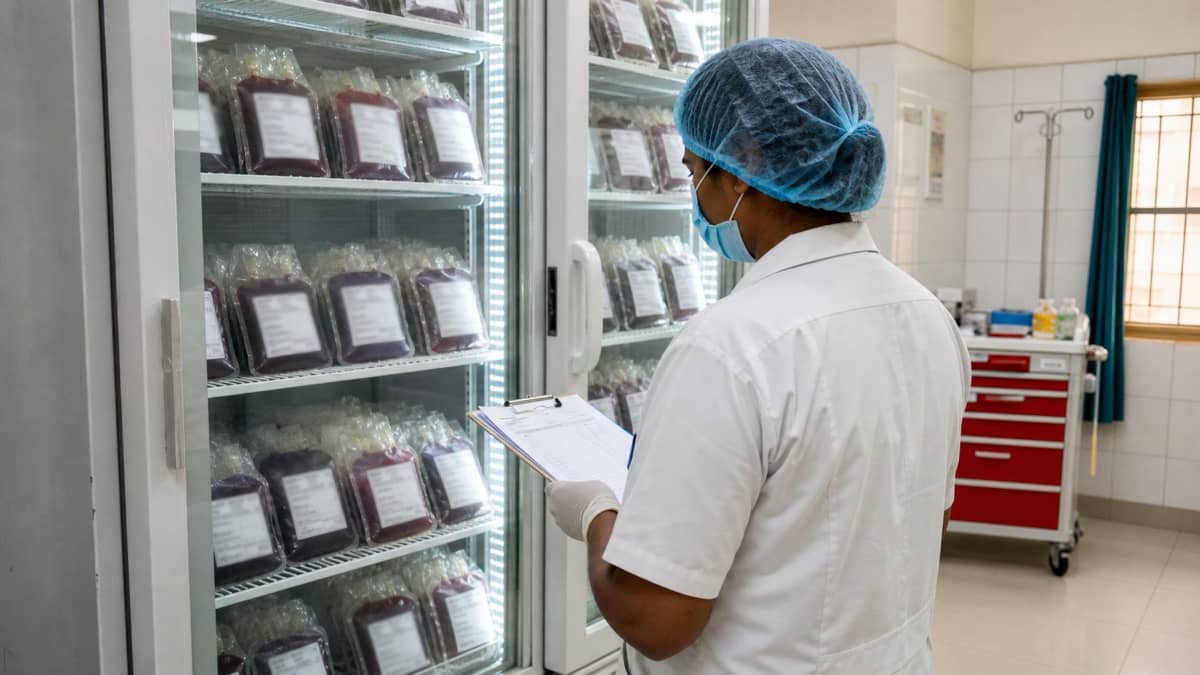
VARANASI: Durgakund’s urban Community Health Centre is set to receive a blood storage unit, a facility intended to shorten the time between a doctor identifying an urgent need and compatible blood reaching the patient.
Chief Medical Officer Dr N P Singh said the unit will be established as part of an effort to strengthen facilities at first-referral units. At present, patients who require blood may have to depend on the IMA blood bank, the divisional hospital, Pandit Deen Dayal Upadhyay Hospital or another distant centre. In an obstetric haemorrhage, surgery or serious road injury, transport and paperwork can consume time a patient may not have.
A blood storage unit is not the same as a full blood bank. It generally stores screened blood and components supplied by a licensed parent blood bank under controlled conditions. It does not independently collect and process donations unless separately licensed for that work. The distinction matters because safe storage depends on a documented supply chain, compatibility testing and constant temperature monitoring.
The Durgakund CHC already offers dialysis, digital X-ray, ultrasound, pathology services and specialist consultations, according to the district update. Adding blood storage could make emergency and referral care more self-contained, but only after licensing, equipment validation and staff training are complete. Until an official commissioning notice is issued, families should not assume blood is available on site.
The refrigerator needs uninterrupted power with backup, calibrated temperature alarms and a log reviewed every day. Staff must rotate stock before expiry, quarantine any unit exposed to an unsafe temperature and maintain traceability from the parent bank to the recipient. Cross-matching and consent procedures cannot be bypassed because a case is urgent.
The health department should publish the parent blood bank, components to be stocked, operating hours and the route clinicians use to request a unit. A headline capacity figure is less useful than knowing whether O-negative blood, packed red cells or plasma can be supplied when required. Stock information must also be managed carefully so that relatives are not sent between centres on the basis of an outdated phone call.
Voluntary donation remains essential to the wider system. Healthy eligible adults can donate only through authorised camps and blood banks after screening; patients’ families should not pay unverified brokers or respond to unsafe social-media offers.
For south and central Varanasi, Durgakund is a practical location for the service. The benefit will be measured in minutes saved and referrals stabilised, not the ribbon at installation. If the cold chain, staff and parent-bank link are kept reliable, a modest room inside a community health centre can become one of its most consequential emergency facilities.