VARANASI: A capacity-building workshop at Banaras Hindu University has urged civil-service aspirants to look beyond accumulating notes and develop the problem-solving habits, creative thinking and environmental understanding required for the UPSC examination.
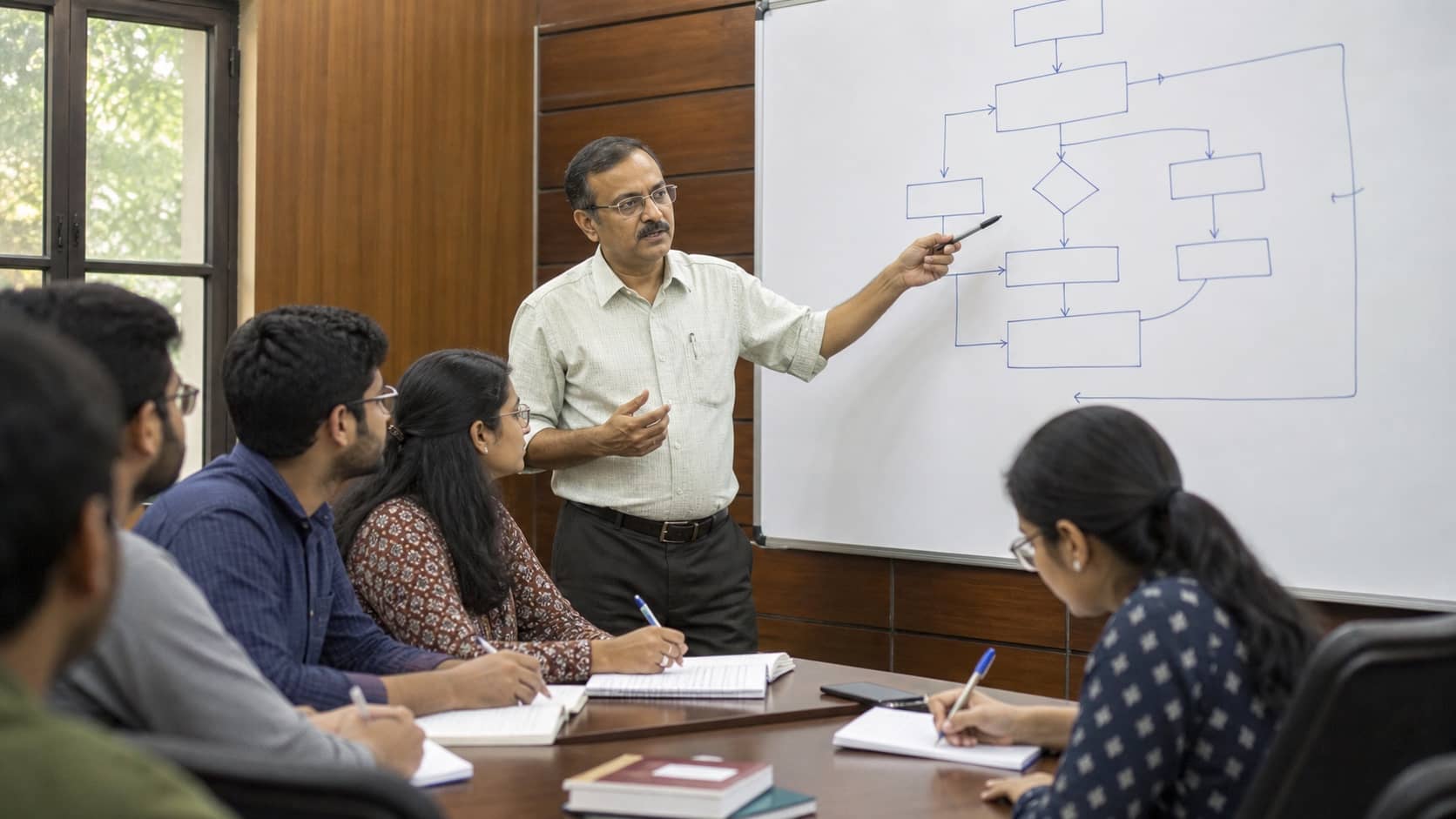
The session was organised on Thursday at the Dr Ambedkar Centre of Excellence with support from the Dr Ambedkar Foundation under the Union Ministry of Social Justice and Empowerment. Professor Ashish Vajpayee addressed students on developing skills and mindset for UPSC preparation. Professor Vinayak Kumar Dubey spoke about problem-solving and creative thinking, while Professor P Dalai discussed ecology and environmental issues.
Centre coordinator R N Kharwar thanked the speakers and participants. The programme was concise, but its themes point to a common weakness in competitive-examination preparation: aspirants can spend months collecting material without practising how to use it under time pressure.
The civil-services examination tests different abilities at each stage. Preliminary papers reward breadth, elimination and accuracy. Main examination answers require selection, structure and balance. The interview examines judgement and communication rather than a performance of certainty. A useful “mindset” therefore includes the ability to revise an opinion when evidence changes and to admit limits without becoming indecisive.
Problem-solving can be practised through local issues. A Varanasi aspirant examining waterlogging, for example, can map causes across drainage design, solid waste, enforcement, finance and citizen behaviour. The exercise becomes stronger when it identifies stakeholders, constraints and measurable options rather than producing a generic paragraph about awareness.
Environmental topics also reward connection. Air pollution links health, transport, construction and meteorology. River management involves ecology, sewage infrastructure, livelihoods and inter-state flows. Reading one subject in isolation may help with definitions, but public administration rarely presents problems in isolated boxes.
Workshops can motivate students, yet they should not create the impression that a single technique guarantees selection. UPSC preparation is uncertain and often expensive in time and emotional energy. Aspirants need realistic schedules, sleep, exercise and an alternative career plan. Institutions should avoid language that treats every unsuccessful attempt as a failure of effort.
The Dr Ambedkar Centre of Excellence has a particular role in widening access to high-quality guidance. Students who cannot afford large coaching fees benefit most when public programmes provide regular answer evaluation, current-affairs discussion, library access and mentoring—not only occasional lectures.
Participants can turn Thursday’s advice into a weekly practice: choose one public problem, write a one-page diagnosis, list conflicting interests and propose two feasible responses. Over time, that exercise builds clarity more effectively than underlining another stack of photocopied notes.
The workshop’s central message was not that content is unimportant. It was that knowledge becomes useful only when an aspirant can organise it, question it and apply it. For students preparing in Varanasi, that shift—from collecting information to making reasoned decisions—may be the most practical skill the university can help them build.