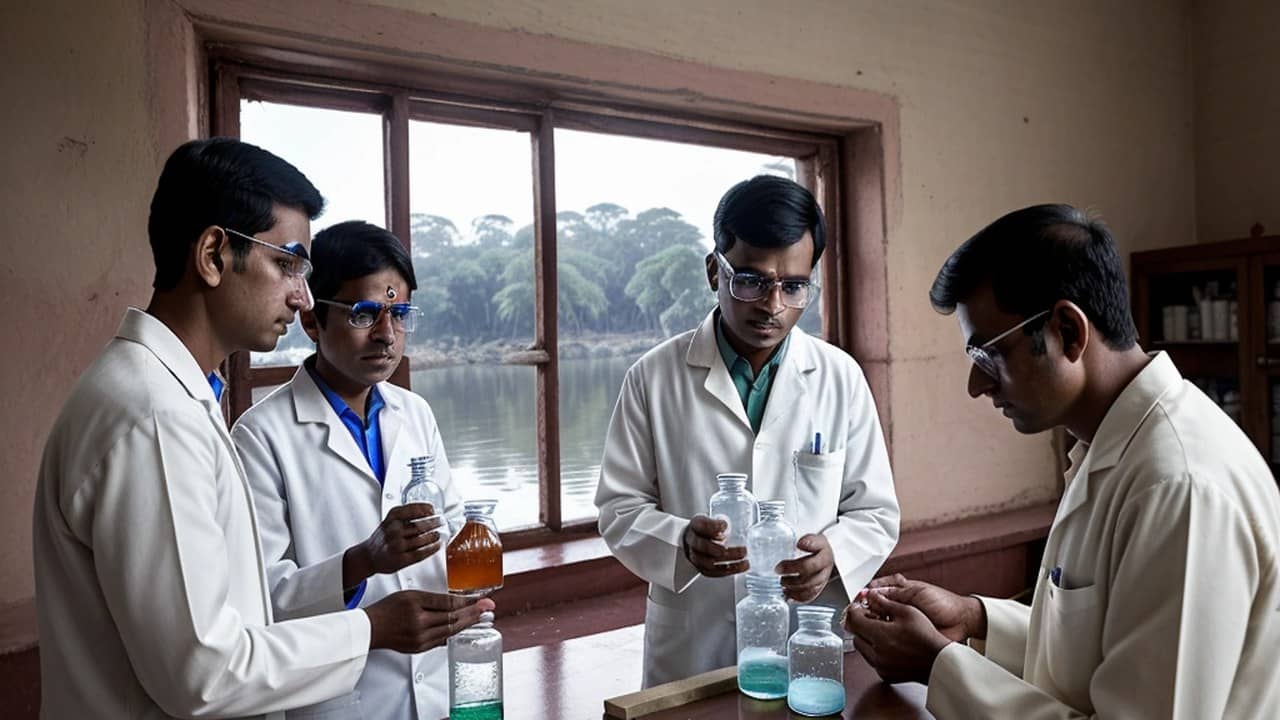
A new protocol for watching plastic pollution in Indian rivers, framed under the National Mission for Clean Ganga, puts Banaras Hindu University chemist Dr Kripa Ram among scientists from eight institutes asked to standardise how the country maps microplastic hotspots and pathways.
The protocol targets particles up to five millimetres, the size band commonly treated as microplastic. Teams working under the document are to monitor plastic loads, identify hotspots and trace flow routes, then advise the Union Jal Shakti ministry on control options. The same group may review detailed project reports, research proposals and technology choices linked to plastic management, and coordinate with other ministries on policy and community measures.
The document was released during the opening of the ninth India International Water Week at Bharat Mandapam in New Delhi on 22 September, with climate-resilient water management as the theme. Local briefing in Varanasi this week underlined BHU's role because Dr Kripa Ram's river work in Kashi fed the drafting. Other named contributors include Prof. Ghulam Jeelani of Kashmir University, Dr Mahua Saha of the National Institute of Oceanography in Goa, Prof. Abhayanand Singh Maurya of IIT Roorkee, Dr Pradeep De of ICAR-CIFRI, Dr Smita Mohanty of CIPET, G. Trimurti of the Central Pollution Control Board, Arun Kansal of TERI and Ruby Raju of MMCG, with NMCG officers providing guidance.
Dr Kripa Ram has said microplastics move through fish and the food chain into human exposure, with research linking them to inflammation, oxidative stress and hormonal disruption. The protocol's promise, as framed by the scientific group, is a shared method so different stretches of the Ganga and other rivers are not sampled with incompatible yardsticks.
For Varanasi, a city that lives on the river's edge, a national monitoring rule is not a local clean-up by itself. It is a measuring stick. Whether hotspots near urban drains, burning grounds or tourist ghats are flagged will depend on how quickly agencies fund field crews after the launch. Friday's public facts are the protocol's existence, BHU's named scientist on the team, the eight-institute list, the five-millimetre focus, and the NMCG umbrella under which advice will travel to the ministry. Microplastic sampling is fiddly work: mesh sizes, blank controls and lab contamination can wreck a data set if methods differ between crews. A shared protocol is meant to stop that drift. Whether Jal Shakti and state pollution boards fund enough boats and lab hours for the Ganga's long urban stretches is the next political question. For BHU students and faculty, Dr Kripa Ram's place on the national team is also a signal that Kashi-based river chemistry still feeds policy drafts written in Delhi.