
BHU Establishes Centre for Tourism and Hospitality Studies
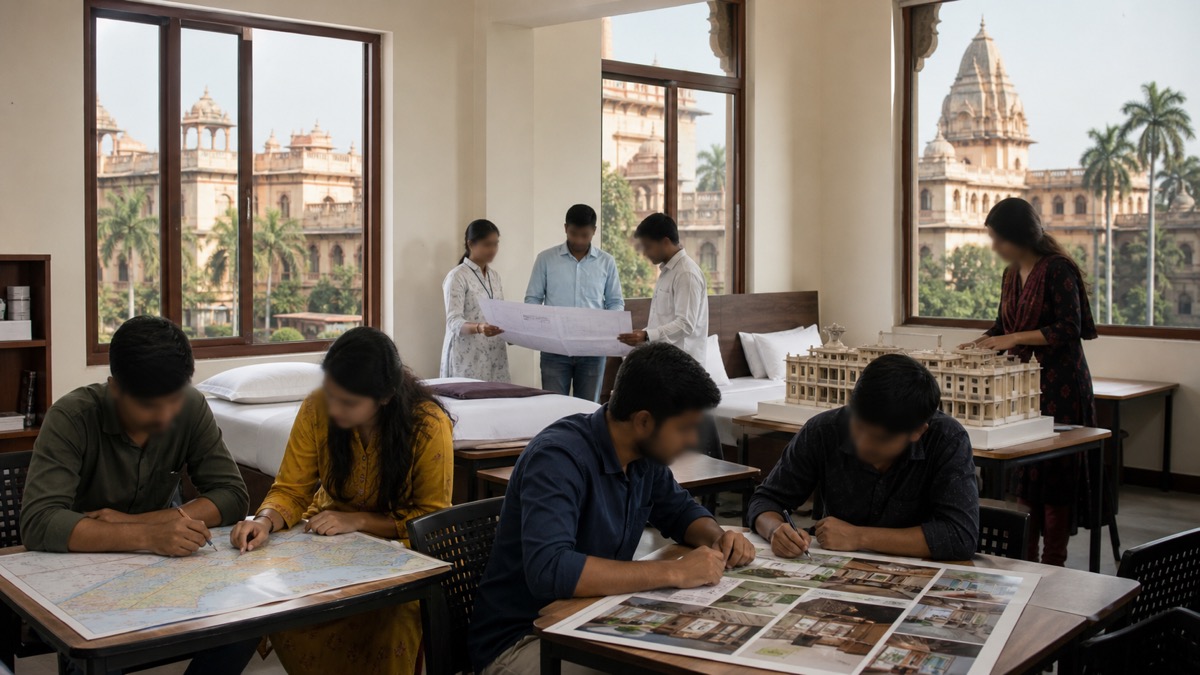
Banaras Hindu University has established a Centre for Tourism and Hospitality Studies under the Faculty of Arts, creating a new academic home for subjects that already shape Varanasi’s economy every day. The city is an unusually demanding classroom: pilgrimage, heritage, hotels, food, transport and river tourism overlap within a dense living landscape. A serious centre can study that system rather than teaching hospitality as a set of generic front-desk routines detached from place.
The announcement is institutionally significant because tourism is both an industry and a public-policy challenge. Visitor numbers support jobs, but unmanaged growth can strain lanes, water, waste systems and historic sites. Students need to understand revenue management and service design alongside carrying capacity, accessibility, conservation and resident experience. BHU is well placed to bring humanities, management, geography and cultural studies into the same conversation.
The university has not yet placed every operational detail in the public domain. Prospective students will need clarity on the courses offered, eligibility, intake, fees, faculty, internships and the date admissions begin. The centre should also explain whether it will award standalone qualifications, support existing programmes or begin with research and short-term training. A new name on an organisational chart is only the starting point.
Industry links will matter, but they must be broader than hotel placements. Varanasi’s tourism workforce includes guides, boat operators, event teams, artisans, drivers, cooks and small guest-house owners. Structured fieldwork with these groups can expose students to the informal systems that keep the city running. Partnerships should protect academic independence and avoid turning the centre into a recruitment desk for a narrow set of employers.
Research could be the centre’s distinctive strength. Reliable local work is needed on visitor flows, pilgrimage seasons, last-mile mobility, safety, digital booking, waste generation and the economic value retained by neighbourhood businesses. The findings should be published in accessible form for the municipal corporation, temple administration, tourism department and residents. A city that is measured only in annual visitor totals misses the quality of the experience and the cost of delivering it.
BHU’s move arrives when Varanasi is expanding its airport, cruise offerings and heritage profile. The centre will earn credibility by asking difficult questions as well as celebrating growth. It should also build language, data and field-reporting skills, because hospitality decisions are increasingly made through digital platforms and live visitor information. If it trains professionals who can balance hospitality with stewardship, it will serve not only students but the city outside the campus gates.
Sources and reporting
Fresh official Banaras Hindu University announcement during the reporting window; programme details beyond the announcement are not inferred.
Related Stories

Festive Special to Gorakhpur Gets Gurugram Halt
Fifth Accused Held in Rs 25 Lakh Sector 47 Robbery

Courier Staffer Booked Over 105 Missing One8 Returns

HC Sets Rs 50 Lakh Costs for Accused's Return to India

Gurugram Swimmer, 20, Crosses English Channel