Bhagirathi Cruise Footage Raises Questions Over Life-Jacket Compliance in Varanasi
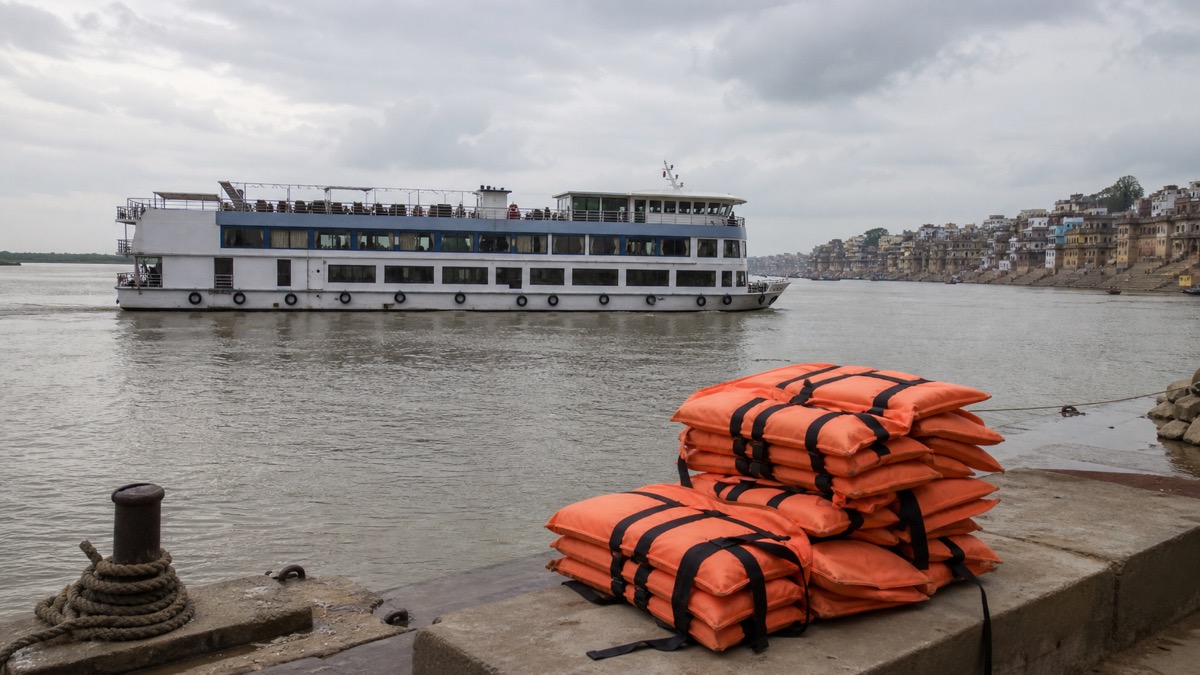
Verified footage from Varanasi’s riverfront appears to show passengers aboard the Bhagirathi Cruise without life jackets, raising a straightforward safety question at a time when the Ganga is running higher and faster. The clip does not establish how long the passengers were on deck, whether jackets had been issued elsewhere on the vessel or what instructions the crew gave before departure. It does establish enough to warrant a prompt, public explanation from the operator and the authority overseeing river traffic.
Life jackets are not decorative equipment to be stored until an emergency has already begun. Their usefulness depends on correct sizing, accessibility and, where rules require, passengers wearing them during movement. A large vessel may feel stable compared with a wooden boat, but stability does not remove the possibility of a fall, collision, sudden manoeuvre or evacuation. Strong current narrows the time available for rescue and can separate a person from the vessel within seconds.
The immediate accountability test is practical. The operator should state the vessel’s approved capacity, number and type of flotation devices, wearing policy, crew training and the safety briefing given to passengers. Authorities should confirm whether an inspection was conducted after the footage surfaced and whether operations complied with the conditions attached to the cruise permission. If no rule was broken, those facts can be put on record; if procedures were weak, correction should not wait for an accident.
Passengers also have a role, but the greater duty lies with the operator. Tourists may be unfamiliar with local river conditions and often take cues from crew behaviour. A jacket left under a seat communicates that safety is optional. A properly fitted jacket, a brief demonstration and firm instructions communicate the opposite. Ticket sellers and guides should not reassure visitors that a short or scenic ride is automatically low-risk, especially during a period of rising water.
Varanasi has expanded its cruise and river-tourism offerings, and that growth makes consistent rules more important. Small boatmen are frequently stopped when conditions worsen; large commercial vessels should face safety scrutiny that is at least as visible. Different vessel classes can have different operating permissions, but passengers should not encounter a different seriousness about basic rescue equipment based on the price of the ticket.
This report does not conclude that a legal violation occurred. It records a visible concern and the questions that follow from it. A quick response—supported by inspection findings rather than promotional language—would protect both passengers and responsible operators. Silence, by contrast, would allow a preventable doubt to grow on a river where complacency is the most dangerous passenger of all.
Sources and reporting
Verified Dalimss News Banaras footage published on 10 August 2026; the report describes what is visible and seeks clarification rather than alleging a proven statutory breach.
Related Stories
Festive Special to Gorakhpur Gets Gurugram Halt
Fifth Accused Held in Rs 25 Lakh Sector 47 Robbery

Courier Staffer Booked Over 105 Missing One8 Returns
HC Sets Rs 50 Lakh Costs for Accused's Return to India
Gurugram Swimmer, 20, Crosses English Channel