
BCI Gives Maharashtra Law Colleges One-Time Approval Relief as CAP Deadline Closes
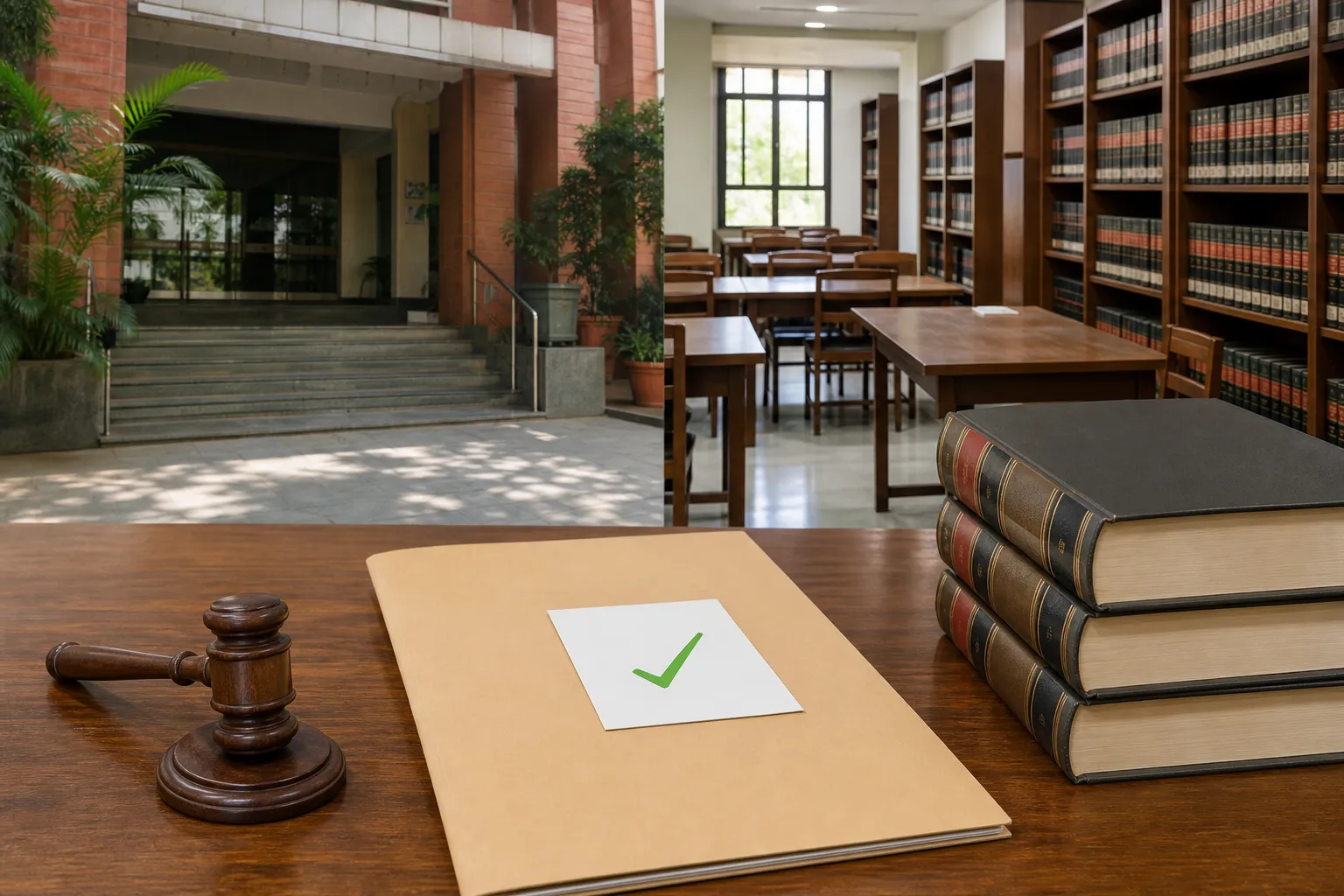
The Bar Council of India has given existing eligible law colleges in Maharashtra one-time conditional approval to take part in the 2026–27 centralised admission process, easing a last-day logjam for students filling choices for three-year and five-year LLB programmes.
The regulator's Legal Education Committee communicated the decision on 10 August, noting that the first-round option-form deadline ran until 11 August. More than 100 of Maharashtra's 357 law colleges were still outside the admission system on the final day of choice filling, although several prominent institutions had already been added.
The relief is limited in both time and scope. It applies only to existing Centres of Legal Education, their existing law courses, approved sections and sanctioned intake. Valid university affiliation for 2026–27 and verification against BCI records remain necessary.
New colleges, new courses, additional sections and proposals to increase intake are not covered. Those cases continue to require separate approval. The BCI has also said the arrangement does not regularise earlier non-compliance, waive outstanding fees or create a precedent for another state or academic year.
Colleges receiving the benefit have until 31 August to complete the prescribed process on the BCI portal, submit documents and clear applicable fees and dues. Conditional approval therefore removes an immediate barrier to participation in admissions; it is not a permanent exemption from legal-education standards.
For applicants, the decision should widen the choice set, but it does not eliminate the need to check each institution carefully. Students should confirm that a college appears in the current CAP list, that the relevant three-year or five-year course is included, and that the displayed intake matches the option they intend to select.
The Maharashtra Common Entrance Test Cell had earlier indicated that colleges could be added in later rounds. It also removed the auto-freeze option in the first round, allowing candidates to remain eligible for betterment up to the third round and revise choices as additional colleges received approval.
That flexibility is useful, yet it makes record-keeping more important. A candidate should save the submitted option form, allotment status and any subsequent revision. College names can be similar, and approval for one course or section should not be read as approval for every programme offered by the same management.
The episode exposes a coordination problem that should have been resolved before choice filling. Students were asked to make consequential decisions while the list of participating colleges was still changing. Even where a regulator ultimately grants relief, late updates can alter preference strategies, travel plans and expectations about fees or location.
For colleges, the 31 August deadline is not a formality. Institutions must ensure their affiliation, faculty, infrastructure and other required records are complete, and they should tell admitted students plainly that the current permission is conditional. Marketing the decision as an unrestricted or permanent approval would misrepresent the order.
For the CET Cell and the BCI, the immediate priority is a single, clearly dated list showing college, course, section and sanctioned intake. A change log would help candidates identify what was added after their first submission. Notices should also explain whether a newly listed option can be inserted at the next betterment stage and what happens if a college misses the compliance deadline.
The one-time approval prevents the present admissions cycle from stalling, but it should not become the normal method of reconciling regulatory records. Students need a stable option list before the first deadline, not a rescue measure while the clock is running.
Sources and reporting
Based on the Bar Council of India communication dated 10 August 2026 and contemporaneous reporting on Maharashtra's centralised law admissions; no original interviews were conducted.
Related Stories

Festive Special to Gorakhpur Gets Gurugram Halt
Fifth Accused Held in Rs 25 Lakh Sector 47 Robbery

Courier Staffer Booked Over 105 Missing One8 Returns
HC Sets Rs 50 Lakh Costs for Accused's Return to India

Gurugram Swimmer, 20, Crosses English Channel