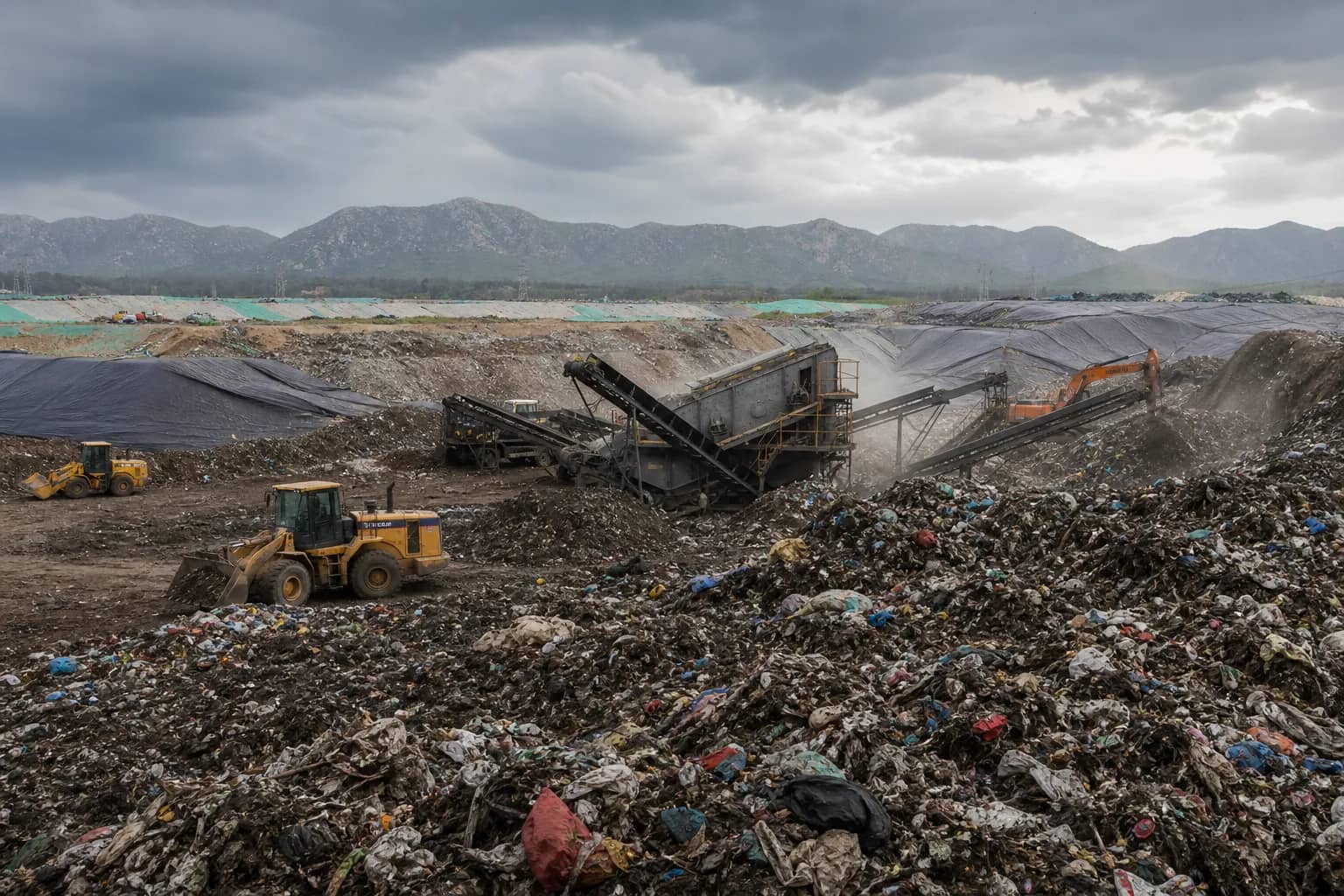
GURUGRAM: Bandhwari may still hold about 7.1 lakh metric tonnes of unprocessed waste when the current remediation contracts end in March 2027, according to a status report the Municipal Corporation of Gurugram has placed before the National Green Tribunal. The projection underlines the central contradiction at the landfill: old waste is being processed, but fresh garbage keeps arriving.
The civic body's audit puts the total load handled at the site at 57 lakh tonnes. Of this, about 39.8 lakh tonnes has been processed, leaving 17.2 lakh tonnes in the latest assessment. The calculation includes both the legacy mountain and municipal waste added while clearance work was under way, which means progress cannot be judged only by the output of remediation machines.
In January 2023, Bandhwari held an estimated 30.4 lakh tonnes of legacy waste. Between then and August 16 this year, another 26.6 lakh tonnes of fresh municipal solid waste reached the site. Processing has outpaced part of that inflow, but not enough to bring the expected balance to zero within the lifespan of the existing contracts.
MCG processed about one lakh tonnes in July. The August total is still being compiled. In an affidavit filed by commissioner Pradeep Dahiya, the corporation said it expects to have a firmer completion date only by November or December and sought additional time to present the tribunal with a final road map.
The finish line moves with every truck
Legacy-waste contracts typically excavate, separate and channel old material into different streams. That is difficult work, but it is measurable. The larger management failure is allowing mixed fresh waste to enter the same system faster than decentralised collection, segregation, composting and material recovery can divert it. Each new truck effectively extends the clean-up schedule residents have already heard for years.
Bandhwari is not only a question of visible garbage. The tribunal proceedings cover toxic leachate leaving the dump, recurring fires and the site's proximity to the Aravalli landscape. During heavy rain, contaminated runoff can travel beyond the operational boundary. During dry periods, smouldering waste and dust create a different air-quality risk for workers and nearby settlements.
A credible plan therefore needs two clocks. The first must show how quickly the remaining old waste will be processed, with monthly inflow and output disclosed in the same table. The second must show when Gurugram and Faridabad will reduce the fresh waste sent to Bandhwari through ward-level segregation, dependable collection and facilities that actually accept the separated streams.
The 7.1-lakh-tonne projection is not a distant technical footnote. It means the existing contracts can expire while a substantial dump remains and a new procurement cycle begins. The next affidavit should identify the expected balance under different daily inflow rates, the additional capacity required and the agency responsible for every delay. Without that clarity, March 2027 risks becoming another date when Bandhwari changes contractors but not its role as the region's permanent waste fallback.