Banaras Gharana Musicians Say Applause Is Rising but Reliable Income Is Not
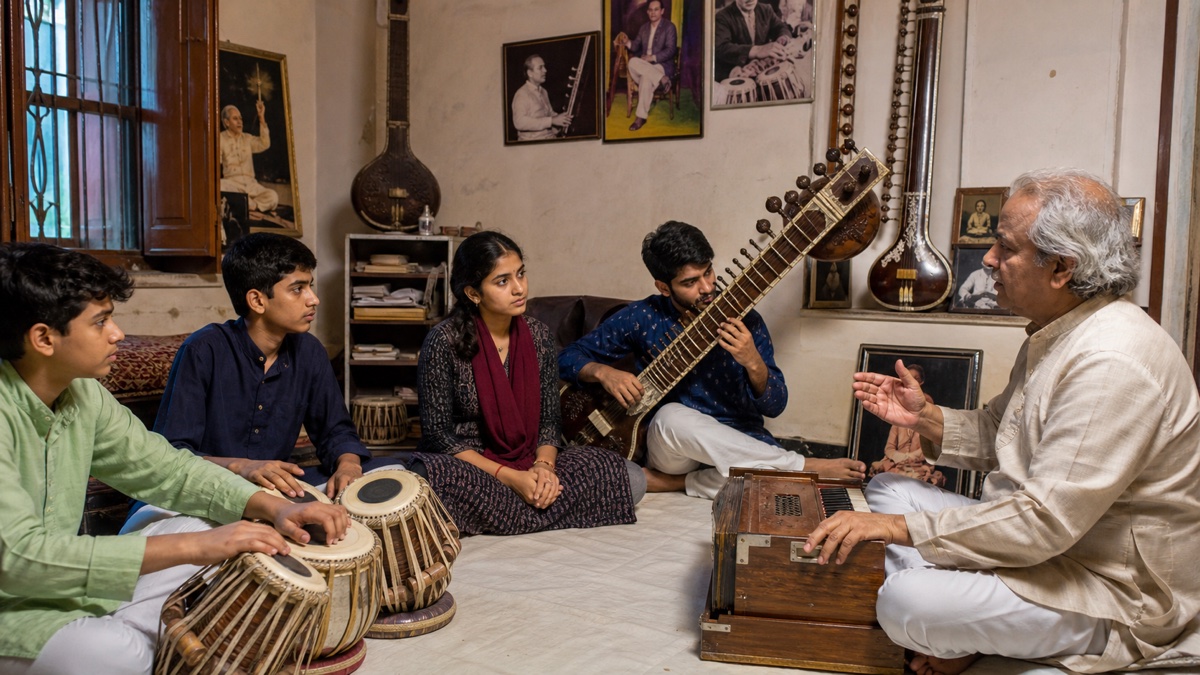
The Banaras gharana continues to carry Varanasi’s name across concert halls and digital classrooms, but several of its working musicians say prestige is no longer translating into a stable livelihood. Local organisers often expect Banarasi artists to perform without a fee, they said, leaving accomplished performers dependent on teaching, online lessons and unrelated jobs to support their families.
Vocalist Pandit Anoop Mishra, a nephew of the late Padma Bhushan Rajan Mishra, told local reporters that he has taught more than 10,000 students. He now teaches children offline during the day and overseas students online at night. Concerts in India and abroad bring recognition, but teaching has become his dependable source of income.
Mishra said many local programmes spend heavily to bring performers from outside the city while asking Varanasi musicians to appear for free. An unpaid stage may be presented as exposure, but an artist still pays for years of training, instruments, accompanists, travel and family expenses. When free appearances become routine, they suppress fees across the local circuit rather than opening a path to paid work.
Devvrat Mishra, son of Padma Shri sitarist Shivnath Mishra, has performed abroad more than 40 times and runs an academy. He described the same uncertainty: one week may bring a concert, followed by many days without a booking. Even families steeped in music see younger members move towards information technology and salaried professions because a regular income is easier to plan around.
This is not evidence that young people have stopped learning. The musicians said interest in classical and traditional forms remains strong, and online teaching has created an international classroom for Banaras. The problem is the economic bridge between student enthusiasm and a professional career. A city can celebrate its gharana in speeches while still underpaying the people who practise it every day.
Organisers can change that by publishing budgets, agreeing fees in writing and treating accompanists and sound checks as professional costs. Publicly funded festivals should disclose how local artists are selected and paid. Venues can also invest in ticketing and smaller regular programmes instead of relying only on occasional free spectacles. Digital platforms offer reach, but recordings should not be reused without permission or payment.
For Varanasi, the issue is cultural infrastructure as much as personal hardship. A gharana survives through teaching, rehearsal, instrument repair and performance—not through nostalgia alone. The artists’ accounts are a reminder that heritage work is work. If Banaras wants its musical identity to remain alive rather than museum-like, applause must be matched by contracts, fair fees and enough continuity for a musician to make a life.
Sources and reporting
Based on interviews with Banaras gharana musicians published on August 16, including Anoop Mishra and Devvrat Mishra’s accounts of teaching, performance fees and unstable income.
Related Stories

Dalimss 20 Under 40 Varanasi 2026: Meet the 20 Young Achievers Making Their Mark on Banaras

Biker Dies After Thar Hit on Golf Course Road
Court Orders Probe Into Body Handling Lapses
Two Held After Rs 54,000 Robbery Near Rampura
Manduadih Fan Warehouse Fire Burns for Hours; No Deaths Reported