
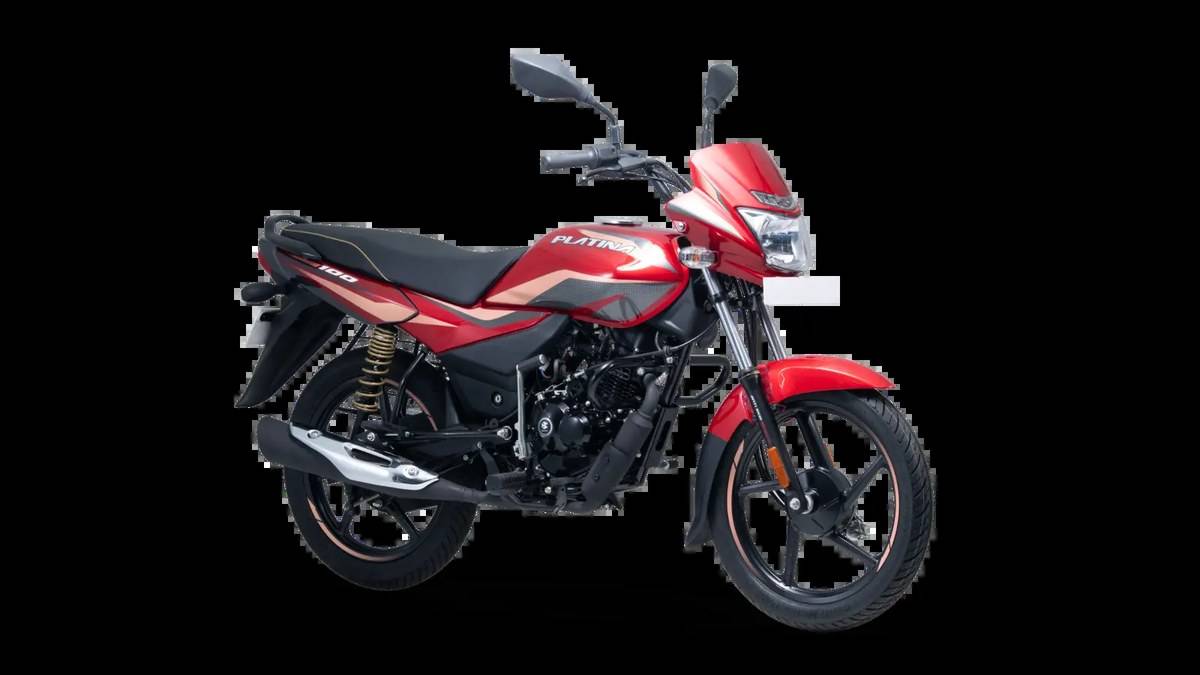
NEW DELHI: Bajaj Platina 100 starts at Rs 72,942, while Platina 110 Drum starts at Rs 75,797, according to Bajaj Auto's official Platina range page. Both are ex-showroom Delhi listings. The difference is Rs 2,855, making this a close comparison between two everyday commuters rather than a jump into a different motorcycle category.
| Official listing | Platina 100 | Platina 110 Drum |
|---|---|---|
| Starting price, ex-showroom Delhi | Rs 72,942 | Rs 75,797 |
| Engine | 99.59 cc | 115.06 cc |
| Maximum power | 8.2 PS at 7,500 rpm | 9.5 PS at 7,500 rpm |
| Maximum torque, product-page figures | 8.3 Nm at 5,500 rpm | 9.9 Nm at 5,500 rpm |
| Transmission | Four-speed | Four-speed, all-down shift |
| Fuel tank | 11 litres | 11 litres |
Price as of 24 November 2026, 23:02 IST. These are starting prices published for the named models, not a complete colour-wise quotation. Registration, insurance and the final local invoice need separate checking. Bajaj's individual product-page price widgets did not return figures, so the prices above come specifically from its readable range listing.
What the small price gap actually changes
The larger engine is the clearest mechanical distinction. Both motorcycles reach their quoted peak power at the same engine speed, and their published torque peaks also occur at the same speed. The 110 therefore offers more quoted output without asking the reader to compare figures measured at very different points in the rev range. That still does not establish acceleration with a passenger or fuel use on a particular route.
For a household sharing the motorcycle, the useful question is how that extra output feels with its regular load. A solo office commute and a journey with a pillion can place different demands on the same engine. Neither the published displacement nor the price premium settles that question without a ride in comparable conditions.
Tyres and suspension deserve attention
Bajaj's official specification pages identify tube-type tyres on the Platina 100 and tubeless tyres on the Platina 110 Drum. The latter uses 80/100-17 tyres at both ends. This is a practical equipment distinction to verify on the delivered motorcycle, especially when discussing puncture repairs with the workshop that will maintain it.
The specification sheets give both motorcycles telescopic front suspension with 135 mm travel. At the rear, the 100 has spring-in-spring suspension, while the 110 listing specifies an SOS arrangement with a Nitrox canister. Both sheets state 110 mm rear travel. Shared travel figures should not be read as proof of identical comfort: seat feel, suspension setting and passenger load also matter.
The Platina 100 product page highlights electric starting, a soft seat and wide pillion footpads. The 110 page adds a quilted seat to its comfort description. These details help explain the family's commuter focus. During a showroom check, the regular pillion should try the footrest position and seat space instead of judging the motorcycle only from the rider's saddle.
Drum brakes, with careful terminology
Both specification listings show a 130 mm front drum and a 110 mm rear drum. Bajaj describes the 110's rear arrangement as CBS. Its 100 page uses the wording CBS or anti-skid braking in the equipment table. Those labels should not be turned into an unsupported claim that either of these drum-brake listings has wheel-speed-controlled ABS.
The published saddle height is 807 mm for each, with 200 mm ground clearance and a 1,255 mm wheelbase. Their similar basic dimensions make a back-to-back fit check especially useful. Check whether the rider can move the motorcycle backwards, reach the ground confidently and operate the controls without stretching. A dimensional match on paper does not guarantee the same personal fit.
Variants, ownership and nearby alternatives
The readable range page prices Platina 100 and Platina 110 Drum as starting listings. It does not provide a separate payable price for every colour or older Platina configuration. Treat a dealer's different variant description as something to reconcile with the invoice and specification sheet, rather than assuming every motorcycle wearing the Platina name has this equipment.
Bajaj's combined owner manual states warranty cover of five years or 75,000 km, whichever comes earlier, subject to its scope and limits. Read the service and warranty sections together. The headline duration is useful, but it does not make routine wear, missed maintenance or every replacement part automatically eligible for a free repair.
For adjacent official-price coverage, see our Bajaj Chetak price list: Rs 99,802 to Rs 1,53,850 for all five models in Bengaluru, Bajaj Freedom 125 CNG price: Rs 1,04,058 to Rs 1,17,499, variants explained and Bajaj Pulsar 220F price: Rs 1,28,490, features and rivals. Compare their equipment and intended use before treating an engine-capacity badge as a direct substitute.
The Platina comparison ultimately turns on a specific package: a modest listed premium brings the 110's higher quoted output, tubeless tyres and different rear-suspension description, while both retain the same published tank capacity and four-speed format. Ask for an itemised quote against the exact motorcycle being supplied, then check those distinctions on the vehicle itself.
Official sources: Bajaj Platina prices, Platina 100 product page, Platina 110 product page, Platina 100 specifications, Platina 110 specifications and Bajaj owner manual.