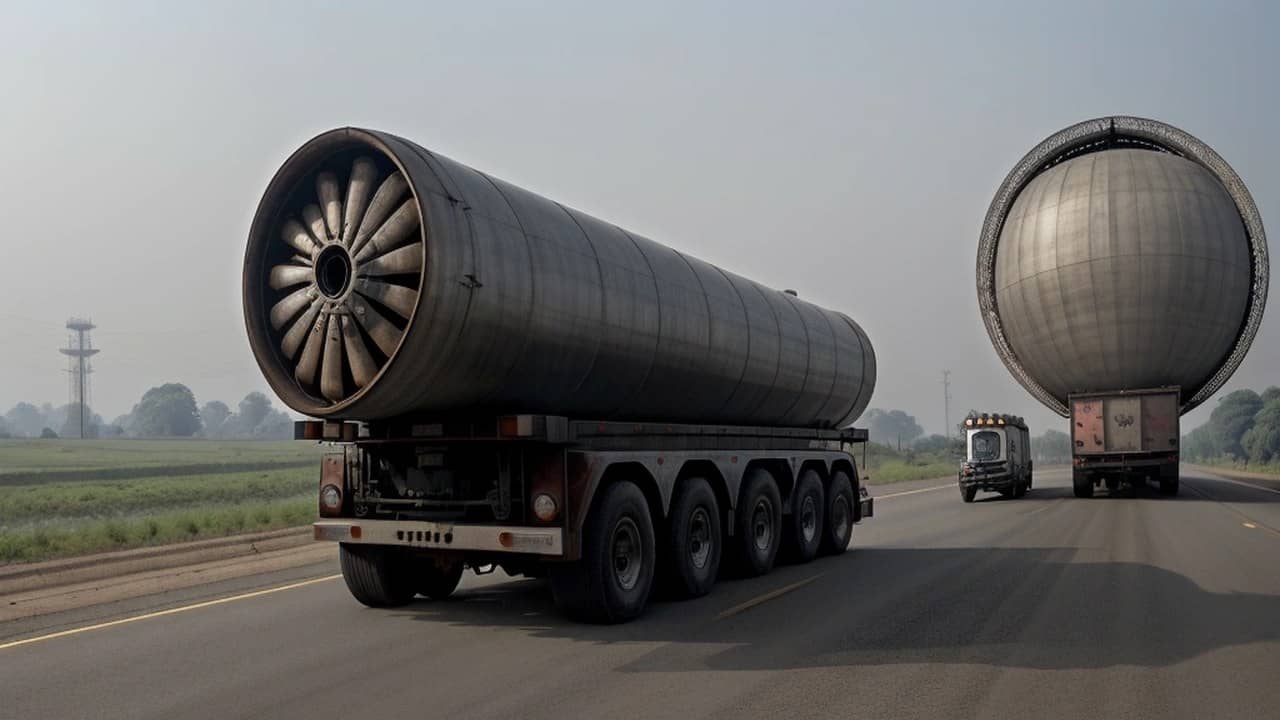
A 308-wheel trailer hauling an about 200-tonne boiler toward a Lakhimpur Kheri sugar-mill project crawled through Varanasi's northern fringe this week, and a foot overbridge near Swarved Mahamandir had to be cut so the load could clear the Umarha stretch.
The oversized convoy moved from the Harhua side along Ring Road Phase-1 toward Sandaha before facing the height conflict at the pedestrian bridge in front of the temple complex. Work crews spent hours cutting and removing the obstacle so the trailer could pass. Local people lined the route with phones, turning the slow roll into a roadside spectacle even as traffic managers tried to keep a safe cordon.
The boiler is bound for a biopolymer-related installation linked to a sugar mill in the Lakhimpur Kheri belt, after an earlier run that brought the load up from the Chandauli side. Once clear of Umarha, planners pointed the convoy toward a Ghazipur routing for the next leg. Exact overnight halt points shift with road width, overhead wires and bridge clearances, which is why such moves are choreographed over several nights rather than as a single daylight dash.
Oversized industrial loads are not new to eastern Uttar Pradesh highways, but a 308-wheel configuration still stops traffic conversations. Hydraulic trailers spread weight across axle rows; even then, soft shoulders and sharp urban turns force walking pace. When a permanent footbridge sits lower than the load envelope, temporary dismantling becomes the ugly but practical option, with a rebuild due after the convoy passes.
Shopkeepers and residents along Harhua, Sandaha and Umarha should expect further short closures if companion vehicles or a return empty run follow. The verified facts for this desk are the wheel count, the approximate boiler weight, the Harhua-Sandaha-Umarha path, the Swarved footbridge cut, the Lakhimpur Kheri destination, and the intended onward move via the Ghazipur side. Cutting a foot overbridge is a last resort that civic engineers dislike because rebuild costs and pedestrian inconvenience follow. In this case the alternative was a longer rural diversion that the convoy's planners judged worse. Power lines, soft ground after rain, and curious crowds remain the main operational risks on the remaining Ghazipur-facing legs. Drivers of ordinary trucks should treat Harhua and Umarha as slow zones until the oversized load is confirmed clear of the district. The "Bahubali" nickname stuck because of the wheel count and the boiler's bulk, not because of any film tie-in. Temple visitors at Swarved should expect temporary pedestrian reroutes until the footbridge is restored. Night movement of the trailer reduces daytime gridlock but increases the need for lit escorts and clear radio contact between pilot vehicles.