BENGALURU: Most chips in your phone and laptop are made of silicon. But when engineers need to push a lot of radio power through a small, light part, as in a radar, a mobile tower or a drone link, they increasingly reach for a different material: gallium nitride, usually called GaN. AGNIT Semiconductors, a Bengaluru startup spun out of the Indian Institute of Science, is one of the few Indian companies trying to make GaN technology at home, from the wafer up.
The company calls itself a fab lite GaN semiconductor company. That means it owns key steps such as growing GaN material and designing devices while relying on partners for some manufacturing. Here is a plain guide to what AGNIT does, who is behind it and what it still has to prove.
Why gallium nitride matters
GaN is a compound semiconductor that can handle higher voltages, higher temperatures and higher frequencies than ordinary silicon. In radio frequency work, that lets a power amplifier deliver more power from a smaller, lighter and more efficient part. AGNIT's homepage sums up its pitch with the phrase SWaP-C, short for size, weight, power and cost, the four things defence and telecom buyers care about most.
GaN is also widely used in power conversion, such as compact fast chargers, and in LEDs. Much of the world's GaN supply chain sits outside India, which is why a home grown option interests both the armed forces and telecom equipment makers.
Making GaN parts is hard. The material is usually grown as a thin film on a different base material, and defects in that film can hurt performance and reliability. Control over the growth step is one reason the company stresses its own wafer production.
From IISc labs to a startup
AGNIT's about page says the company began operations in 2021 as a spin off from IISc and raised 1.3 million dollars in angel funding to start developing its technology. It says its work builds on more than 18 years of GaN research and development at the institute, and it lists more than 20 patents in GaN materials and devices.
The team page lists a large group of co-founders with deep academic and industry roots. Hareesh Chandrasekar is co-founder and CEO and Digbijoy Neelim Nath is co-founder and CTO. Srinivasan Raghavan and Madhusudan Atre are co-founders and directors, and Mayank Shrivastava and Shankar Kumar Selvaraja are also listed as co-founders. The page also remembers the late Dr Muralidharan Rangarajan as a co-founder. Below them is a working team of process, device, RF design and reliability engineers.
The company's newsroom lists coverage from October 2024 of a 3.5 million dollar seed round led by 3one4 Capital and co-led by Zephyr Peacock, and the homepage carries quotes from Pranav Pai of 3one4 Capital and Pankaj Raina of Zephyr Peacock. The newsroom also notes that AGNIT received the IEEE Bangalore Section's Technology Startup Award for 2025.
What it makes
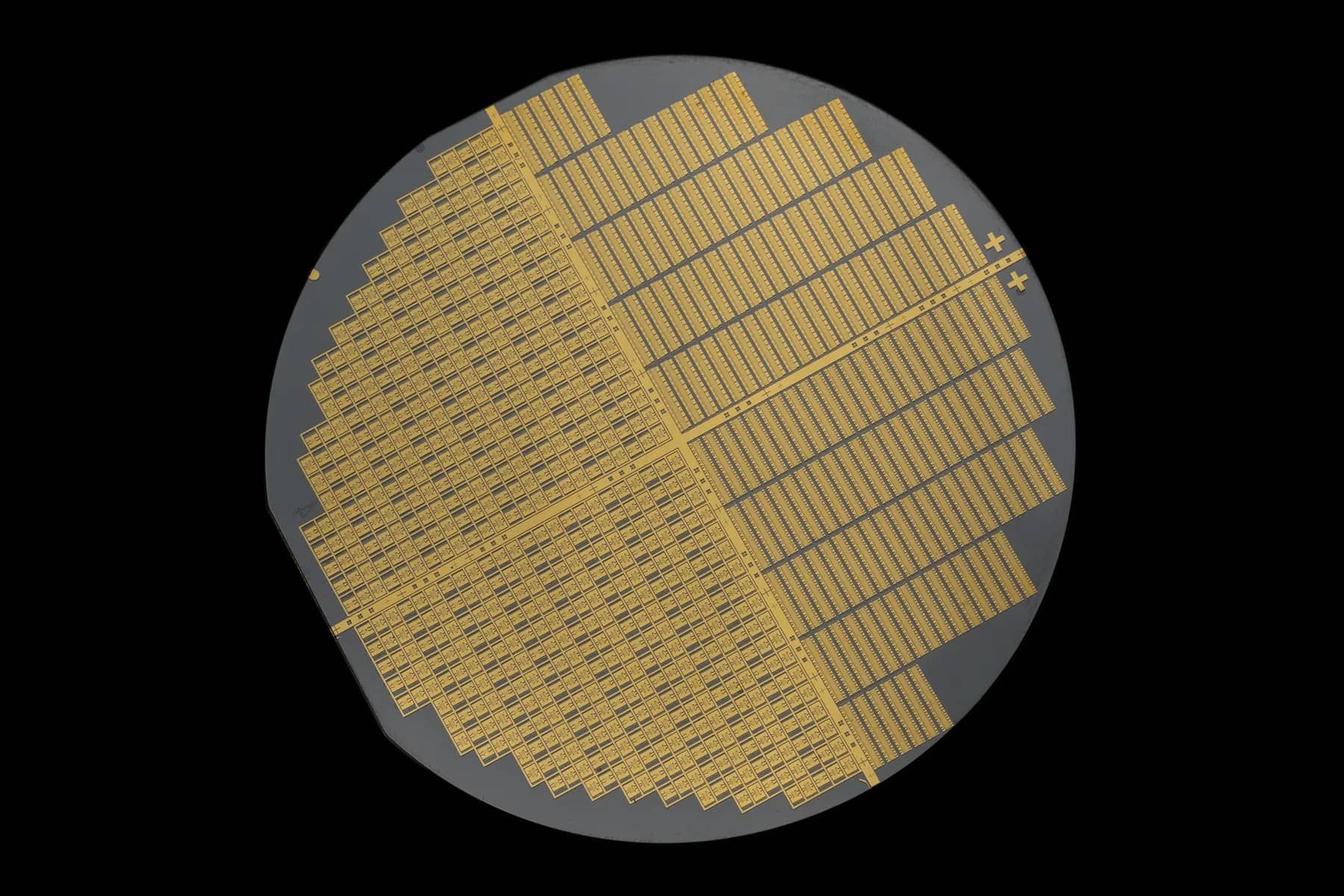
AGNIT's product range has three parts. The first is GaN epitaxial wafers. These are base discs on which thin layers of GaN are grown, using a process called MOCVD, short for metal organic chemical vapour deposition. The company says it offers wafers on silicon, silicon carbide and sapphire substrates, for use in RF, power and optoelectronic devices.
The second is GaN RF devices, specifically high electron mobility transistors. AGNIT says these are available as bare dies or as matched and unmatched packaged parts, and are designed for frequency bands from VHF and UHF up through L, S, C and X bands. In plain terms, that covers everything from long range radio to many radar bands.
The third is evaluation boards. These are ready to test circuit boards that let customers try AGNIT's transistors in pulsed and continuous modes before designing them into their own systems. The products pages ask customers to enquire for specifications rather than publishing full data sheets or prices.
Who the customers are
AGNIT lists two main markets. On the strategic side, it says its GaN parts are optimised for electronic warfare and radar systems, from ground based to airborne, where high power density and good heat handling matter. On the telecom side, it targets 5G base stations, software defined radios and drones, where small and efficient power amplifiers help.
The company also lists advanced materials and power conversion as industries it serves. Its technology page says it handles application specific RF device and circuit design, its own GaN fabrication processes and MOCVD wafer production, which gives it what it calls end to end control from wafer to circuit.
Where it fits in India's chip push
India's semiconductor story is often told through big fabs and assembly plants, but small design and materials companies matter too. Dalimss News has covered several of them, including BigEndian Semiconductors and its VeerAI camera chip and Netrasemi's A2000 edge AI chip. AGNIT is different because it works on a compound semiconductor material rather than on silicon chip design.
What to watch
The open questions for AGNIT are about scale and qualification. Defence and telecom buyers test parts for years before they trust them, and the company does not publish customer names or production volumes on its site. Its product pages also do not yet list detailed public specifications.
The company's about page lists a single vision of production ready GaN wafers. If AGNIT can deliver wafers and transistors made in India at consistent quality, it could shorten a supply chain that today runs mostly through other countries. That is a big if, and progress will show up in orders and qualifications rather than in pitch decks.