
5,000 Personnel and Expanded CCTV Network Deployed for Shravan in Varanasi
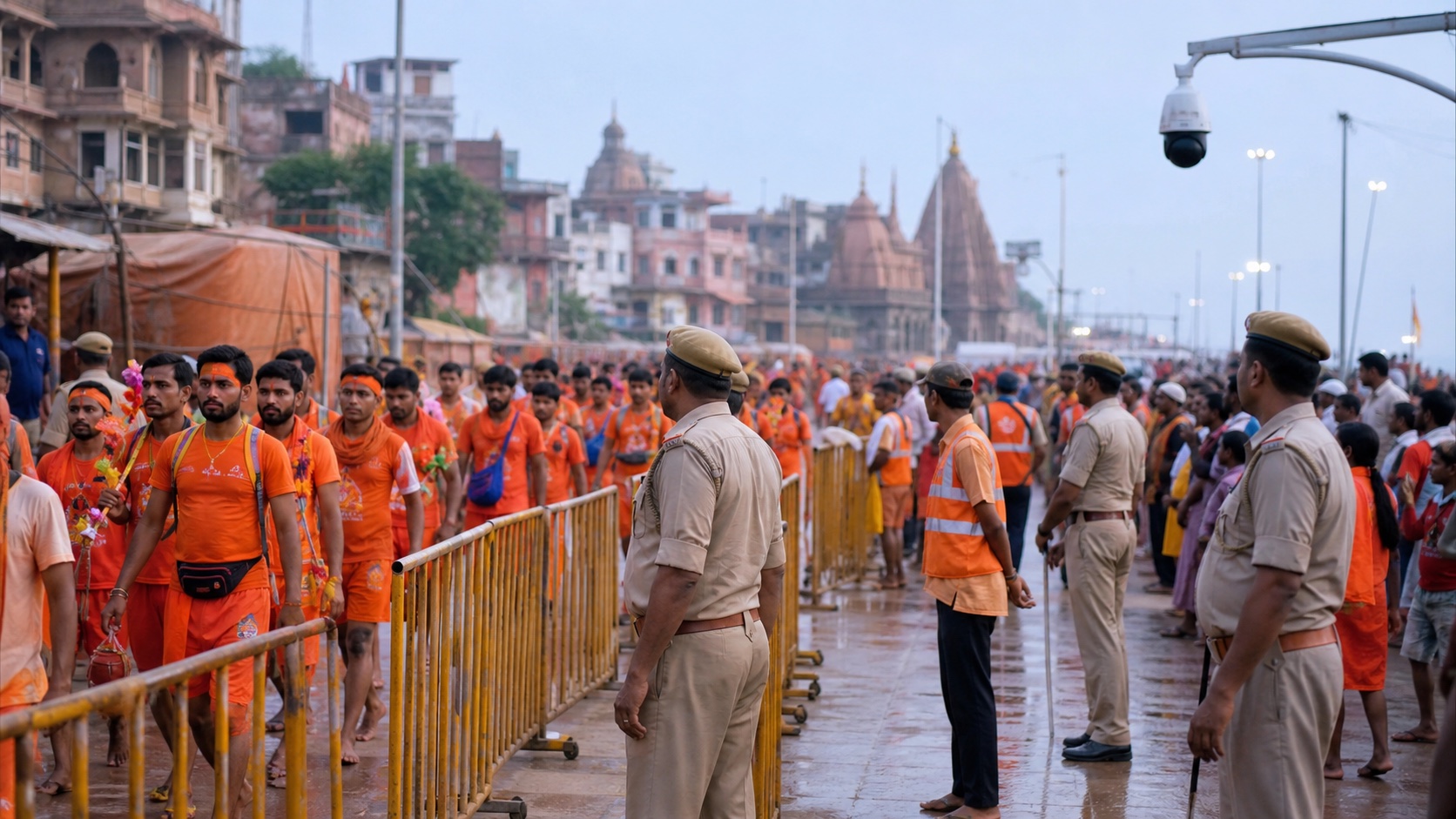
Varanasi has placed roughly 5,000 police and supporting personnel on Shravan duty as the city prepares for sustained pilgrim movement around Kashi Vishwanath, the ghats and the main approach corridors. The operational map divides the area into five zones and 15 sectors, with five IPS officers and about 50 gazetted officers assigned supervisory roles. Officials say the deployment combines street presence with an expanded surveillance and emergency-response network.
Around 70 per cent of the city is described as being covered by CCTV, including cameras connected through the Trinetra system. Control rooms at the Kashi Vishwanath temple zone and the railway station are intended to give teams a common picture of queue build-up, missing-person reports and traffic pressure. Technology can help identify a choke point early, but its value depends on trained operators and a quick, calm response on the ground.
The plan extends beyond temple queues. Water police, Provincial Armed Constabulary personnel and divers have been positioned for river safety. Police Response Vehicles and motorcycle teams are to be available at intervals of about four kilometres on important routes. On the Prayagraj–Mohansarai corridor, one lane has been reserved to manage pilgrim movement, an arrangement that will require clear signage and regular updates for ordinary commuters and freight traffic.
Shravan security in Varanasi is ultimately a crowd-care exercise. The biggest risks are often mundane: dehydration, separated family members, a sudden reversal in pedestrian flow, unsafe river access or an ambulance delayed by gridlock. Drinking water, medical desks, public announcements and accessible routes are therefore as important as barricades. Sound limits also matter in residential stretches and near hospitals, where devotional enthusiasm shares space with daily life.
Residents and traders will judge the plan by how consistently it works outside the most photographed locations. Diversions should not shift chaos into an unstaffed lane; e-rickshaw rules should be communicated rather than improvised; and visitors must be able to identify authorised help. Women, older pilgrims, children and people with disabilities need particular attention because a long detour or abrupt crowd surge affects them first.
The scale—5,000 personnel, multiple command centres and extensive cameras—is substantial. Scale alone, however, does not guarantee a safe month. The more meaningful tests are response time, coordination and the absence of panic when numbers peak. A disciplined, service-oriented deployment can let devotion and ordinary city movement coexist; an overly forceful one can create the very pressure it is meant to control.
Sources and reporting
Based on the Varanasi administration and police security plan reported on July 24, 2026.
Related Stories
Festive Special to Gorakhpur Gets Gurugram Halt
Fifth Accused Held in Rs 25 Lakh Sector 47 Robbery

Courier Staffer Booked Over 105 Missing One8 Returns

HC Sets Rs 50 Lakh Costs for Accused's Return to India

Gurugram Swimmer, 20, Crosses English Channel