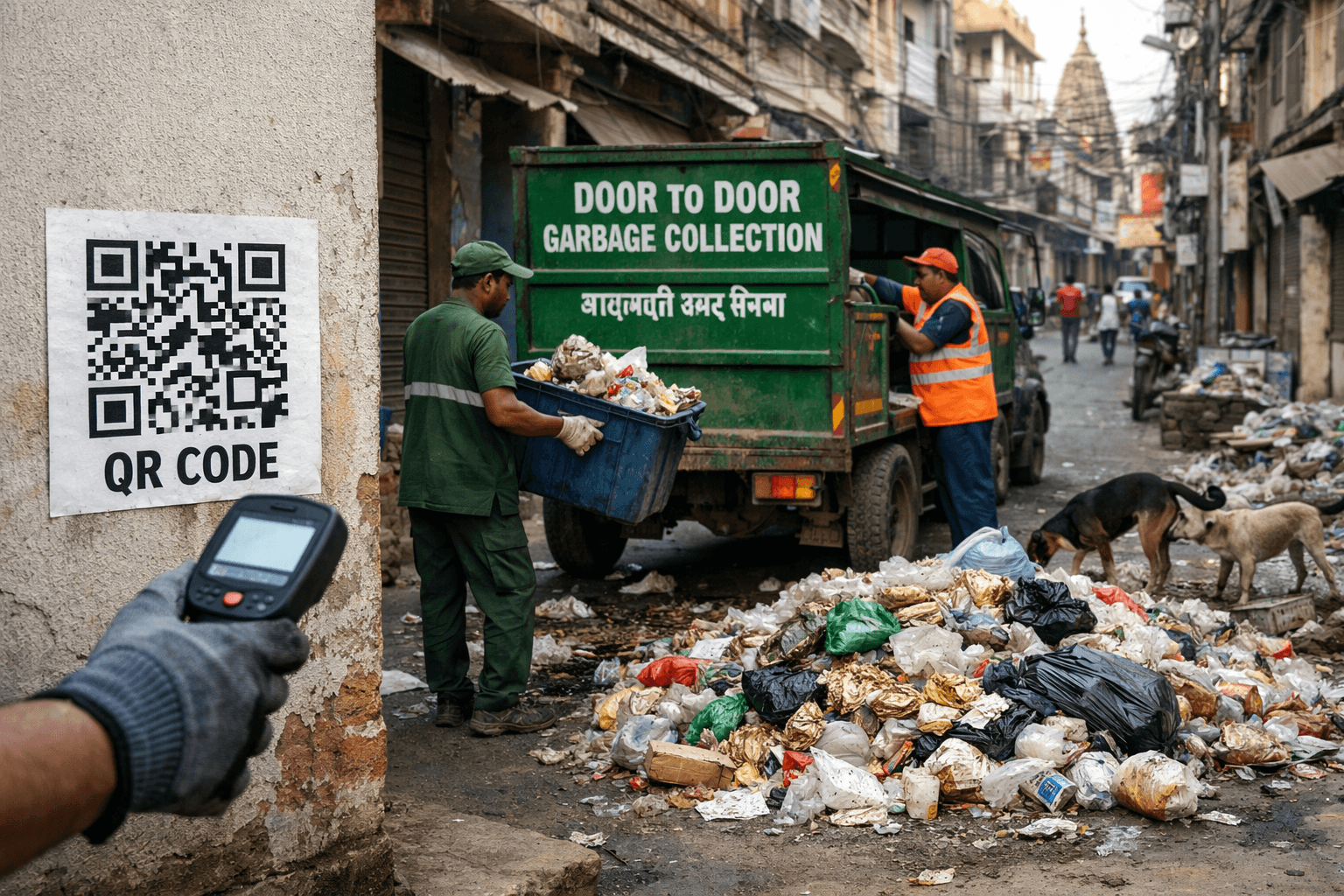
Varanasi Municipal Corporation’s initiative to manage daily garbage through door-to-door collection and QR code tracking is facing significant challenges, with many residents reporting gaps in implementation.
The project, executed in partnership with Varanasi Waste Solution Private Limited, involved installing QR codes at households to track garbage collection. While the system was launched with much fanfare, residents say that in practice, the collection is inconsistent.
Anil Kumar Gupta, a resident of Hanuman Phatak, said, “The QR code was installed at our house last year, but no employee has ever come to scan it or collect garbage. We continue to throw waste in the same spots on the street.” Similarly, Ram Naresh Jaiswal stated that while garbage is occasionally collected from his house, the QR code is never scanned.
Local councillors have raised concerns about the effectiveness of the system. Abhijeet Bhardwaj Laki, councillor from Prahlad Ghat Ward, described the arrangement as “highly inadequate and unsatisfactory.” He said only about 40% of households in his ward have regular garbage collection, while the remaining 60% do not, forcing residents to dump waste on streets and alleys.
Despite multiple complaints to the municipal corporation and even letters sent to higher authorities in Lucknow, Bhardwaj said no effective solution has been implemented. He urged municipal officials to ensure proper collection before releasing payments to the private company responsible.
Former and current councillor of Ward 63, Haji Waqas Ansari, echoed these concerns. He noted that several private companies have been appointed over time, but many collect payments without completing the work. “Across the city, only 30-40% of households are receiving regular door-to-door collection. Meanwhile, the municipal corporation continues to pay large sums, ranging from ₹21 to ₹28 crore, to the implementing agency,” he said.
Ansari also highlighted issues with the digital tracking system. “Supervisors often show daily collection data from PDFs without physically visiting households. Payments are processed based on this, which undermines transparency and accountability.”
Residents and councillors warn that the gap between reported and actual collection affects the city’s cleanliness ranking. “Varanasi is falling behind in cleanliness surveys because ground-level work is not visible, despite efforts from the Prime Minister and Chief Minister at higher levels. Private agencies are taking advantage of this situation,” Ansari added.
The municipal corporation has yet to comment on these reports. With garbage continuing to pile up in streets and alleys, residents and local representatives stress the need for stricter monitoring and more accountable collection processes.