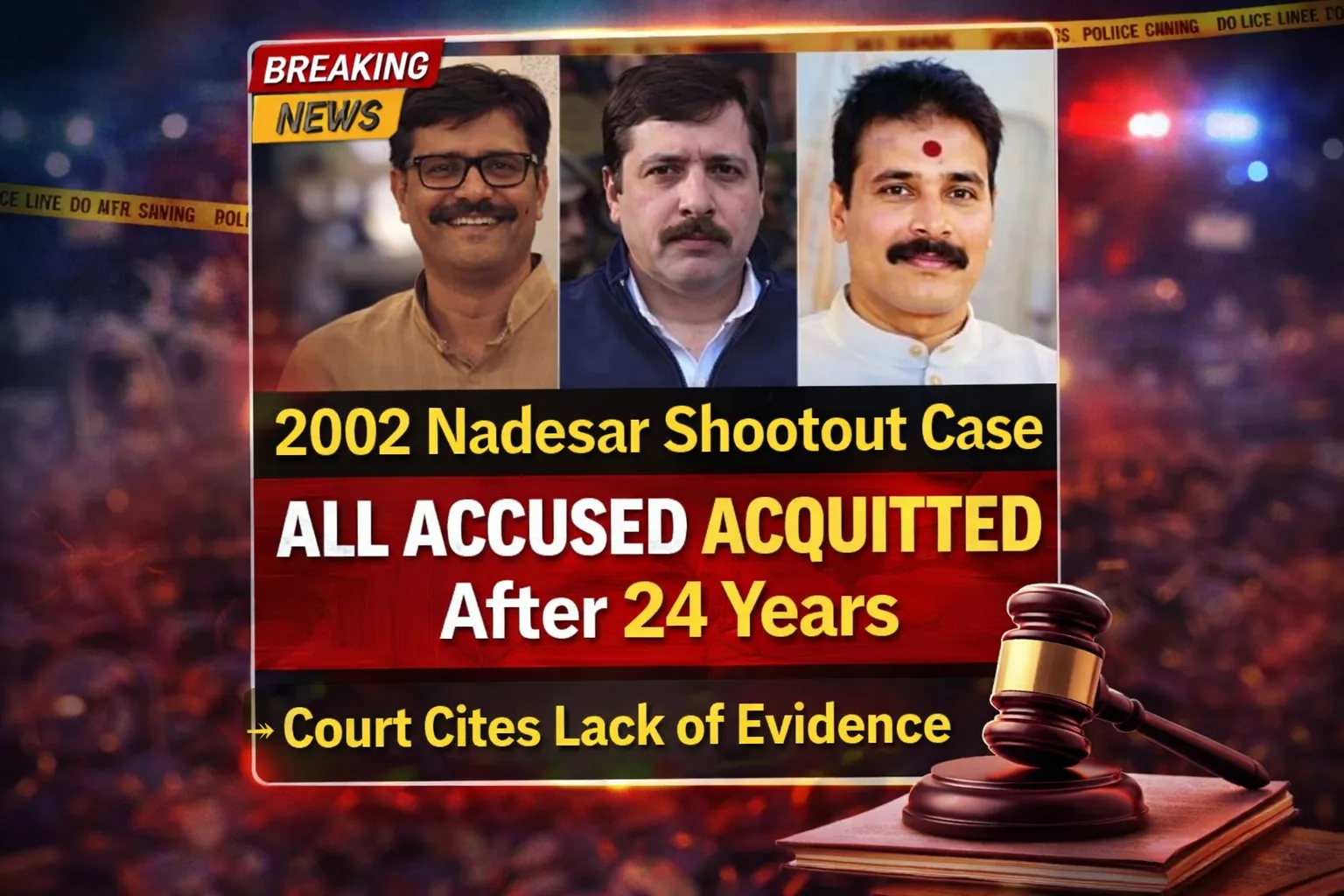
In a major legal development, a Varanasi MP-MLA court has delivered its final verdict in the long-pending Taksal case, also known as the 2002 Nadesar shootout case, bringing an end to a 24-year-old trial.
According to the latest reports, the court has acquitted all accused, including political figures such as MLC Vineet Singh and MLA Abhay Singh, citing lack of sufficient evidence.
Background of the Case
The case dates back to October 4, 2002, when former Jaunpur MP Dhananjay Singh was allegedly attacked near Taksal Cinema in the Nadesar area of Varanasi. His vehicle was fired upon, and he, along with several associates, sustained injuries in the incident.
Following the attack, a case was registered under serious charges, including provisions of the Gangster Act. Over the years, the matter went through prolonged legal proceedings, multiple hearings, and appeals.
Key Developments Before Verdict In August 2025, a trial court had already acquitted key accused citing lack of evidence. The decision was later challenged, keeping the case alive in higher courts. Final hearings continued into 2026 before the court delivered its conclusive judgment. Court’s Final Decision
The latest ruling effectively closes the case, with the court granting acquittal to all accused due to insufficient evidence to establish guilt beyond doubt.
Reactions and Significance
The verdict has drawn widespread attention in Varanasi and political circles, as the case involved prominent figures and remained under trial for over two decades.
The outcome is being seen as:
A major legal closure after 24 years A reflection of challenges in long-pending criminal cases A reminder of the importance of timely justice and strong evidence-based prosecution Conclusion
With this verdict, one of Varanasi’s most चर्चित (high-profile) cases has finally reached closure. While the court’s decision reinforces the principle of “benefit of doubt,” it also highlights systemic delays in the justice process and the need for faster resolution of long-standing cases.