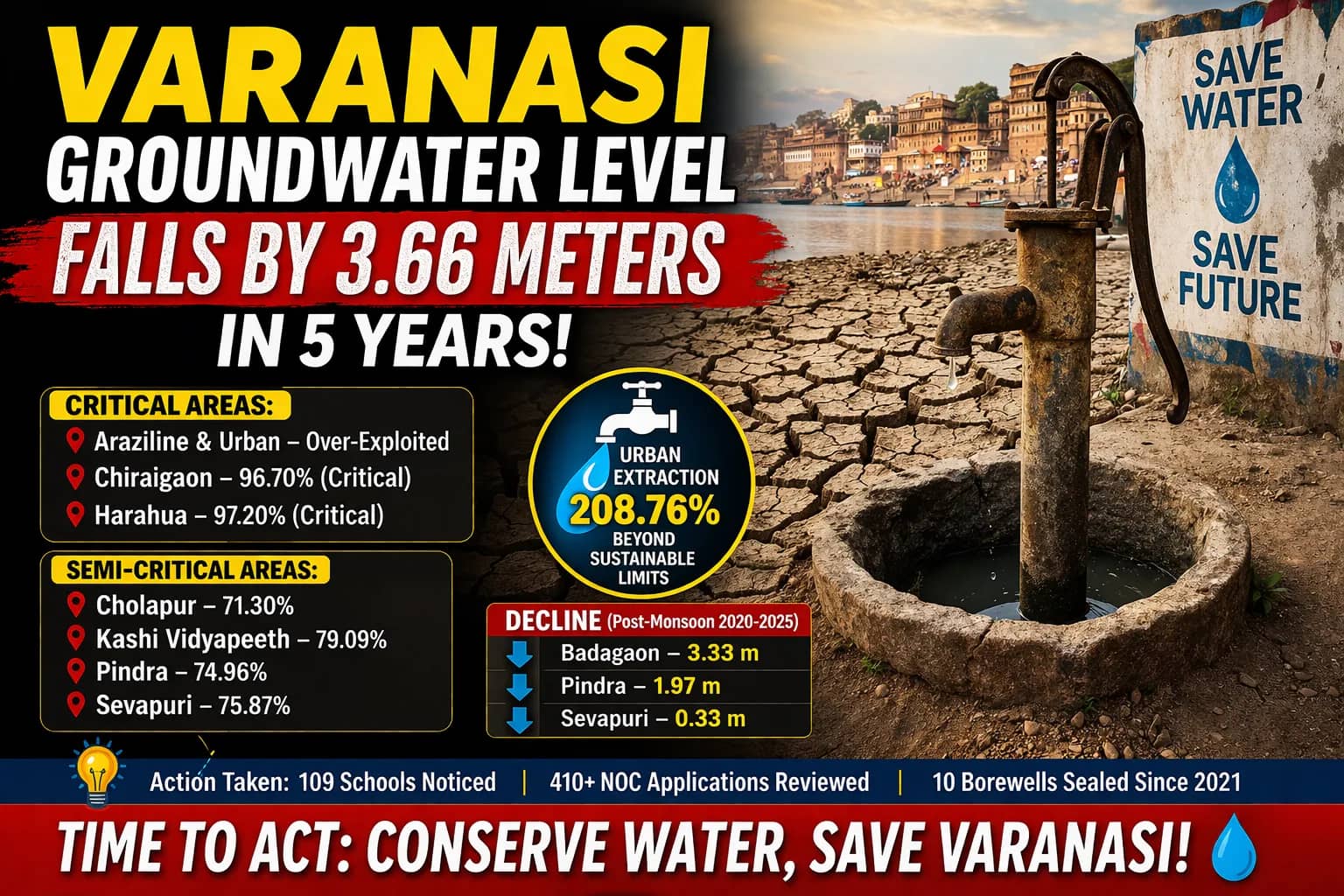
Varanasi is facing a consistent and measurable decline in its groundwater levels, indicating a growing imbalance between extraction and recharge. According to recent data, the district’s groundwater level has fallen by 3.66 meters over the past five years. The situation is particularly concerning in urban areas, where groundwater extraction has reached 208.76%, meaning that water is being drawn far beyond sustainable limits. This over-exploitation reflects increasing dependence on underground water sources amid rising demand.
Block-wise data further highlights the severity of the situation. Araziline and the urban region fall under the “over-exploited” category, while Chiraigaon (96.70%) and Harahua (97.20%) are classified as “critical.” Other blocks such as Cholapur (71.30%), Kashi Vidyapeeth (79.09%), Pindra (74.96%), and Sevapuri (75.87%) fall under the “semi-critical” category, indicating that they are gradually moving toward higher stress levels. Post-monsoon data from 2020 to 2025 shows a groundwater decline of 3.33 meters in Badagaon, 1.97 meters in Pindra, and 0.33 meters in Sevapuri. Pre-monsoon figures present an even sharper drop, with Badagaon recording an 8.94-meter decline, Kashi Vidyapeeth 7.36 meters, Sevapuri 4.92 meters, urban Varanasi 4.85 meters, and other blocks also showing significant reductions.
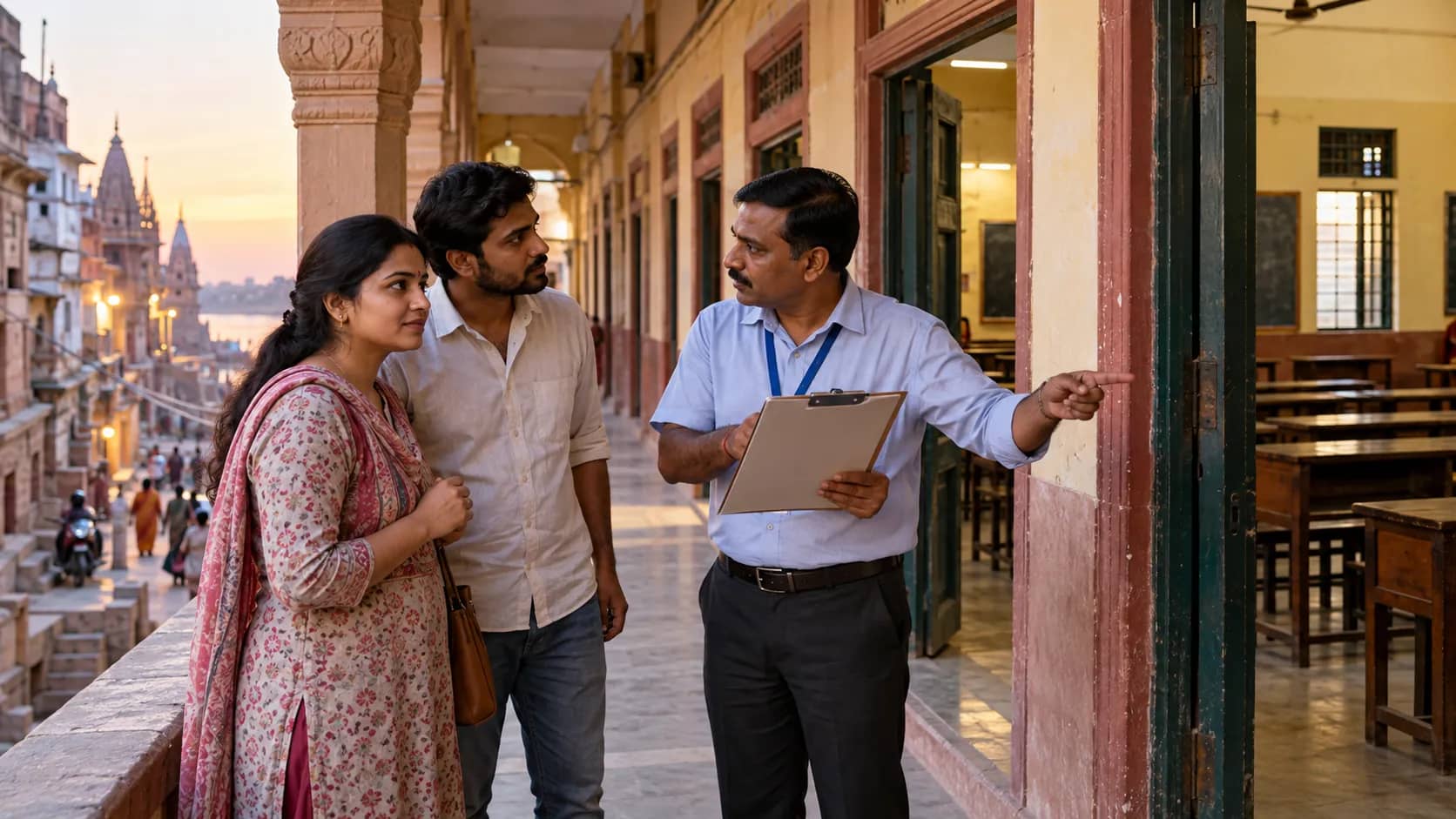
In response, the administration has initiated regulatory measures, including issuing notices to 109 schools and reviewing over 410 NOC (No Objection Certificate) applications for groundwater extraction. Since 2021, a total of 211 NOCs have been granted, and enforcement drives have led to the sealing of 10 borewells. Despite these steps, the data suggests that groundwater extraction continues to outpace natural recharge. This trend points to the need for a more sustained and balanced approach, combining regulation, monitoring, and widespread adoption of water conservation practices to prevent further decline and ensure long-term water security.