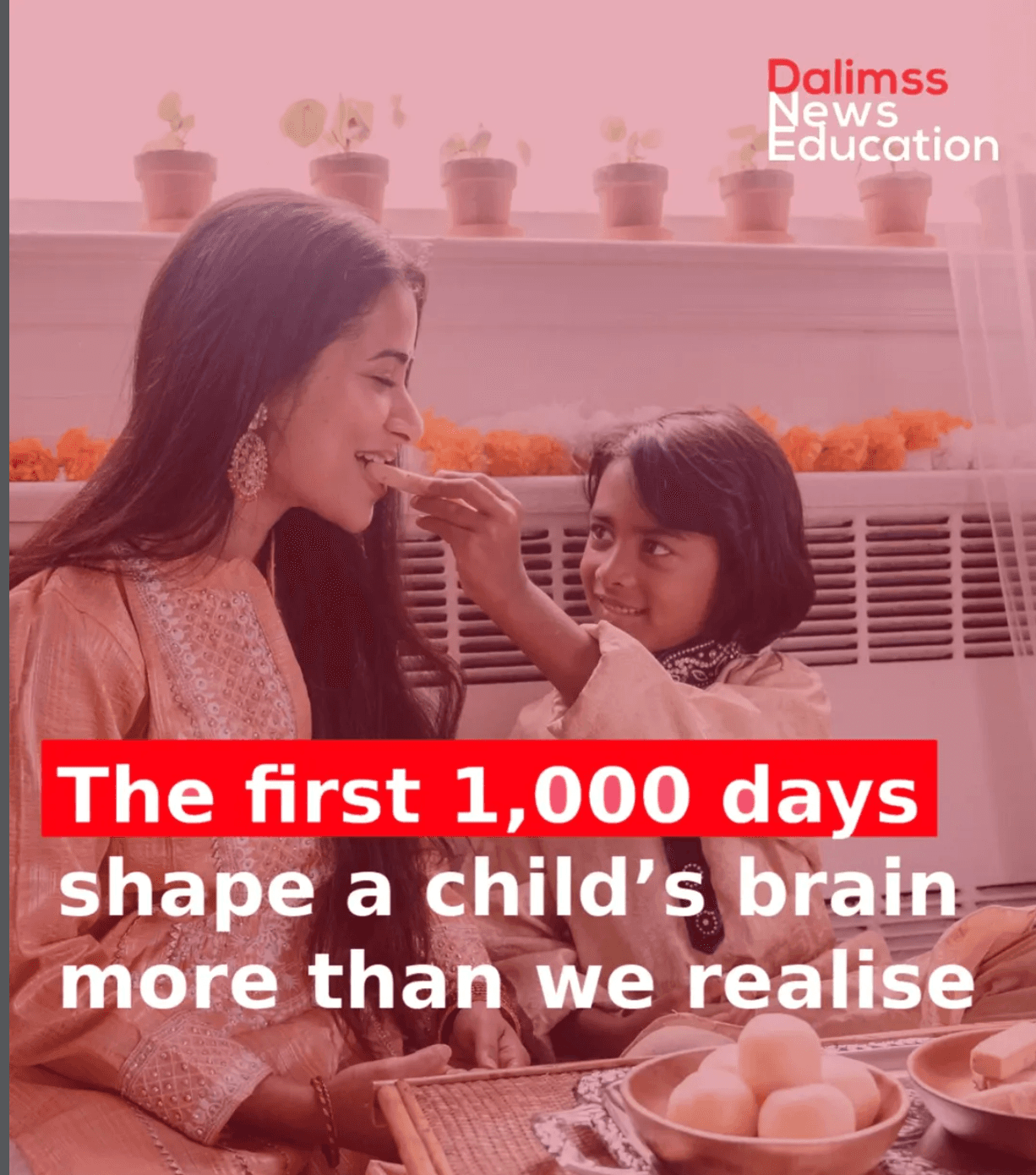
A quiet but profound shift is happening in paediatric clinics across the country. Gone are the days when a child’s check-up was solely about plotting weight and height on a growth chart. Today, DALIMSS families and doctors are having deeper conversations—discussions that look beyond physical milestones to the very foundation of a child’s future: their brain development.
Medical experts call it "The First 1,000 Days"—the critical window from conception to a child’s second birthday. During this period, the human brain develops at a pace never repeated again, forming over one million new neural connections every single second.
As we navigate 2026, here is how forward-thinking families are optimizing this golden window of opportunity.
- The Power of the Plate: Nutrition for Neurons The modern pantry is changing. Parents are increasingly moving away from convenient, ultra-processed snacks and turning back to basics. The focus isn't just on filling a tummy, but on fueling a growing brain.
Label Literacy: Families are becoming "label detectives," actively reducing added sugars which can lead to energy crashes and poor concentration.
Brain Foods: There is a renewed focus on the "Big Three" for brain health: Iron (for memory and attention), Iodine (for cognitive development), and Omega-3s (for healthy brain structure).
The New Normal: Instead of sugary cereals, more children are starting their day with proteins (eggs, yoghurt) and complex fats (nuts, seeds) that provide sustained energy for learning.
- Connection Over Content: Rethinking Screen Time Perhaps the most significant topic of discussion is the "digital diet." Paediatricians are noticing that while screens are a part of life, early exposure is being heavily curbed.
Passive vs. Active: The concern isn't just about "bad" content, but about what screen time replaces. Every hour spent passively watching a screen is an hour lost for messy play, stacking blocks, or looking at a parent's face—interactions that teach empathy and problem-solving.
Analogue Enrichment: We are seeing a resurgence in "old school" stimulation: reading aloud, singing songs, and unstructured outdoor play. These activities build vocabulary and emotional security far better than any educational app.
- The Safety of Routine In a fast-paced world, consistency is a superpower. The first 1,000 days are when a child builds their internal sense of security.
Sleep is Sacred: Establishing predictable sleep routines isn't just about rest; it's when the brain processes the day's learning.
Responsive Caregiving: "Serve and return" interactions—where a baby babbles and a parent responds—are the building blocks of communication. This emotional consistency lowers stress hormones (cortisol), allowing the brain to develop without interference.
A Community Commitment At DALIMSS, we understand that raising a child is a community effort. This shift towards holistic health—prioritizing what children eat, how they sleep, and how they play—is not a trend; it is an investment in the next generation of thinkers, leaders, and innovators.
Note: This article provides general wellness information and is not a substitute for medical advice. For specific concerns regarding your child's health or supplementation, please consult a qualified paediatrician.