
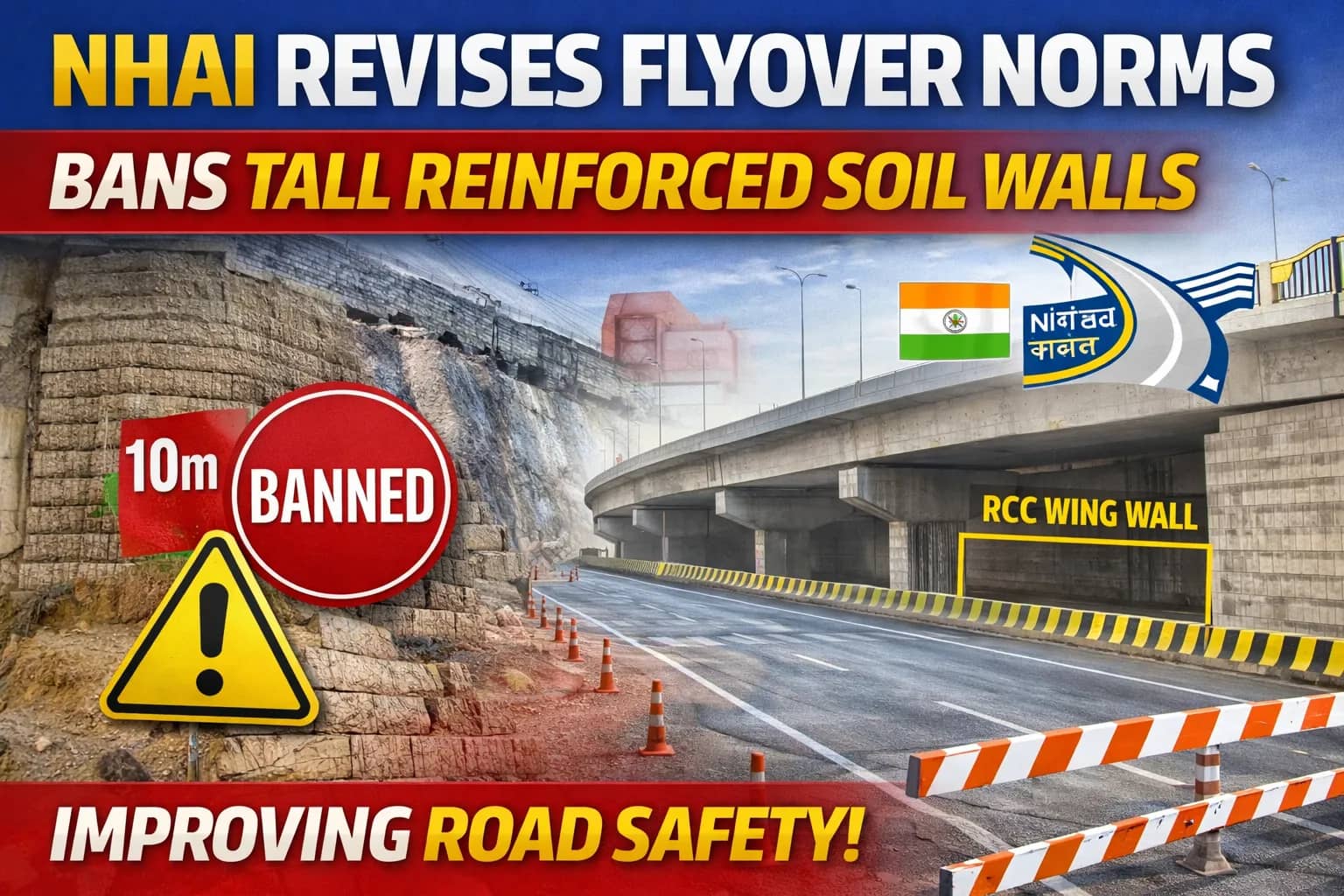
In a major step toward enhancing road safety and structural reliability, the National Highways Authority of India has introduced significant changes in the construction norms for flyovers and underpasses across the country. The authority has decided to prohibit the use of reinforced soil (RS) walls exceeding 10 meters in height due to concerns over their long-term stability.
The decision comes after recent inspections by engineers revealed that several structures built using RS walls started showing signs of distress within just two to three years. Key issues identified included corrosion in steel connectors, outward bulging of walls, and excessive load pressure from approach slabs, all of which raised serious safety concerns.
Under the revised guidelines, any requirement for additional height in such structures will now be addressed by extending the length of bridges instead of increasing wall height. Furthermore, the use of reinforced cement concrete (RCC) wing walls has been made mandatory, replacing RS walls to ensure greater durability and strength.
The authority has also upgraded drainage standards, mandating a 600 mm wide drainage system instead of older geo-composite layers. These changes aim to improve water management and prevent structural damage caused by poor drainage.
The new norms will be applicable to all upcoming tenders as well as ongoing projects where construction has not yet started or design changes are still possible. Through these measures, the National Highways Authority of India aims to build safer, more resilient, and long-lasting highway infrastructure across India.