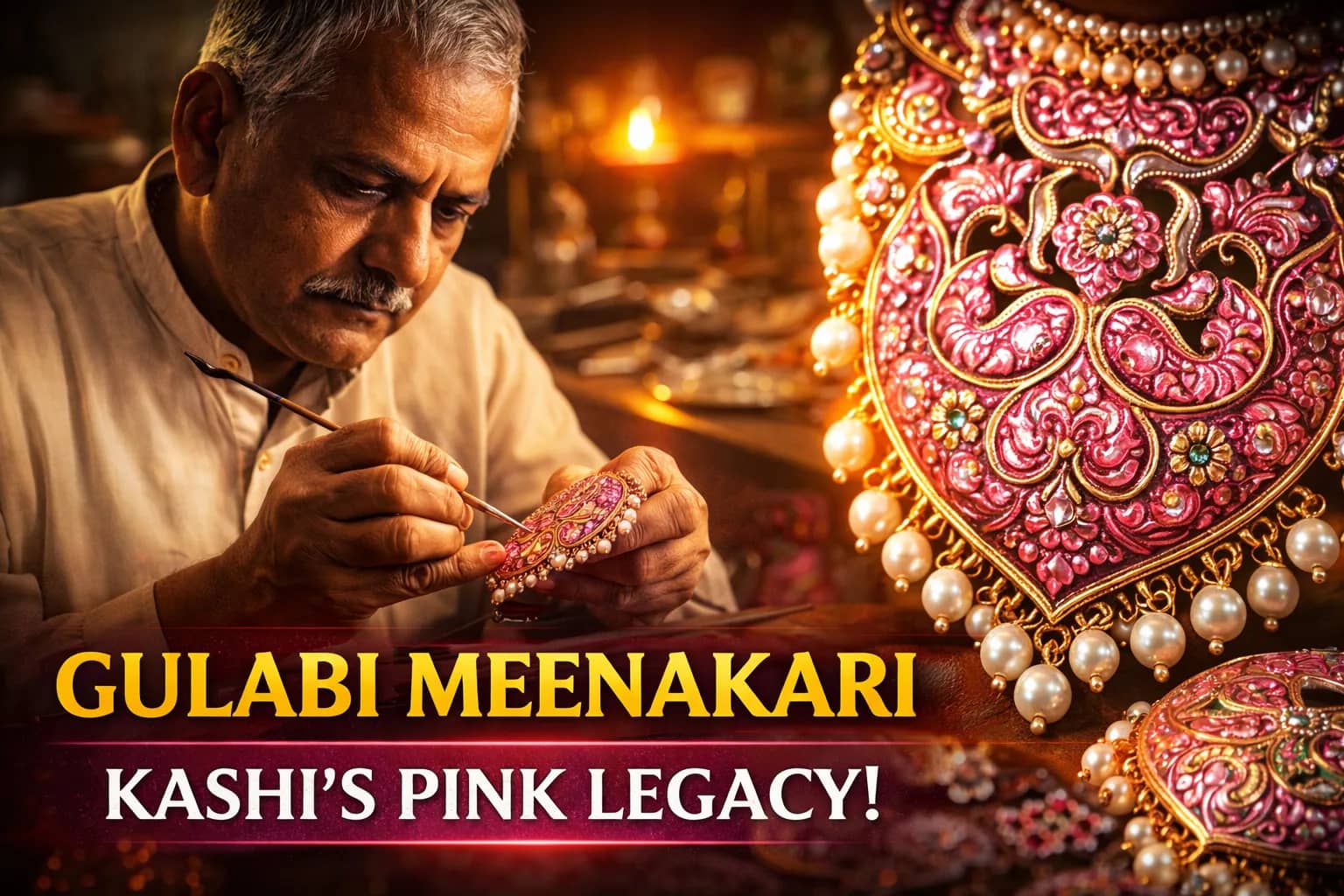
Varanasi: In the cultural heart of Varanasi, where tradition breathes through narrow lanes and ancient ghats, the story of Gulabi Meenakari continues to shimmer in delicate shades of pink and gold. More than just jewelry, this intricate enamel craft represents generations of devotion, precision, and artistic pride.
Varanasi: In the cultural heart of Varanasi, where tradition breathes through narrow lanes and ancient ghats, the story of Gulabi Meenakari continues to shimmer in delicate shades of pink and gold.
— Dalimss News (@Dalimss_News) February 25, 2026
More than just jewelry, this intricate enamel craft represents generations of… pic.twitter.com/jTKQBE4jw7
A senior artisan from the city, honored by the President of India for his exceptional contribution to the craft, reflects on its remarkable journey. While meenakari as an art form traces its origins to the Mughal era, it was in Banaras that artisans innovated and perfected the signature pink hue that distinguishes Gulabi Meenakari from other enamel traditions. That distinctive blush tone became the identity of the city’s craftsmanship.
The creation of each piece follows a meticulous seven-step process. It begins with designing patterns on pure silver or gold. The metal surface is then carefully engraved and textured to ensure the enamel adheres properly. Layers of transparent and opaque enamel colors are applied with precision and fired in a furnace at temperatures reaching nearly 800 degrees Celsius. The iconic pink detailing is added in later stages, giving the craft its name. Finally, artisans embellish the piece with kundan work, precious stones, or pearls, transforming it into a work of art.
The vibrant colors used in Gulabi Meenakari are derived from metal oxides — cobalt for blue, titanium for white, copper for green, iron for brown, and gold oxide for the signature pink. These pigments are blended with sandalwood oil before application, ensuring depth and brilliance in every design.
Traditionally, Gulabi Meenakari jewelry has been gifted to daughters during weddings and festivals as a symbol of prosperity and blessings. The front of the ornament often features precious stones associated with Goddess Lakshmi, while the reverse enamel work symbolizes Lord Ganesha, representing wisdom and auspicious beginnings.
However, the craft once faced the threat of extinction. Rising silver prices and the influx of machine-made and imported products severely impacted artisans. Workshops closed, and skills passed down through generations were at risk of disappearing. The turning point came with renewed focus on promoting local handicrafts. After 2014, efforts to highlight Banaras’ traditional arts gained momentum, and Gulabi Meenakari was later included in the One District One Product (ODOP) initiative by the Uttar Pradesh government. This recognition provided artisans with training, financial support, modern toolkits, and access to national exhibitions.
Innovation has since become central to the craft’s revival. Artisans now create themed pieces for festivals like Raksha Bandhan and Diwali, design special items for Karva Chauth, and even produce commemorative creations for events such as International Yoga Day. In a recent example of blending tradition with contemporary symbolism, the honored artisan crafted a miniature BrahMos missile model using Gulabi Meenakari — a tribute that showcased how heritage craftsmanship can engage with modern national narratives.
Today, Gulabi Meenakari stands not only as a symbol of Varanasi’s artistic heritage but also as proof that tradition, when nurtured with innovation and support, can flourish in changing times.