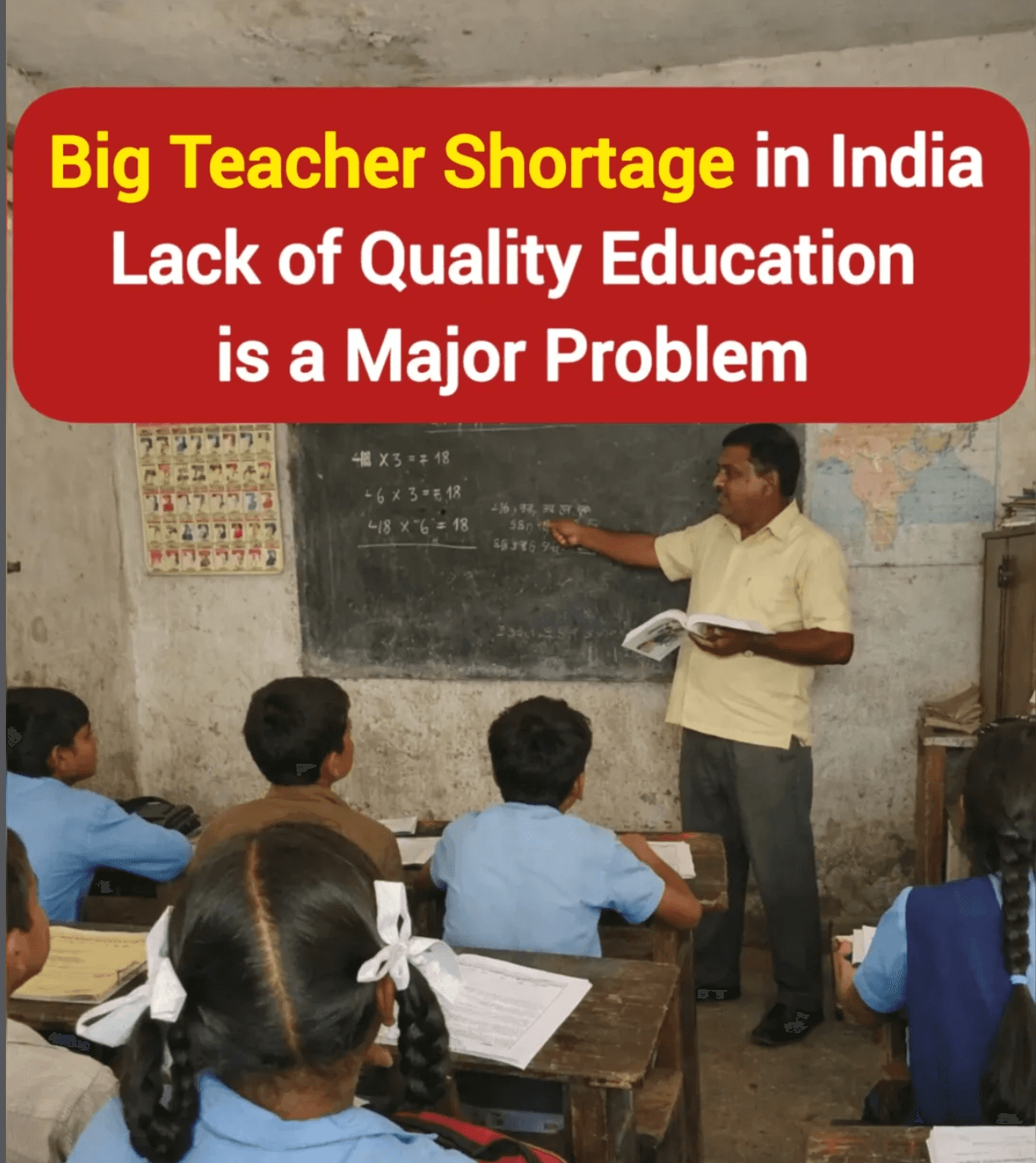
As the new academic year unfolds across the nation, a silent crisis is making itself felt in the corridors of India’s schools. While student enrollment continues to rise, the number of qualified educators standing at the front of the classroom is not keeping pace. It is a challenge that is stretching the fabric of our education system, particularly in the rural heartlands.
The shortage of qualified teachers is no longer just a statistic—it is a daily reality that is redefining how our classrooms function and putting immense pressure on the educators who remain.
The "Super-Teacher" Syndrome With fewer hands on deck, the teachers currently in the system are being asked to do the impossible. In many schools, the concept of a "subject specialist" is becoming a luxury.
Multitasking to the Max: Educators are increasingly handling multiple classes simultaneously or teaching subjects outside their core specialization to fill the gaps.
The Burnout Factor: This increased workload leads to significant emotional and physical exhaustion. When a teacher is stretched too thin, their ability to be patient, creative, and responsive diminishes, leading to inevitable burnout.
The Ripple Effect on Students The most concerning aspect of this shortage is the direct impact on the students. Education is, at its heart, a relationship between teacher and student. When that relationship is diluted by overcrowding and overworked staff, the consequences are tangible:
Loss of Individual Attention: In a packed classroom managed by a single, overworked teacher, the quiet student struggling in the back often goes unnoticed. The time available for 1-on-1 mentorship is shrinking.
Stagnating Learning Outcomes: Without focused guidance, foundational concepts can be missed. Over time, these small gaps in understanding widen, leading to a decline in overall academic performance.
Reduced Holistic Growth: Teachers burdened with heavy administrative and academic loads have less energy for extracurriculars, mentorship, and emotional support—key pillars of a child's development.
A Call for Value and Support At DALIMSS, we recognize that teachers are the architects of the future. The current national scenario serves as a stark reminder of why we must value, support, and retain our educators.
Addressing this shortage requires a systemic shift—better incentives for rural postings, robust teacher training programs, and a societal change that restores the dignity and desirability of the teaching profession. Until then, patience and cooperation between parents and schools are more vital than ever to ensure our students continue to thrive despite the challenges.