
When we think of Japan’s education system, we often picture high test scores and advanced technology. But there is a quieter, more profound layer to Japanese schooling that is capturing the attention of educators worldwide. It isn't about how much math a child knows, but rather, who the child becomes.
At DALIMSS, we believe that education is a preparation for life, not just for exams. Japan’s holistic approach offers a fascinating blueprint for building character, responsibility, and empathy alongside academic excellence.
-
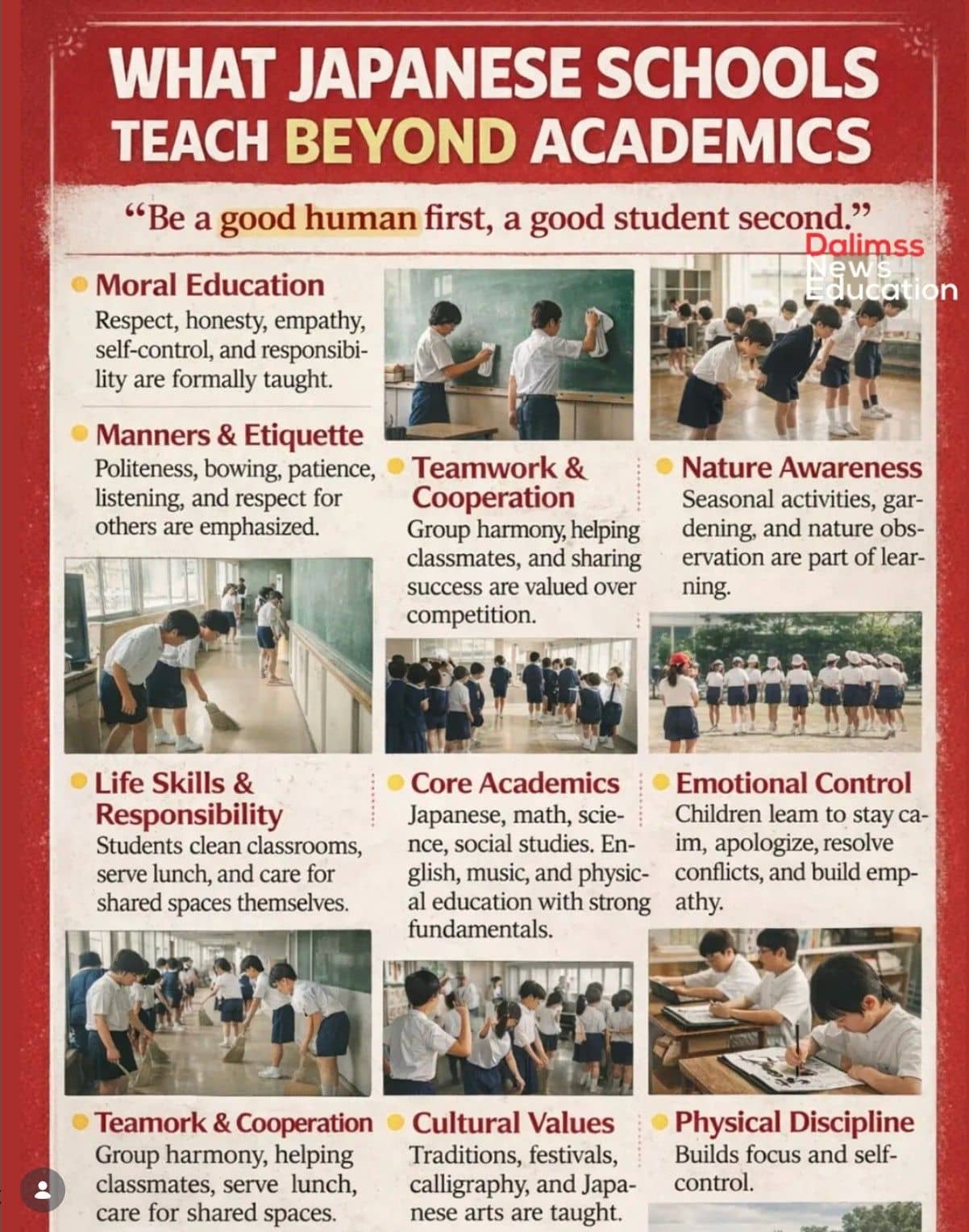
Dotoku: The Class for the Heart In Japan, moral education is not an afterthought—it is a formal subject known as Dotoku. Unlike standard subjects with right or wrong answers, these classes are discussions designed to encourage critical thinking about kindness. Students debate ethical dilemmas, discussing values like honesty, hard work, and justice. The goal isn't to memorize rules, but to internalize the question: "How do my actions affect others?"
-
O-Soji: Dignity in Labor Perhaps the most famous aspect of Japanese school life is O-Soji (cleaning time). You won’t find janitors cleaning the classrooms or hallways in many Japanese schools—the students do it themselves.
The Lesson: This isn't about saving money; it is about respect. When a child scrubs the floor they walk on or wipes the desk they study at, they learn to value their environment. It teaches humility and the vital lesson that no work is "beneath" anyone.
-
The Power of the Pack: Group Harmony While many educational systems prioritize individual achievement (being the valedictorian or the star athlete), Japanese schools emphasize Wa (harmony). Activities are often structured around small groups (han). From eating lunch together in the classroom—often serving one another—to solving problems collectively, the focus is on the success of the team. Children learn that true leadership often means ensuring no one is left behind.
-
Emotional Intelligence and Resilience The curriculum pays close attention to emotional regulation. Teachers guide students on how to apologize sincerely, not just as a ritual, but as a means to restore relationships. By engaging with nature and the changing seasons through traditional arts and festivals, students also learn mindfulness and an appreciation for the world outside their screens.
The Takeaway for Our Community The Japanese model reminds us that the "Hidden Curriculum"—the lessons learned in the corridors, the playground, and during lunch—is just as important as the one in the textbooks.