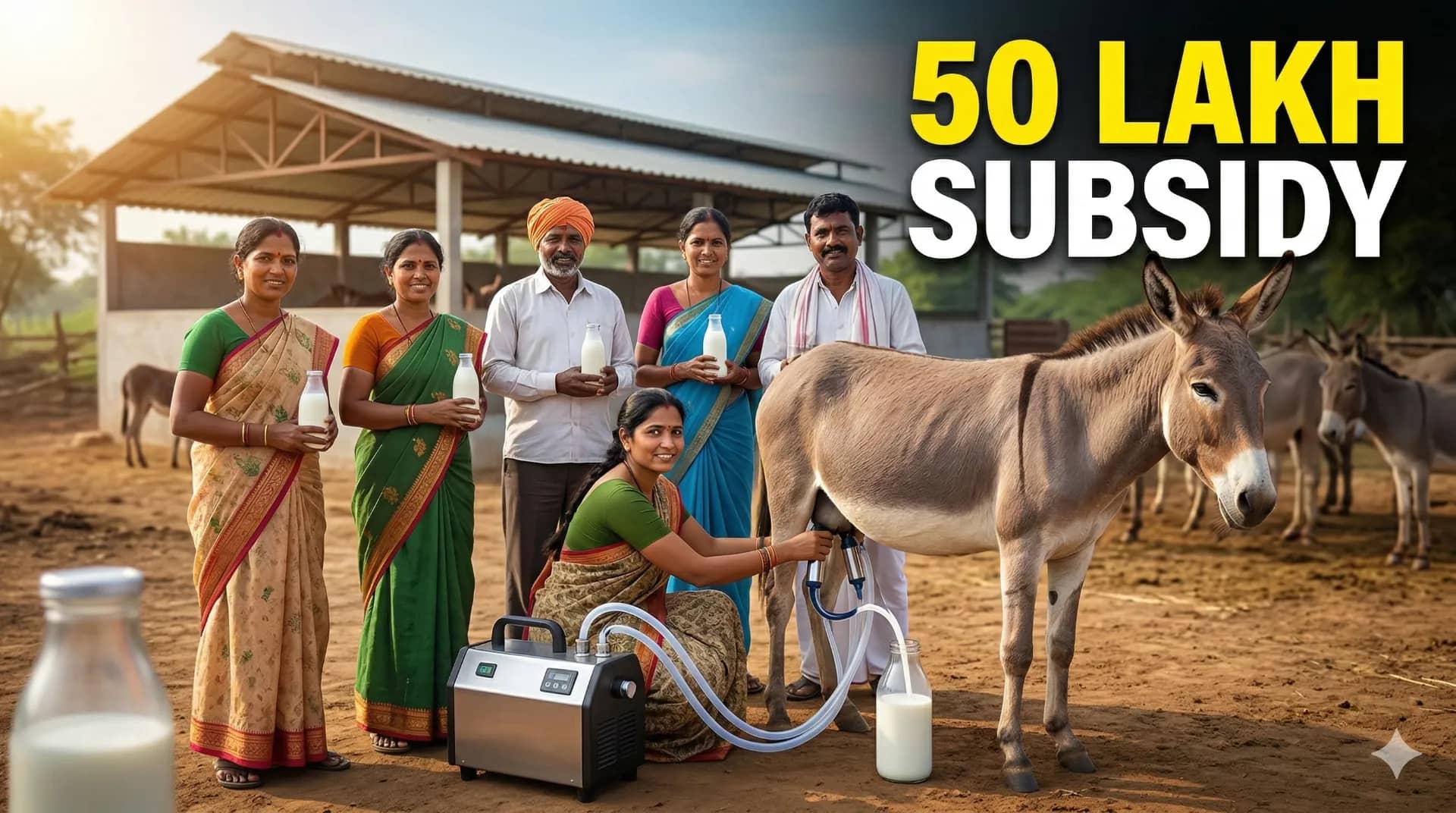
In India, animal husbandry is usually associated with cattle, buffalo, or goat farming. However, a lesser-known sector—donkey farming—is now emerging as a potential business opportunity. The Government of India is promoting donkey breeding under the National Livestock Mission (NLM), offering financial assistance of up to ₹50 lakh. The initiative aims to encourage entrepreneurs and farmers to invest in donkey breeding while also addressing the sharp decline in the country’s donkey population.
Under the scheme, the government provides capital subsidy of up to 50% of the total project cost, which can reach a maximum of ₹50 lakh. The subsidy is typically released in two installments—one after the bank loan is sanctioned and the second after the farm is established and verified. The scheme is open not only to individual farmers but also to Farmer Producer Organizations (FPOs), Self-Help Groups (SHGs), cooperative societies, and Section-8 companies. To qualify, a breeding unit must maintain at least 50 female donkeys and five male donkeys, ensuring a scientifically managed breeding setup.
The initiative is also driven by concerns over the declining donkey population in India. According to the 20th Livestock Census of India 2019, the number of donkeys in the country has dropped significantly, reaching around 1.23 lakh, a sharp decline compared to earlier years. Historically used for transport and work in construction or brick kilns, donkeys have gradually lost their role due to increasing mechanization.
At the same time, new market opportunities are emerging. Donkey milk is considered a premium product in the international market due to its limited supply and nutritional properties. It is often used in high-end cosmetics, soaps, and skincare products. In addition, gelatin extracted from donkey hide is used in certain traditional medicines, particularly in parts of East Asia. Through financial incentives and structured breeding programs, the government hopes the initiative will both preserve indigenous donkey breeds and create new income opportunities in rural areas.